For detective adventures played mainly in a dark room, start with contrast and black levels rather than the highest refresh rate: OLED is a strong choice for scenes with small bright details against darkness. Consider 4K OLED if reading fine clues matters and your gaming hardware can run the games at your preferred settings; compare Mini LED LCD models if you also use the screen in a brighter room or leave static interfaces visible for long periods. A conventional LCD needs to be judged by the exact model’s dark-scene performance, not its HDR label alone.
Who this choice affects
Dark-scene story-game players
If you play in a genuinely dark room, the distinction between black areas and nearby lamps or interface markers can shape how a scene looks. RTINGS.com notes that higher contrast typically produces deeper blacks in dark rooms.
Clue-and-text detail seekers
If you frequently read case notes, subtitles and maps, a 27-inch 4K option such as the AW2725Q listed by Dell UK is worth comparing with QHD. Check whether your hardware can run your games at the resolution and settings you want.
Mixed-use, static-UI gamers
If maps, HUDs, paused games or desktop windows stay visible for long periods, weigh OLED’s black levels against static-image care. LG UK advises that displaying the same image for a long time may leave faint marks; a Mini LED LCD is another route to compare.
What matters when choosing
OLED or QD-OLED
Choose when: Most play is in a dark room and deep blacks beside small bright details matter most.
Weigh against: Long periods of static maps, HUDs or desktop content call for panel-care habits.
Mini LED LCD
Choose when: Daylight use or persistent static content is a substantial part of your routine.
Weigh against: Local-dimming zones can produce haloing around bright objects in dark scenes, as RTINGS.com explains.
Whichever panel type you consider, check the exact monitor’s dark-scene behaviour first, then choose resolution and connection modes for your games and hardware.
| Concern |
What to check |
Who this matters to |
| Dark-scene contrast |
Panel type and evidence of the exact model’s black levels; check HDR performance separately from the badge. |
If clues sit near dark corridors or isolated lights, I want those areas to remain visually distinct. Around 39% of consumers put dark-scene contrast first. |
| Text and clue detail |
Native resolution and screen size, then whether your PC or console can run the desired mode. |
When I read small case files and map labels, fine detail matters more to me than extra refresh rate. For around 23% of consumers, text and clue clarity is the primary need. |
| Static-image resilience |
How long HUDs or desktop windows remain visible; for OLED, review panel-care guidance and warranty terms. |
I may leave an inventory or paused screen open while doing something else, so ongoing panel care affects my choice. Static-image resilience comes first for around 23% of consumers. |
| Motion and connections |
Resolution and refresh modes available through the ports you will use, plus compatible variable refresh rate where relevant. |
If I also play faster games, I need the monitor and my device to support the same motion and connection modes. Around 15% of consumers prioritise that compatibility. |
Buying pitfalls
-
Choosing by refresh rate alone
A high refresh-rate figure does not tell you how a monitor handles dark corridors or small highlights. RTINGS.com identifies contrast as particularly relevant to black levels in dark rooms.
Compare panel type and the exact model’s dark-scene performance before deciding how much refresh rate you need for your other games.
-
Expecting every HDR screen to have OLED-like blacks
Mini LED uses local-dimming zones, which can show haloing around bright objects; RTINGS.com contrasts this with OLED’s black handling.
Look for evidence about the particular monitor’s local dimming and contrast rather than relying on an HDR label.
-
Overlooking static-image care with OLED
Leaving the same HUD, paused game or desktop image visible for a long time can leave faint marks, according to LG UK.
Follow the chosen model’s panel-care instructions. If static content dominates your use, compare Mini LED LCD as well.
-
Setting screen brightness without considering room lighting
A dark game scene does not require the room to have no other light. Moorfields Private advises using suitable lighting and adjusting screen angle and settings for comfort.
Try indirect ambient light, position lights to limit reflections and set the monitor brightness for the room.
Relevant brands to consider
LG UltraGear
LG’s 27GS95QE-B is a documented 27-inch QHD OLED option for a relatively compact dark-room setup.
- LG UK specifies a 240Hz refresh rate, DisplayHDR True Black 400 and anti-glare treatment for the 27GS95QE-B.
- LG says disabling its default Smart Energy Saving setting can increase brightness but may also increase power consumption; that trade-off is specific to the setting.
Samsung Odyssey
Samsung UK lists the 27-inch QHD QD-OLED Odyssey OLED G6 G61SH for buyers considering OLED contrast with glare-reduction treatment.
- Samsung specifies 240Hz for the G61SH and describes its Glare Free treatment as reducing reflections.
- Samsung’s claims about Glare Free and HDR10+ Gaming should not be treated as an independent comparison with another monitor.
Alienware
Dell UK lists both 27-inch QHD and 27-inch 4K QD-OLED Alienware models, giving detail-focused players a resolution choice.
- Dell lists the AW2726DM at QHD and the AW2725Q at 4K, both with 240Hz refresh rates.
- Before choosing the 4K AW2725Q for small text and clues, check that your gaming hardware can run your preferred games at the settings you want.
OLED monitors for dark-room play
These Joybuy choices cover OLED gaming monitors in several screen sizes and resolutions. Compare their format and your device’s supported modes alongside the dark-scene priorities above; the Mini LED and conventional LCD alternatives remain separate choices to assess.
 No image available
Samsung Odyssey OLED LS32FG810SUXXU 32-inch gaming monitor
Consider this OLED option if dark-room contrast is your priority and a 32-inch screen suits your setup.
Check the exact inputs and supported display modes for your device before ordering. If you often leave a HUD or desktop window visible, review the model’s panel-care guidance and warranty terms.
View on Joybuy
 No image available
LG UltraGear 34GX900A-B 34-inch OLED WQHD monitor
Consider the wider screen format if it suits your desk and the detective games you play.
The product name specifies a 34-inch OLED WQHD display and 240Hz refresh rate. Check game support for the screen format, along with the model’s OLED care guidance.
View on Joybuy
 No image available
Samsung Odyssey G6 S27DG612 27-inch QHD OLED monitor
This is a QHD OLED choice if you favour dark-room contrast but do not need a 4K screen for small clues and documents.
The product name specifies 240Hz and a rated 0.03ms response time. Check whether QHD gives you enough text detail, and review OLED care guidance if static interfaces are common in your games.
View on Joybuy
 No image available
Acer X Predator X27U W3 26.5-inch QD-OLED monitor
Consider this compact QHD route if OLED black levels matter more to you than moving to 4K.
The product name specifies 2560 × 1440 resolution, 240Hz, a rated 0.03ms response time and HDR10. Confirm that QHD suits the size of the clues and documents in your games, and follow model-specific OLED care guidance.
View on Joybuy
 No image available
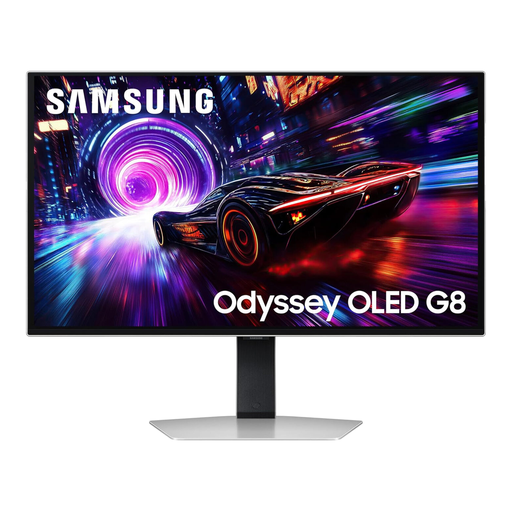
Samsung Odyssey OLED G8 LS32DG802SUXXU 32-inch Ultra HD monitor
Consider this larger Ultra HD OLED option when fine clues and text are a priority as well as dark-scene contrast.
Check that your gaming device supports the display mode you want. If HDR or variable refresh rate matters to you, confirm the exact model’s supported modes; also review its OLED care guidance for prolonged static content.
View on Joybuy
Common questions
Should I play detective games in complete darkness?
You do not need a completely dark room to appreciate a high-contrast monitor. Moorfields Private advises suitable lighting, limiting reflections and adjusting screen settings for comfort; try indirect ambient light if that feels better than playing with no room lighting.
How should I care for an OLED monitor with a static game HUD?
Avoid leaving paused games or other static images on screen longer than necessary, and follow the monitor maker’s panel-care instructions. LG UK says prolonged display of the same image may leave faint marks and describes Image Cleaning as a way to reduce them on applicable LG monitors.
Do detective adventures need a 4K monitor?
No: 4K is worth considering when small text, maps and environmental clues are a priority and your hardware can run your preferred games at that resolution. QHD remains a choice if its detail level suits you and you would rather place less rendering demand on your system; confirm the exact monitor and source device’s supported modes.


