Dark-scene immersion-first players
If shadow separation and HDR presentation shape your choice, compare the exact panel and named HDR certification. An OLED route also means paying attention to panel-care guidance during static scenes.


For dark-room squad survival matches, start by checking whether your PC and connection can run the resolution, refresh rate and variable refresh rate you want. A 27-inch QHD OLED is worth considering when dark-scene contrast and fast rated pixel response matter most; a QHD Fast IPS monitor is a route when you expect long periods of static HUD or desktop use and would rather avoid OLED-specific care. Check the exact model’s HDR certification, input limits and warranty terms before deciding.
If shadow separation and HDR presentation shape your choice, compare the exact panel and named HDR certification. An OLED route also means paying attention to panel-care guidance during static scenes.
If tracking movement during fast encounters comes first, check that your game, graphics hardware, connection and monitor can use the intended high-refresh mode together, including compatible variable refresh rate (VRR).
If the monitor will also show desktop windows or persistent game HUDs for long sessions, weigh OLED-care routines and the exact warranty terms alongside gaming specifications.
Choose between OLED and Fast IPS around your dark-room and static-content priorities, then check whether your equipment can deliver the mode you intend to use.
Consider it when: Dark-scene contrast and fast rated pixel transitions are central to your matches.
Keep in mind: Persistent HUDs and desktop elements make panel-protection settings and warranty terms part of the decision.
Consider it when: You want a high-refresh QHD setup for gaming and extensive desktop use without an OLED-care routine.
Keep in mind: Judge its HDR credentials on the exact model, and check refresh limits for the input you will use.
| Concern | What to check | Who this matters to |
|---|---|---|
| Dark-scene visibility and HDR | Compare panel type and the exact HDR claim. For a certification claim, check the named VESA DisplayHDR or DisplayHDR True Black tier; VESA says its logo is reserved for displays meeting its specifications. | If shadowed interiors and bright effects define the experience I want, I would put credible HDR credentials first. Around 36% of consumers put dark-scene visibility and HDR first. |
| Motion and VRR | Check refresh rate at your intended resolution and port, then match VRR support to your graphics hardware. | During quick squad encounters, I want to follow movement without choosing a mode my PC cannot deliver; around 29% of consumers prioritise motion and VRR. |
| Static HUDs and OLED care | For OLED, check the model’s panel-protection controls and written warranty terms. ASUS advises using its OLED Care settings to reduce the possibility of burn-in from static content. | If maps, status indicators or desktop windows stay visible for long sessions, I need an ownership routine I can live with. OLED care is the primary concern for around 21% of consumers. |
| System and connection fit | Match your source device, cable and input to the model’s resolution-specific refresh, HDR and VRR modes. Dell specifies different QHD refresh limits for the AW2725DM’s DisplayPort and HDMI inputs. | I need the monitor’s intended mode to work with the equipment I already use, rather than relying on its headline refresh rate. Around 14% of consumers put connection fit first. |
An unqualified label such as HDR-400 does not establish that a monitor has passed VESA DisplayHDR certification. That distinction matters when HDR presentation is a reason for choosing a dark-room monitor.
Check the exact model and named certification tier rather than relying on a similar-looking label; VESA reserves its DisplayHDR logo for displays meeting its specifications.
Dell specifies QHD at up to 180Hz through DisplayPort for the AW2725DM, but up to 144Hz through HDMI. The input you use can therefore change the available setup on that model.
Compare your source device, output, cable and intended resolution and refresh rate with the exact monitor’s technical sheet.
Persistent HUDs, logos and paused screens make static-image care relevant to an OLED gaming setup. ASUS recommends retaining OLED Care functions to reduce the possibility of burn-in from static content.
Follow the exact model’s care instructions, use display sleep when appropriate and avoid leaving static content on screen unnecessarily.
A warranty has its own coverage and claim conditions. Citizens Advice explains that warranties and guarantees add to legal rights rather than replacing them.
Keep proof of purchase and read both the seller’s and manufacturer’s written terms, including who handles a claim.
LG’s 27GS95QE-B is a model-specific reference point for a 27-inch QHD OLED setup.
Samsung’s QHD OLED G6 models illustrate why the complete model number matters when comparing high-refresh options.
Dell’s Alienware AW2725DM is a 27-inch QHD Fast IPS reference point for mixed gaming and desktop use.
ASUS provides OLED Care guidance relevant to players who expect persistent HUDs or long desktop sessions.
These OLED models offer different sizes and resolution or refresh-rate arrangements for dark-room play. In particular, check whether a larger screen or a dual-resolution mode suits your desk, game and connected hardware; the Fast IPS route remains a separate choice.
 Image unavailable
Consider this if you want an OLED screen larger than the 27-inch QHD starting point for dark-room matches.
 Image unavailable
This 27-inch QHD OLED configuration suits a player considering the article’s main OLED route.
 Image unavailable
Consider its two resolution modes if you want to choose separately between a 4K setup and a higher-refresh Full HD setup.
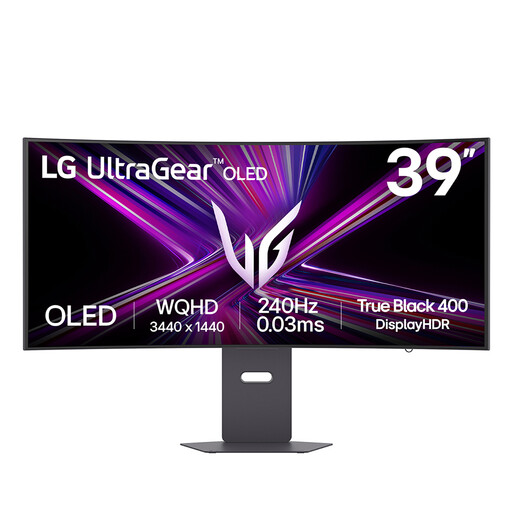 Image unavailable
This is a larger-screen OLED option if you have room for its 39-inch, 21:9 format rather than a conventional 27-inch setup.
 Image unavailable
Its 26.5-inch QHD configuration is worth considering if you want an OLED screen close to the 27-inch starting size.
No. OLED is worth considering when dark-scene contrast and fast rated pixel response are priorities, provided you are comfortable following panel-care guidance for static HUDs. A QHD Fast IPS monitor is another route if extensive desktop use and avoiding that care routine matter more; compare the exact models and connections before choosing.
No. Look for the exact certification name and tier if independently defined HDR criteria matter to you. VESA says only displays meeting its DisplayHDR specifications may carry its logo; a similar-looking HDR label alone does not establish certification.
The monitor, graphics hardware and chosen connection must support a compatible VRR mode. Check the exact model’s input specifications, then select a supported resolution and refresh rate and enable the relevant graphics settings. AMD describes FreeSync operation with compatible Radeon graphics and certified displays over supported HDMI or DisplayPort connections.
Read the exact seller and manufacturer warranty terms, keep proof of purchase and ask the retailer about its electrical-waste take-back route for your old monitor. Citizens Advice says warranties and guarantees add to legal rights. UK government guidance describes retailer take-back responsibilities for equivalent electrical waste, subject to the applicable scheme conditions.