What matters when choosing?
Your usual seat should lead the choice: a wide sofa makes viewing angle harder to compromise on, while a central seat leaves more room to prioritise other picture characteristics.
OLED TV
Consider it: You often sit off-centre and want strong contrast in candlelit interiors and night scenes.
Trade-off: Bright-room and reflection performance still need checking on the exact model.
IPS LCD TV
Consider it: Several viewers spread across a wide sofa and an OLED is otherwise unsuitable.
Trade-off: RTINGS says IPS generally offers wider angles than VA LCD, but lower contrast.
VA LCD, with or without Mini LED
Consider it: You normally watch near the centre and want to compare contrast-focused LCD models for your room.
Trade-off: RTINGS says VA panels generally have narrower viewing angles than IPS; Mini LED backlighting does not, by itself, establish how a TV looks from the side.
| Concern |
What to check |
Who this matters to |
| Side-seat picture |
Look for viewing-angle measurements for the exact model and screen size; for an LCD, establish its panel type. |
I sit to one side and want faces and colours to remain convincing from my seat. Around 42% of consumers put side-seat picture consistency first. |
| Dark-scene contrast |
Compare black-level and, where relevant, local-dimming behaviour in reviews of the exact TV. |
Dim interiors are central to what I watch, so I care most about whether shadowy scenes retain depth. Roughly 33% of consumers make dark-scene contrast their primary concern. |
| Bright-room viewing |
Check reflection handling and brightness results for the model, then consider where you normally sit. |
I usually sit near the centre and often watch with the room lights on, making that viewing arrangement my priority. Around 25% of consumers put bright-room and centre-seat practicality first. |
Brands to consider
These brands have relevant TV ranges, but suitability depends on the particular model and size rather than the badge.
LG
LG's UK OLED range is relevant if side-seat viewing and dark-scene contrast are both important; it includes C6 models in several sizes.
- LG says its OLED pixels can switch on and off independently, producing true blacks without a backlight.
- Compare independent results for the particular model and size, including its viewing angle and performance in your room.
Samsung
Samsung offers OLED and Neo QLED models, giving shoppers distinct display approaches to investigate.
- Samsung describes its OLED pixels as self-illuminating and its Neo QLED Quantum Mini LEDs as offering finer backlight control.
- Neither description establishes the viewing angle, HDR support or panel construction of every Samsung model and size.
Sony
Sony's BRAVIA OLED range is relevant to drama viewing; its UK specification for the BRAVIA 8 K-55XR8M2 lists HDR10, HLG and Dolby Vision support.
- The K-55XR8M2 specification identifies an OLED display and those three HDR formats.
- Check specifications and independent picture measurements for the precise Sony variant you choose; one model's specification does not describe the whole range.
OLED TVs on Joybuy
These OLED models are relevant if you want to investigate the wide-angle, dark-scene route. Their screen sizes differ, so compare each one with your viewing distance and check how the exact model looks from your usual side seat.
 No image available
Samsung S85F QE83S85FAE 83-inch OLED TV
Consider this OLED model for side-seat drama viewing if an 83-inch screen suits your viewing distance and available space.
The listed screen size is 2.11 m (83 inches), with 4K Ultra HD stated in the product name. Check viewing-angle results for this model before deciding.
View on Joybuy
 No image available
Samsung S90F 55-inch OLED TV (2025)
Consider this OLED model if a 55-inch screen fits your seating distance and you often watch dramas off-centre.
The product name states 4K. Check this model's viewing-angle and reflection performance for your usual seat and room lighting.
View on Joybuy
 No image available
Sony BRAVIA 8 K65XR80BP 65-inch OLED TV
This is a 65-inch OLED option to consider for side-seat viewing when the screen size suits your room.
The product name states 4K and HDR. Check the K65XR80BP variant's viewing-angle results and the HDR formats you need.
View on Joybuy
 No image available
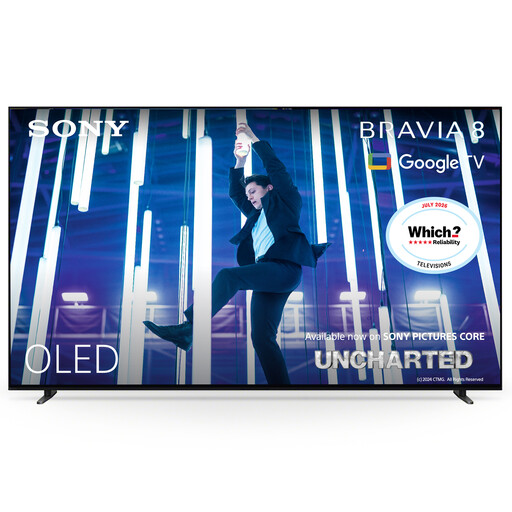
Sony BRAVIA 8 K55XR80BP 55-inch OLED TV
Consider this 55-inch OLED variant if that size suits your viewing distance and side-seat picture quality is a priority.
The product name states 4K and HDR. Check viewing-angle and room-light results for K55XR80BP rather than applying another BRAVIA variant's results to it.
View on Joybuy
 No image available
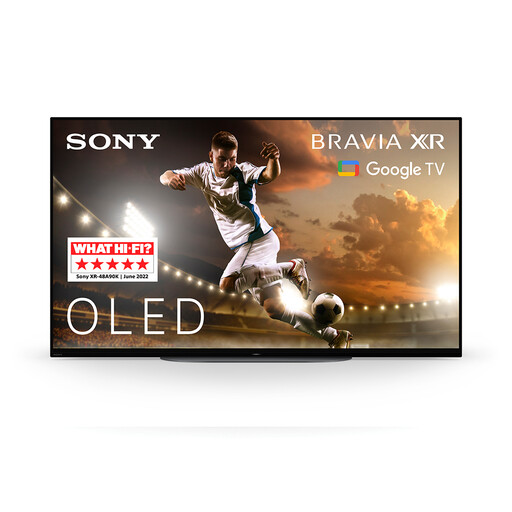
Sony BRAVIA A90 XR48A90K 48-inch OLED TV
This 48-inch OLED option is worth considering if that screen size fits your room and you watch dramas from the side.
The product name states 4K and HDR. Confirm the XR48A90K's off-centre picture and reflection handling against your seating and lighting.
View on Joybuy
Frequently asked questions
Should I choose OLED if I watch historical dramas from the side?
OLED is a strong starting point when both side-seat viewing and dark-scene contrast matter. LG describes how independently controlled OLED pixels produce blacks without a backlight, while RTINGS stresses the importance of viewing angle for wide seating. Check the exact TV's off-centre and room-light performance before choosing it.
Can an IPS LCD work for a wide sofa?
Yes: RTINGS says IPS LCD generally maintains a wider viewing angle than VA LCD. It also generally has lower contrast, so compare dark-scene results as well as side-seat results if period dramas are your main viewing.
How do I choose a screen size when some seats are off-centre?
Measure the distance from your usual seats to the screen, then check whether the size works across the seating area. LG's TV-size guidance suggests dividing viewing distance in inches by 1.2 as a starting point; account for the room layout rather than using the centre seat alone.
What UK energy information should I check for a TV?
Check the energy label for the exact TV, particularly when comparing screen sizes. GOV.UK says in-scope products must display an energy label at the point of sale, including on a website.
Where can I take an old TV for recycling in the UK?
A local household waste recycling centre is one option for an old TV; GOV.UK advises that electrical products can be taken to these centres. Check your local arrangements or an available retailer take-back option before transporting it.


