For art documentaries watched mainly in dim or controllable light, OLED is worth considering for dark scenes: its pixels can be controlled independently, avoiding backlight haloing around bright details. If windows or lamps regularly reflect in the screen, investigate Mini LED models too, but compare reflection handling on the exact TVs rather than assuming either panel type will suit the room. Measure the available space and check the picture from every regular seat before choosing a size.
Who is this for?
Evening art-film viewers
If you can dim the room, you may care most about black backgrounds, shadow detail and small bright elements in paintings, architecture or restoration footage. Independent TV guidance from RTINGS.com explains how OLED pixels can be controlled individually; the picture still needs assessing in your own lighting.
Daylight living-room viewers
Windows and lamps may remain visible in the screen while you watch. Reflection handling therefore deserves attention alongside the picture in darker scenes. RTINGS.com cautions that screen finish alone does not tell you how a TV handles reflections.
Shared-sofa small-room viewers
If people watch from different positions, check colour, brightness and dark scenes from each regular seat. RTINGS.com identifies viewing angle as an important consideration for wider seating arrangements; the TV also needs to fit its unit or wall space.
What matters when choosing?
Decide where and when you usually watch art documentaries, then compare the exact TVs in that lighting. Screen size and seating position can change the decision even after you have settled on a display type.
OLED TV
Consider it when: You mainly watch with the room lights controlled and want dark areas beside bright details without backlight haloing.
Trade-off: Reflections can still obscure a dark scene, so check the exact screen in your usual lighting.
Mini LED LCD TV
Consider it when: Daylight or lamps are difficult to control and you want to compare models for use in those conditions.
Trade-off: LCD backlighting does not control light pixel by pixel as OLED does; assess dark scenes and reflections on the particular model.
| Concern | What to check | Who this matters to |
|---|
| Dark-scene contrast and colour |
View a dim scene with small bright details on the exact TV; compare a restrained picture setting. |
If I usually watch with the lights low, I want shadows and artwork colours to remain convincing without a halo around bright details. Around 33% of consumers put this picture priority first. |
| Glare in daylight |
Check direct reflections from the intended screen position with curtains open and normal lamps on. |
When I cannot darken the room, reflections must not hide details I am trying to see. Around 27% of consumers place daytime readability first. |
| Off-centre viewing |
Assess colour and dark scenes from each regular seat, not just the position directly in front. |
If we share a sofa, I want the picture to hold up from the side seats as well as the centre. For around 20% of consumers, shared-seat viewing is the main concern. |
| Fit and energy information |
Measure available width and stand depth or check the mount pattern; compare the exact models' energy labels and product information sheets. |
I need the TV to fit the unit or wall and want to understand its energy information before ordering. Around 20% of consumers make fit and ownership information their first priority. |
What should you avoid?
-
Assuming OLED suits every room
OLED's pixel-level light control is relevant to dark documentary scenes, but reflections can make those scenes harder to see in daylight.
Compare the exact OLED and Mini LED models where the screen will sit, with curtains open and your usual lamps on.
-
Choosing by diagonal size alone
A TV that looks suitable by screen size may still overhang a narrow unit or need a different wall mount.
Measure the available width and depth, then check the exact variant's dimensions, stand arrangement, mass and mounting pattern.
-
Using the screen finish as a glare test
RTINGS.com explains that reflection handling involves more than whether a screen is described as glossy or matte.
Look at model-specific reflection assessments and, where possible, position the screen away from direct window or lamp reflections.
-
Overlooking viewing and old-TV arrangements
How you watch documentaries affects TV Licence requirements; replacing a TV also raises the question of how the old set will be taken back.
Check TV Licensing's rules for live programmes and BBC iPlayer, and confirm the seller's arrangement for taking back an old TV before delivery.
Brands to consider for these display types
LG
LG's UK C5 OLED range includes a 48-inch model to consider when a 55-inch screen would be difficult to place.
- LG describes the OLED48C54LA as offering true black levels and 100% Colour Fidelity; these are the brand's product claims.
- Those claims do not establish how this model handles reflections or looks from every seat. Assess it in the intended room conditions.
Sony
Sony's UK K-55XR5, or BRAVIA 5, is a 55-inch Mini LED LCD model to compare if that size fits the room.
- Sony lists local dimming, HDR10, HLG and Dolby Vision support for this model.
- Sony lists its width as approximately 122.8 cm and its VESA mounting pattern as 30.0 × 30.0 cm. Check both against a narrow unit or existing mount.
Samsung
Samsung's UK QE55QN90FATXXU is a 55-inch QN90F Neo QLED Mini LED model with glare-focused positioning from the manufacturer.
- It gives viewers in reflection-prone rooms a specific model to assess alongside independent reflection tests.
- The glare positioning is Samsung's claim, not a result that applies to every room. Samsung's product page identifies energy class F for this model; compare its full energy information with similarly sized TVs.
Joybuy product choices for small-room viewing
These TVs span compact OLED, Direct LED and a larger Mini LED option. Compare their stated screen sizes with your available space; the panel type or product title alone cannot settle reflection handling or the view from an off-centre seat.
 No image available
Sony BRAVIA A90 XR42A90K 42-inch OLED TV
Consider this 42-inch OLED if you mainly watch documentaries with the room lighting controlled. The product name specifies 4K HDR, Google TV and Dolby Vision; check the full cabinet footprint and screen reflections in your intended position.
View on Joybuy
 No image available
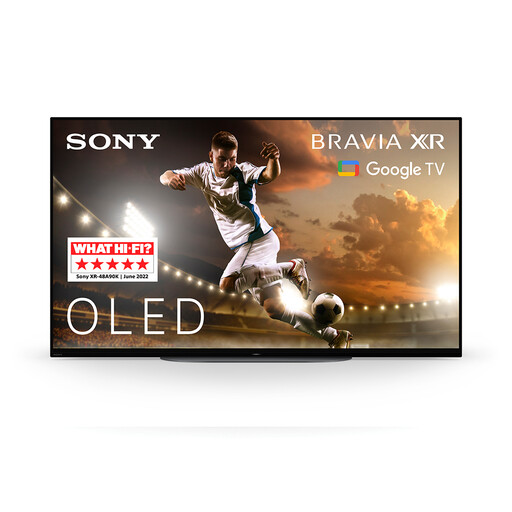
Sony BRAVIA A90 XR48A90K 48-inch OLED TV
Consider this 48-inch OLED when controlled-light viewing is the priority and that screen size suits your furniture. The product name specifies 4K HDR, Google TV and Dolby Vision; confirm the stand footprint and assess reflections before choosing it over a smaller screen.
View on Joybuy
 No image available
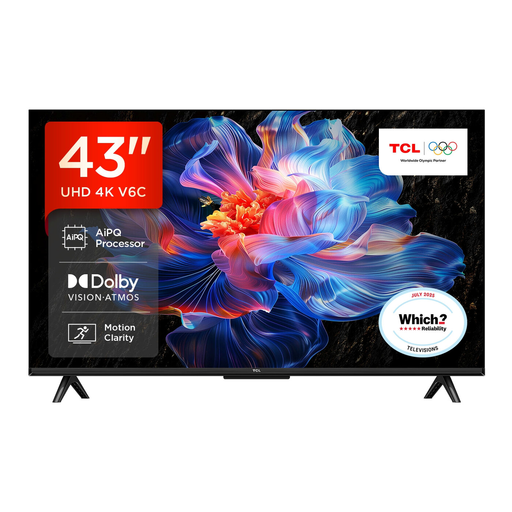
TCL 43V6C 43-inch Direct LED TV
Compare this 43-inch screen if a narrow unit limits your choices. Its product name specifies Direct LED, 4K HDR and Google TV; check dark scenes, reflections and the exact cabinet dimensions rather than assuming it behaves like OLED or Mini LED.
View on Joybuy
 No image available
Hisense U7Q Pro 55U7QTUK Pro 55-inch Mini LED TV
Investigate this Mini LED model if room lighting is hard to control and a 55-inch screen fits. Its product name specifies 4K HDR and VIDAA OS; assess reflections and the picture from your regular seats, and measure the unit before ordering.
View on Joybuy
 No image available
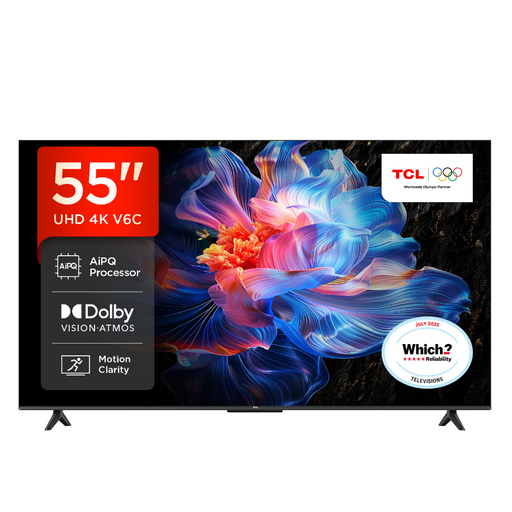
TCL 55V6C 55-inch Direct LED TV
Compare this model if you have room for a 55-inch screen but are also considering other display types. Its product name specifies Direct LED, 4K HDR and Google TV; verify the full footprint and judge dark scenes and glare on the exact TV.
View on Joybuy
Common questions
Do I need a TV Licence to watch art documentaries?
It depends on how you watch: TV Licensing says you need a TV Licence for live programmes and for BBC iPlayer, including its on-demand programmes. Watching only on-demand programmes on other services does not, by itself, require one.
Should I compare energy labels for TVs of different sizes?
Yes, but compare the full energy information as well as the letter grade. GOV.UK's energy-information guidance covers labels and product information sheets for products in scope; screen size and intended use also matter when weighing up two TVs.
How can I tell whether a TV will fit on my unit or wall?
Measure the available space against the exact model's width, stand depth and mounting details, rather than relying on its diagonal screen size. For example, Sony lists the 55-inch BRAVIA 5 at approximately 122.8 cm wide with a 30.0 × 30.0 cm VESA mounting pattern; other models and sizes need their own measurements.
What should I arrange for my old TV?
Ask the seller how it handles take-back of an old TV when you buy a replacement. GOV.UK's retailer guidance covers take-back of waste electrical equipment of the same type as the purchased item, including for online purchases; confirm the practical collection or drop-off arrangement before ordering.


