For historical adventures played mainly in a dark room, put contrast and HDR handling ahead of a headline refresh rate. OLED suits players who prioritise deep blacks and can accommodate the risk from prolonged static-interface use; a well-implemented Mini LED LCD offers another route for HDR highlights, while a conventional LCD may suit those less concerned with cinematic darkness. Whichever panel you choose, check the exact model against your PC or console.
Who is this choice for?
Dark-room story-game players
If caves, night skies and torch-lit interiors are central to what you play, black depth and visible detail in dark scenes deserve attention before extreme refresh rates. RTINGS identifies contrast as particularly important to picture quality in a dark room.
Players who also use a desktop extensively
OLED’s dark-scene appeal comes with an ownership decision if the same game interface or desktop elements remain on screen for long periods. Consider your usage pattern, panel-care settings and the exact warranty terms; RTINGS identifies static-heavy use as a continuing image-retention consideration.
PC and console players checking device fit
A detailed picture and smooth camera movement are useful only if your device can deliver the resolution and refresh rate you intend to use. Check the monitor’s specified inputs against your PC or console before choosing a screen.
What matters when choosing?
Choose a panel route for the way you use the screen, then assess the exact model’s dark-scene behaviour and its fit with your device and desk.
OLED or QD-OLED
Consider it when: Deep blacks for dark-room exploration matter most and your use is not dominated by the same fixed interface for long periods.
Trade-off: Image retention remains a consideration with static-heavy use, so check care features and warranty terms for the individual model.
Mini LED LCD
Consider it when: You want an LCD route with local dimming and HDR highlights rather than an OLED panel.
Trade-off: RTINGS notes that poorly implemented local dimming can produce halos or obscure dark detail; the Mini LED label alone cannot settle the choice.
Conventional LCD
Consider it when: Everyday desktop use matters more to you than maximum black depth in games.
Trade-off: Check contrast and HDR behaviour rather than assuming an HDR label will translate into convincing dark-room scenes.
| Concern |
What to check |
Who this matters to |
| Dark-scene contrast and HDR |
Look for assessments of the exact model’s contrast and HDR behaviour. For an LCD, examine how its local dimming handles bright objects against dark backgrounds. |
I want torch-lit rooms and night scenes to retain black depth without hiding details in shadow. Around 33% of consumers put dark-scene contrast and HDR first. |
| Static-interface use |
Consider how long fixed game interfaces or desktop elements remain visible, then read the OLED model’s care guidance and warranty terms. |
If I leave the same maps, menus or desktop elements on screen for long stretches, image-retention risk changes my panel choice. For around 20% of consumers, managing static-interface use is the primary concern. |
| Device fit and motion |
Confirm the resolution and refresh rate supported by your device, cable and chosen monitor input; check HDR and variable refresh rate support where needed. |
I need my PC or console to deliver the picture and motion settings I am choosing the monitor for. Device compatibility and motion come first for around 27% of consumers. |
| Screen format and desk fit |
Measure your desk and viewing distance, and decide whether the screen size and curvature suit your usual position. |
A large or curved display has to fit where I sit, not just look appealing on a specification sheet. Around 20% of consumers make screen format and desk fit their leading concern. |
Buying pitfalls
-
Choosing by the HDR label alone
An HDR label does not describe how well a monitor preserves detail in dark scenes. RTINGS identifies contrast and effective local dimming as important to the appearance of dark backgrounds and bright highlights.
Look for evidence about the exact model’s HDR and contrast behaviour; for an LCD, pay particular attention to halos and lost shadow detail.
-
Assuming OLED care features eliminate image retention
Panel-care or cooling measures should not be treated as a guarantee for repeated, prolonged display of fixed interfaces. RTINGS continues to identify static-heavy use as an image-retention concern.
If your games or desktop use keep the same elements visible for long periods, compare the OLED model’s care guidance and warranty coverage with an LCD alternative.
-
Assuming the highest refresh rate works through every input
A monitor’s advertised maximum does not by itself establish the resolution, refresh rate and other display features available from your particular device and connection.
Check the monitor documentation against your GPU or console and the cable and input you plan to use.
-
Overlooking the old monitor when replacing it
Government guidance on waste electrical and electronic equipment addresses the recovery and recycling of electrical products rather than disposal with general waste.
Before replacing your display, check the retailer’s take-back options or an appropriate local electrical-recycling route.
Relevant brands to consider
ASUS ROG
A QD-OLED route illustrated by the ROG Swift OLED PG32UCDM for players considering a large 4K screen.
- ASUS specifies a 32-inch 4K QD-OLED display and 240 Hz refresh rate for the PG32UCDM.
- ASUS describes cooling measures intended to reduce burn-in risk; that claim does not remove the need to consider static-heavy use and the model’s warranty terms.
Alienware
A curved QD-OLED route illustrated by the AW3225QF for a close, centred gaming setup.
- Dell specifies a 32-inch-class curved 4K QD-OLED display with a 240 Hz refresh rate for the AW3225QF.
- The curved, large-screen format warrants checking your desk depth and preference for a flat or curved picture.
AOC
A Mini LED LCD route illustrated by the 27-inch U27G4XM for players who prefer not to choose OLED.
- AOC lists a 4K Fast IPS Mini LED panel and 160 Hz refresh rate at UHD for the U27G4XM.
- Local-dimming results depend on implementation; assess halos and shadow detail for the exact model rather than relying on the Mini LED designation.
Joybuy monitors for this setup
These monitors offer OLED and LCD choices relevant to dark-room gaming, along with different screen formats. Use the panel and connection checks above to decide which listed model fits your games, device and desk.
 No image available
Samsung 32-inch Odyssey OLED LS32FG810SUXXU gaming monitor
Consider this OLED model if dark-room black depth matters to you and you can account for prolonged fixed-interface use.
Check its supported input modes against your device and read the exact warranty terms before choosing it for regular static-HUD use.
View on Joybuy
 No image available
Dahua 32-inch 4K 165 Hz curved OLED gaming monitor
This is a curved OLED option if you want a large screen for dark-room adventures and have space for its shape.
The product name specifies 4K, 165 Hz, HDR400 and USB-C 65 W. Assess exact-model HDR behaviour if it is decisive, and check panel-care guidance and warranty terms for prolonged static use.
View on Joybuy
 No image available
LG UltraGear G8 27G850A 27-inch 4K Nano IPS gaming monitor
Consider this non-OLED option if a 27-inch screen and device compatibility matter more to you than choosing an OLED panel.
The product name lists dual 240 Hz and 480 Hz modes, DisplayHDR 600, DisplayPort 2.1 and HDMI 2.1. Check which resolution applies to each mode and seek exact-model contrast and dark-scene assessments.
View on Joybuy
 No image available
Acer X Predator X49X 49-inch curved ultra-wide QD-OLED gaming monitor
This QD-OLED model is worth considering if you want an ultra-wide view and can accommodate its substantial desk footprint.
Its product name specifies a 32:9 format, 1800R curve, Double Quad HD resolution and 240 Hz refresh rate. Confirm that your games and device suit the format, and consider OLED image-retention risk with long periods of fixed-interface use.
View on Joybuy
 No image available
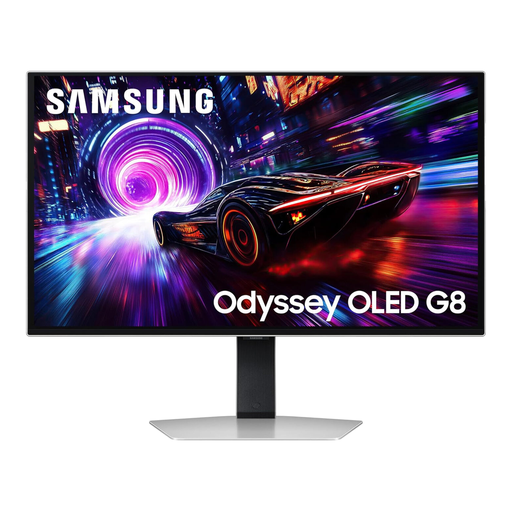
Samsung Odyssey Gaming OLED G8 LS32DG802SUXXU 32-inch Ultra HD monitor
Consider this 32-inch OLED model if you want a large screen for dark-room play and are comfortable weighing OLED ownership considerations.
Check the exact model’s HDR behaviour, the resolution and refresh rate available from your chosen input, and its panel-care guidance and warranty terms.
View on Joybuy
Frequently asked questions
Is OLED automatically the right choice for historical adventures in a dark room?
No. OLED is worth considering when deep blacks are your priority, but a well-implemented Mini LED LCD is an alternative if you want HDR highlights without choosing an OLED panel. Prolonged static-interface use and the exact model’s performance can change the decision.
Does local dimming guarantee convincing dark-room HDR?
No. RTINGS notes that poor local dimming can cause halos around bright objects or hide detail in dark areas. Assess how the particular LCD monitor handles both before relying on its Mini LED or HDR label.
What should I check before connecting a PC or console?
Confirm that the device, cable and chosen monitor input support the resolution and refresh rate you want, along with HDR and variable refresh rate where relevant. A maximum refresh rate in a monitor’s specifications need not apply to every input or display mode.
What should I do with a monitor I am replacing?
Use an appropriate electrical-recycling route rather than putting the old monitor in general waste. Government guidance on waste electrical and electronic equipment addresses recovery and recycling; check whether your retailer offers take-back or your local area has a suitable collection point.


