Who is this for?

Dark-room contrast-first viewers

If you watch evening matches with the lights dimmed, look closely at how a TV separates score graphics and bright court details from darker surroundings. OLED is a route to investigate, but check the picture on the exact model and size.

Viewers focused on ball movement

If serves, rallies or camera pans make blur or processing artefacts distracting, try tennis footage with the model’s motion controls. Which? notes that the benefit of a 120Hz feature depends on whether the content can use it.

Large-screen and mixed-room viewers

If the same TV must suit a larger viewing space or viewing beyond dark-room sessions, compare Mini LED models as well as OLED. Samsung UK lists Neo QLED models in a range of sizes; check the particular screen’s local dimming with bright objects against a dark image.

What matters when choosing?

OLED TV

Consider it when: separation between bright tennis details and dark surroundings is your priority in a light-controlled room.

Bear in mind: an OLED panel does not establish how a particular match will look in motion; assess the exact model and its settings.

Mini LED TV

Consider it when: you want to compare a wider selection of screen sizes or will also watch outside a dark room.

Bear in mind: its backlight dims in zones rather than pixel by pixel, so inspect bright graphics against dark backgrounds on the model you choose.

Concern What to check Who this matters to
Dark-room contrast Compare the exact OLED or Mini LED model using a dark scene with bright score graphics; look for distracting halos. I watch with the lights dimmed and want the court and graphics to stay distinct from darker areas. Around 46% of consumers would put dark-room contrast first.
Tennis motion Try serves and camera pans from your intended viewing source with different motion settings; do not rely on the refresh-rate label alone. Following the ball matters more to me than a specification that looks impressive on its own. Around 36% of consumers would make motion clarity their primary concern.
Screen size and other viewing Check that the screen fits your room and viewing position, then assess its picture in both the dark-room setup and your other viewing conditions. I need a screen that suits the space and will use it for more than evening tennis. Around 18% of consumers would prioritise screen size and flexibility.

Buying mistakes to avoid

  • Assuming 120Hz guarantees clear tennis motion

    A TV’s refresh or input capability does not tell you the frame rate of a tennis broadcast or how its motion processing will look. Which? notes that the value of 120Hz depends on the content.

    Try live or recorded tennis from the source you expect to use, and compare motion settings for blur and unwanted artefacts.

  • Expecting Mini LED dimming to look identical to OLED

    Samsung UK describes Mini LED as a backlight technology using local dimming. Because that control is not pixel by pixel, bright objects against dark surroundings deserve a model-specific check.

    Inspect a dark scene with bright score graphics or subtitles before deciding whether the picture suits your room.

  • Judging energy information by screen technology alone

    The label and product information sheet let you assess the particular TV and screen size rather than making an assumption from its panel type.

    For an in-scope TV offered online in the UK, compare its energy label and product information sheet, as described in GOV.UK guidance.

  • Overlooking the rules for watching live tennis

    TV Licensing says a TV Licence is needed to watch or record live TV through a channel or streaming service, and to use BBC iPlayer.

    Check your household’s licence position if those are how you plan to watch matches.

Brands to consider

LG

Relevant when comparing OLED models for dark-room viewing.

  • LG UK describes pixel-level picture control and 4K video capability up to 120Hz for its cited OLED B6.
  • LG’s stated black-level claims and this model’s specifications do not establish tennis-motion performance across its OLED range.

Samsung

Relevant when comparing Neo QLED Mini LED models and screen sizes.

  • Samsung UK describes Mini LED backlighting with local dimming and lists a range of Neo QLED sizes.
  • Local dimming is not pixel-level control; assess bright objects against dark backgrounds on the exact model.

Sony

Relevant when comparing OLED models with BRAVIA picture processing.

  • Sony UK specifies an OLED display, a 120Hz panel and 4K signal support up to 120Hz for its cited BRAVIA 8 variant.
  • Those specifications do not establish how a different Sony model will render a tennis broadcast.

Joybuy TVs for dark-room tennis

These TVs provide OLED and Mini LED options for the dark-room tennis decision. Compare their stated sizes and features, then check motion with your viewing source and assess the exact model’s energy information.
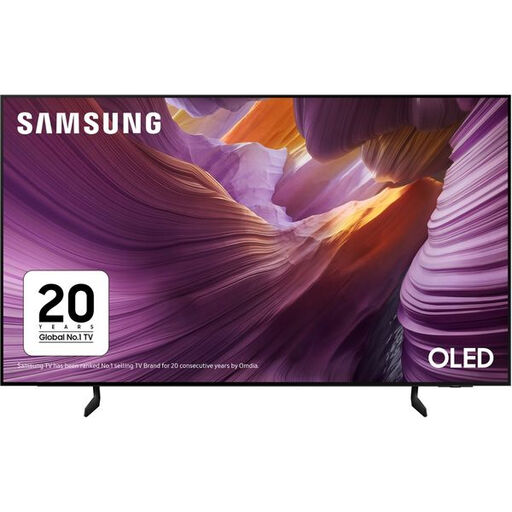
Samsung QE65S85FAE 65-inch TV

Samsung QE65S85FAE 65-inch 4K Smart TV

An OLED option to consider if dark-room contrast is your priority. Check tennis footage and motion settings on this exact model rather than assuming its panel type determines ball clarity.

View on Joybuy
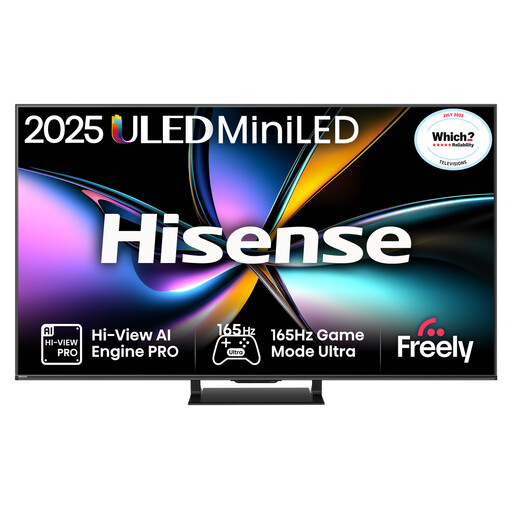
Hisense U7Q Pro 65U7QTUK Pro 65-inch Mini LED TV

Hisense U7Q Pro 65U7QTUK Pro 65-inch Mini LED 4K TV

A Mini LED option for comparing 65-inch screens. The title lists a 165Hz Game Mode Ultra feature; assess tennis motion from your intended source separately, and inspect bright graphics against dark backgrounds.

View on Joybuy
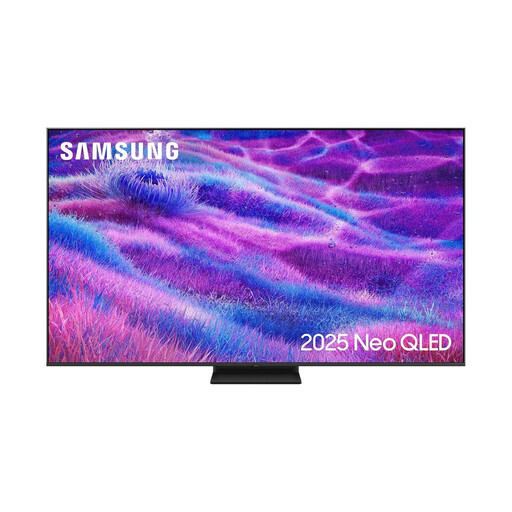
Samsung QE75QN80FAU 75-inch TV

Samsung QE75QN80FAU 75-inch 4K Smart TV

A 75-inch Mini LED option if screen size is a deciding factor. Check that it fits your viewing space, and inspect its handling of score graphics against a dark image.

View on Joybuy

TCL 75Q7C 75-inch QD-Mini LED TV

TCL 75Q7C 75-inch QD-Mini LED 4K TV

A larger-screen Mini LED option for viewers comparing dark-scene detail and tennis motion. Its title states up to 2048 local-dimming zones and a 144Hz native refresh rate; confirm the zone specification for this variant and judge the picture with tennis footage.

View on Joybuy

Sony BRAVIA A90 XR42A90K 42-inch OLED TV

Sony BRAVIA A90 XR42A90K 42-inch OLED 4K TV

An OLED option if a 42-inch screen suits your setup. The listed HDR and Google TV features do not establish tennis-motion performance; try the match source you plan to watch.

View on Joybuy

Questions about dark-room tennis TVs

Should I choose OLED or Mini LED for tennis in a dark room?

Compare OLED first if separation between bright details and dark surroundings matters most to you. Mini LED remains worth considering when screen size or other viewing conditions affect the decision; inspect local dimming on the exact model.

Does a 120Hz TV guarantee a clearer view of the ball?

No. Panel and input specifications describe capabilities, while the source and the TV’s motion settings affect what you see. Which? notes that the value of 120Hz depends on whether the content can use it, so try tennis footage before deciding.

Which energy information should I check for a TV bought online?

Compare the energy label and product information sheet for the exact TV and screen size. GOV.UK guidance says in-scope electronic displays, including TVs, must show an energy label at the point of sale, including on a website, and have a product information sheet.

Do I need a TV Licence to stream a live tennis match in the UK?

Yes, if you watch or record live TV through a channel or streaming service. TV Licensing also says a licence is needed for BBC iPlayer, including on-demand programmes.

Can I cancel an online TV order if its motion handling does not suit me?

For a qualifying distance sale, the cancellation period ends 14 days after the day you receive the TV, under the UK Consumer Contracts Regulations. Check the seller’s instructions for arranging its return; cancellation is separate from remedies for faulty, damaged or misdescribed goods.