Dark-stage detail seekers
You mainly watch performances with dark theatre backgrounds, spotlights and detailed costumes, so contrast and colour are central to your choice.


Start by measuring the available space and checking where you sit, then compare 55-inch OLED and Mini LED TVs using a familiar ballet recording. OLED is a useful starting point when dark-stage contrast and costume colour matter most; if you usually watch in daylight, assess Mini LED models for brightness and motion handling. Neither screen type settles the question without checking the picture in your usual lighting and the exact TV’s fit.
You mainly watch performances with dark theatre backgrounds, spotlights and detailed costumes, so contrast and colour are central to your choice.
You often watch in a bright living room and want to assess movement clarity and how the picture looks in daylight, as well as its colour and contrast.
Your cabinet or wall position limits the choice. The TV’s full dimensions, stand arrangement and mounting pattern matter as much as its screen diagonal.
For ballet recordings in a small living room, check physical fit before comparing how shortlisted TVs show dark scenes, spotlights and movement under your usual lighting.
| Concern | What to check | Who this matters to |
|---|---|---|
| Dark-stage contrast and colour | Compare the same dark-stage recording on shortlisted TVs. Look at costume detail, spotlight highlights and colour in the picture modes you would use. | If dark backdrops and detailed costumes are what draw me into a recording, I want both the stage and performers to remain distinguishable. Around 44% of consumers put this picture detail first. |
| Movement and daylight viewing | Watch fast turns and camera pans in your normal daytime light. Try motion settings to see whether you prefer their effect. | When I watch during the day, I want to follow moving dancers without the room’s light making the picture difficult to see. Roughly 33% of consumers make daylight viewing and movement their primary concern. |
| Fit and setup | Check the exact TV’s width and depth with your chosen stand position, or its mounting pattern and wall requirements. | My available cabinet or wall space sets a firm limit, so I need the complete TV and its intended setup to fit. About 23% of consumers place fit and installation first. |
The diagonal does not tell you the cabinet footprint or mounting requirements. Sony UK lists its 55-inch BRAVIA 5 at approximately 122.8 × 73.9 × 21.0 cm in one inside-stand configuration; another stand position or model needs its own check.
Measure the cabinet, wall and delivery route, then confirm the selected model’s stand position, VESA mounting pattern and wall suitability before ordering.
The manufacturer examples emphasise different display features: LG describes true black levels for its OLED C5, while Sony describes local dimming and XR Motion Clarity for its Mini LED BRAVIA 5. Those descriptions alone cannot tell you which picture you will prefer.
Compare familiar footage containing dark scenery, bright spotlights and moving dancers on both routes in lighting similar to your living room.
GOV.UK’s energy-information guidance covers in-scope televisions and requires an energy label at the point of sale, including on a website, and a product information sheet.
Use the label and sheet for the exact model and screen size you intend to buy when comparing shortlisted TVs.
GOV.UK says electrical products marked with the crossed-out wheelie-bin symbol should not go in household rubbish. A recycling centre or a retailer’s like-for-like take-back route may be relevant when replacing a TV.
Arrange a suitable recycling or take-back route before the replacement arrives.
The 55-inch OLED55C55LA C5 is an OLED model to consider when dark-stage contrast and costume colour are priorities.
Sony offers relevant models on both routes: the QD-OLED BRAVIA 8 II and the Mini LED BRAVIA 5.
The Z95B OLED range is relevant if the TV’s built-in sound matters because you do not plan to add separate speakers.
These 55-inch Joybuy listings include both OLED and Mini LED models. Use them to compare the two display routes, then check each TV’s fit and picture with the recordings and room lighting that matter to you.
 No image available
A Mini LED option to compare if you watch performances in daylight or want to assess moving dancers on your own footage.
The product title identifies 165 Hz Game Mode Ultra and a built-in subwoofer; that game-mode designation does not establish how ballet recordings will look.
Confirm the exact model’s dimensions, stand arrangement and energy information before ordering.
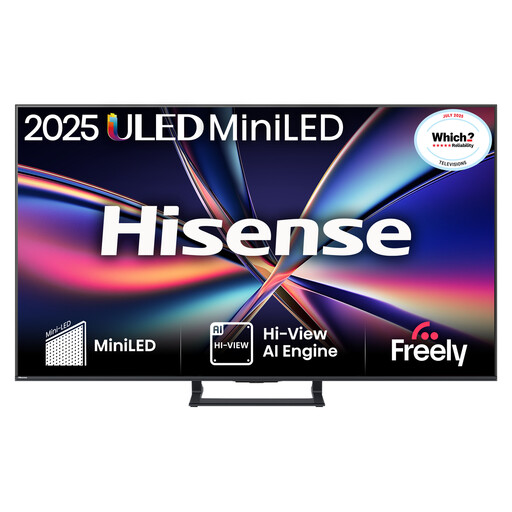 No image available
Another Mini LED model to assess where daytime viewing and movement are important.
Its product title specifies 144 Hz Game Mode PRO and a built-in subwoofer. Judge motion using a familiar performance rather than the game-mode designation alone.
Check its complete footprint and the energy information for this exact variant.
 No image available
An OLED choice to compare if dark-stage scenes and costume colour are central to your viewing.
Check how your usual recordings look in both dim and daytime light, and measure the TV with its stand before choosing a position.
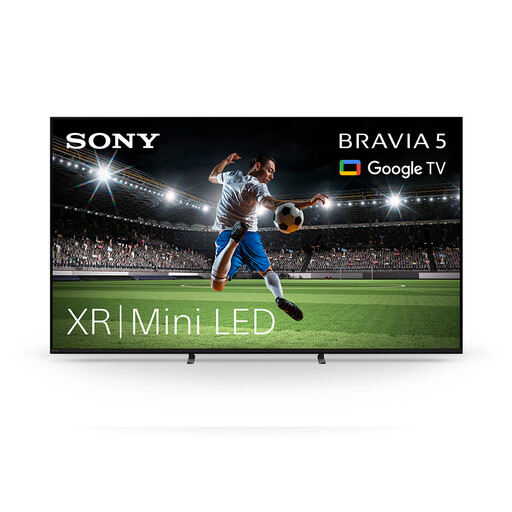 No image available
Consider this Mini LED model when your viewing room is often bright and dancer movement is a priority.
Sony UK describes XR Motion Clarity for BRAVIA 5. Its specifications list approximately 122.8 × 73.9 × 21.0 cm for the 55-inch TV in an inside-stand configuration; confirm the footprint for the stand position you will use.
Compare its motion handling and dark scenes with the same recording before deciding.
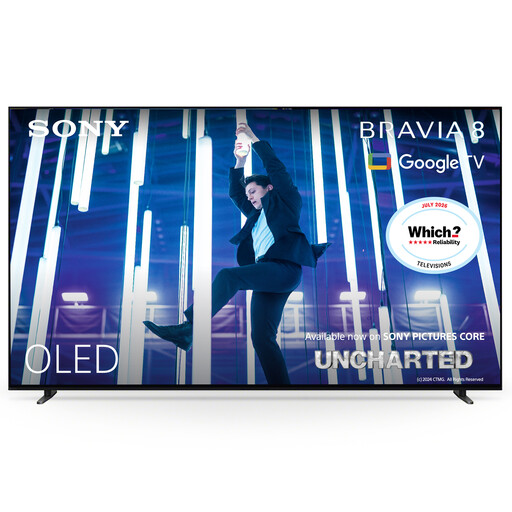 No image available
An OLED model to assess for recordings with dark theatre backgrounds and brightly lit performers.
The product title identifies 4K HDR and Dolby Vision. Check its exact stand footprint and mounting requirements, and use familiar footage to judge movement and colour in your room.
Start with OLED if dark-stage contrast and costume colour matter most in controlled light; consider Mini LED if you commonly watch in a bright room and want to assess movement there. Compare both with the same recording, because panel labels and manufacturer feature descriptions do not settle how a particular TV will look from your seat.
Measure usable cabinet width and depth, wall space, the delivery route and your seating position. Check dimensions for the exact model and selected stand arrangement, or its VESA pattern if you plan to wall-mount it; Sony UK, for example, specifies an inside-stand configuration for its 55-inch BRAVIA 5 rather than one footprint for every setup.
For televisions within the scope of UK energy-information rules, GOV.UK says an energy label must be shown at the point of sale, including online, and a product information sheet must be available. Compare those documents for the exact models you are considering rather than assuming similarly sized TVs have the same energy information.
Use an appropriate electrical-waste route rather than putting a TV marked with the crossed-out wheelie-bin symbol in household rubbish. GOV.UK identifies household waste recycling centres and says retailers must accept an old electrical product free on a like-for-like basis when you buy a new one, whether the purchase is online or in-store; arrange the handover before delivery.