Viewers spread across the room
People on a wide sofa, dining seats or armchairs will not all see the screen head-on. If that describes your match-day seating, judge picture consistency from the furthest side seats, not just the centre.


Start by comparing OLED TVs if keeping the picture consistent for viewers in side seats is the deciding need: LG identifies wide viewing angles as a characteristic of OLED. In a room with strong daylight or reflections, compare the exact OLED model with a bright-room QLED or Mini LED alternative too. Brightness alone cannot establish what either TV will look like from your seats, so check the lighting, motion, screen fit and electricity use before choosing.
People on a wide sofa, dining seats or armchairs will not all see the screen head-on. If that describes your match-day seating, judge picture consistency from the furthest side seats, not just the centre.
Windows and lamps can compete with the picture during a daytime or early-evening match. You need to consider reflections and screen brightness alongside the view from off-centre seats.
You want the pitch to be easy to follow from several seats, but the TV must fit the room and your electricity-use priorities. Compare sizes using the actual seating layout and each model’s energy label.
For a football final watched from side seats, settle the viewing-angle question first, then compare the TVs that remain suitable under your room lighting and seating layout.
Consider it when: Keeping the picture consistent for viewers well off-centre is your main priority; LG identifies wide viewing angles as an OLED characteristic.
Check: Brightness and reflection handling on the exact model in lighting like your match-day room.
Consider it when: Strong daylight is difficult to control; Samsung positions its QLED and Neo QLED ranges for bright-room viewing.
Check: Bright-room positioning does not establish the view from your side seats. Assess the exact model from those positions.
Consider it when: You are comparing more panel types and the principal viewers sit near the centre.
Check: Do not assume a 4K label tells you how its picture will look from the side; test the intended seats on the exact TV.
| Concern | What to check | Who this matters to |
|---|---|---|
| Off-angle picture | Watch a football clip from each intended seat; assess the exact TV’s viewing angle separately from its 4K resolution. | If my guests sit well to either side, I want the pitch and players to remain clear to them. Around 42% of consumers put side-seat picture consistency first. |
| Reflections and motion | Check the screen under match-day lighting, then assess fast play and camera pans with the settings you would use. | With daylight or lamps in view, I do not want reflections or distracting blur to interrupt the match; roughly 33% of consumers place these bright-room and motion needs first. |
| Size, fit and electricity use | Measure the viewing layout and installation space; compare each TV’s energy-label consumption in kWh per 1,000 hours. | I need a screen that works for the spread of seats without overlooking its fit or electricity use. About 25% of consumers make those size and ownership considerations their first priority. |
Resolution does not tell you whether the picture stays consistent when someone moves away from the centre.
Compare panel types, then view a football clip from the seats people will actually use. LG identifies wide viewing angles as an OLED characteristic, making OLED a useful starting comparison.
RTINGS advises matching both peak brightness and screen coating to the room. A window or lamp reflected in the screen can still affect what viewers see.
Assess reflection handling on the exact TV with lighting similar to your planned setup, including the view from the side.
The rating letter alone does not show how much electricity two different-sized TVs will use. Energy Saving Trust cautions that a larger appliance can use more energy despite a better rating.
After deciding which sizes fit, compare the televisions’ SDR and, where shown, HDR consumption figures in kWh per 1,000 hours.
The screen and access to a live broadcast are separate matters. TV Licensing says you need to be covered by a TV Licence to watch live TV on a TV service or streaming service, or to use BBC iPlayer.
Check TV Licence coverage and how the particular match will be shown before the final.
Compare named ranges and models rather than assuming every TV from a brand shares the same viewing-angle, motion or installation characteristics.
LG’s OLED range is relevant when picture consistency from side seats leads the decision.
Samsung offers OLED alongside QLED and Neo QLED routes for viewers weighing side-seat needs against a bright room.
Sony’s OLED models are relevant to a side-seat comparison when installation and source connections also need attention.
These OLED televisions offer different screen sizes for a side-seat football setup. Use each size to narrow your room-fit choice, then assess the exact TV’s reflections and sports picture from your intended seats.
 No image available
Consider this OLED model if a 55-inch screen fits the spread of your side seats. Check its reflection handling in your room and watch football from those seats before deciding.
 No image available
Consider this 83-inch model if your room and seating layout can accommodate a large OLED screen. Measure the installation space and assess reflections from the side seats.
 No image available
Consider this 42-inch OLED if a smaller screen suits your room. Check that viewers across the side seats can follow the action comfortably, and assess reflections and motion on the exact TV.
 No image available
This 65-inch OLED is an option when several viewers need to see the screen from different seats. Check the installation dimensions and compare its sports picture and reflections under your room lighting.
 No image available
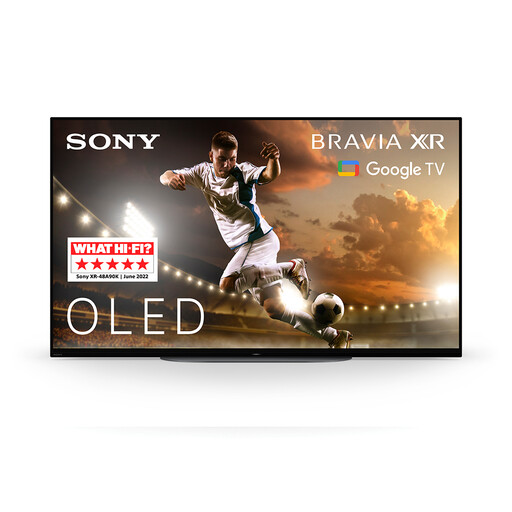
Consider this 48-inch OLED where the seating distance and available space favour this size. Assess football motion and reflections on the exact TV, particularly from the outer seats.
Not necessarily, but OLED is a sensible starting comparison when side-seat picture consistency is the main requirement: LG identifies wide viewing angles as an OLED characteristic. Compare the exact TV under your room lighting, and assess any QLED, Mini LED or conventional LED alternative from the same seats.
Watch a football broadcast or fast sports clip from every intended seat with lighting similar to match day. Check pitch colour, reflections and whether moving play looks natural; a demonstration viewed only from directly in front cannot answer the side-seat question.
Compare their energy-label consumption in kWh per 1,000 hours for SDR and, where shown, HDR, rather than relying only on the rating letter. Energy Saving Trust notes that a larger appliance can use more energy despite a better rating.
You need to be covered by a TV Licence to watch live TV on a streaming service or any TV service, according to TV Licensing. Its guidance also says you need coverage to use BBC iPlayer; check separately where the particular match is available.