Dark-scene strategy players
If you play atmospheric campaigns in a dim room, look closely at how a monitor specifies contrast and how comfortably you can set its brightness for maps and night scenes.


For turn-based strategy in a dark room, choose a panel and brightness setup that suit dark maps and long reading sessions before paying for the highest refresh rate. OLED and high-contrast VA models are worth considering when dark-scene contrast comes first; an IPS model with adjustable brightness and comfort controls may better match your priorities if you spend hours reading menus. Check the exact model’s contrast specification, controls, connections and stand rather than assuming monitors with the same panel type behave alike.
If you play atmospheric campaigns in a dim room, look closely at how a monitor specifies contrast and how comfortably you can set its brightness for maps and night scenes.
If tooltips, menus and turn planning occupy much of your session, brightness adjustment and a stand that fits your desk matter alongside gaming specifications.
If the same screen also serves faster games, refresh-rate modes and adaptive-sync compatibility deserve more attention than they would for turn-based play alone.
Choose the dark-room viewing characteristics and controls you need first, then decide how much the monitor must also serve faster games.
Consider it: If dark-scene contrast is central to your choice and you also want a high-refresh gaming specification.
Bear in mind: Check the model’s panel-care guidance before using it for extended sessions with static menus.
Consider it: If you want a conventional LCD and can find an exact model with a contrast specification suited to your priorities.
Bear in mind: Compare the model’s response modes, connections and stand rather than relying on its panel label alone.
Consider it: If brightness adjustment and configurable features for reading-heavy sessions matter more to you than the highest listed contrast.
Bear in mind: The BenQ EX2710Q lists 1000:1 native contrast; check the specification of any other IPS model you consider.
| Concern | What to check | Who this matters to |
|---|---|---|
| Dark-scene contrast | Check the exact panel type, stated contrast and brightness controls; contrast figures can use different measurement conditions. | I want dark maps and night scenes to remain distinguishable without setting an uncomfortable brightness. Around 50% of consumers would put dark-scene contrast first. |
| Long-session comfort | Try the brightness range and check the stand adjustment and any configurable display modes you need. | When I spend hours reading tooltips and planning turns, I need a screen I can adjust to my room and seating position. Roughly 30% of consumers would make long-session comfort their primary concern. |
| Mixed-genre gaming | Check refresh-rate limits for your chosen port and adaptive-sync compatibility with your hardware. | I also use this monitor for faster games, so I care whether my device and connection can use the display modes I want. Around 20% of consumers would prioritise mixed-genre gaming. |
A 165 Hz or 240 Hz figure does not tell you whether the screen is OLED, VA or IPS, or how its contrast is specified.
For dark-room strategy play, examine the panel and contrast specification first. Then choose refresh-rate modes that suit your other games and hardware.
Maximum brightness need not be your everyday setting in a dim room. BenQ says its Brightness Intelligence technology lowers brightness in darkness on supported models.
Start with a comfortable manual setting or a suitable automatic mode, then reassess while reading text and viewing dark maps.
Dell UK lists specifications for the S2722DGM while marking that model unavailable.
Before ordering an alternative, confirm its exact model number, connections, stand, warranty information and energy label on the retailer’s page.
LG UK lists the 27GS95QE-B as a 27-inch QHD OLED gaming monitor with 240 Hz refresh rate and a stated 1.5M:1 contrast ratio.
Dell UK specifies the S2722DGM as a 27-inch curved QHD VA monitor with 3000:1 native contrast and up to 165 Hz through DisplayPort.
BenQ lists the EX2710Q as a QHD IPS model with 165 Hz refresh rate, Brightness Intelligence Plus and an adjustable stand.
These monitors offer different sizes, screen formats and listed gaming features for a dark-room strategy setup. Check whether your desk, games and source device suit the exact format before choosing.
 No image available
Consider this 32:9 format if you want a wide screen for strategy games and have room for it on your desk.
The title specifies a 49-inch QD-OLED panel, Double Quad HD resolution, a 1800R curve and 240 Hz refresh rate. Check game support for the ultrawide format and whether its brightness controls suit your room.
 No image available
This is an OLED option if you prefer a 34-inch ultrawide screen to a conventional 16:9 monitor.
The title specifies WQHD resolution and 240 Hz refresh rate. Check how the format works with your games and review the listing’s OLED screen-protection guidance for extended static images.
 No image available
Consider this conventional-size curved screen if a 32:9 ultrawide would not suit your desk or games.
The title specifies 2560 × 1440 QHD, 165 Hz, flicker-free and low-blue-light features, and VESA 100 × 100 mm mounting. Check the stand adjustment you need and the connection required for your intended refresh rate.
 No image available
This VA option suits a setup where you specifically want a 49-inch, 32:9 screen and can accommodate its size.
The title specifies 5120 × 1440 DQHD resolution and 165 Hz refresh rate. Confirm game and device compatibility, the stand’s actual adjustment range and the refresh-rate limit for your chosen input.
 No image available
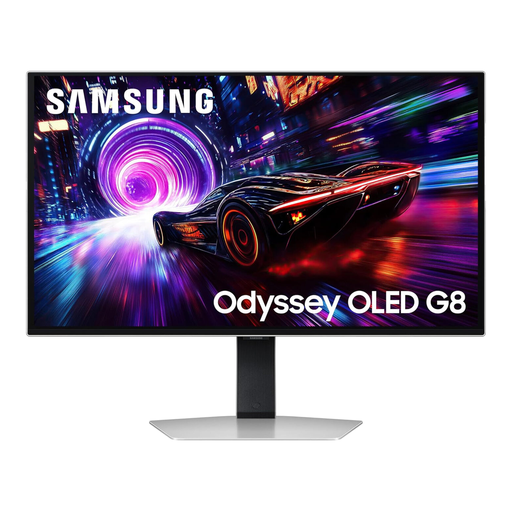
Consider this 32-inch OLED if you prefer that screen size for maps and menus rather than an ultrawide format.
Confirm the exact model before ordering: the listing also uses the model designation G81SF. Check its brightness controls and follow its guidance on static images during long strategy sessions.
No: 240 Hz is not a requirement for turn-based play. Prioritise the panel, dark-room brightness setting and space for maps and menus; a higher refresh rate becomes more relevant if you also play faster games. Check which mode your device and connection can actually use.
Start at a level that feels comfortable while reading menus and viewing dark maps, rather than using maximum brightness by default. BenQ says its Brightness Intelligence technology reduces brightness in darkness on supported models; manual adjustment is another option.
Check the refresh-rate limit for the port you will use, as well as your device and cable. Dell UK lists the S2722DGM at QHD and 165 Hz through DisplayPort but QHD and 144 Hz through HDMI; do not assume another model has the same limits.
GOV.UK says products within the UK energy-labelling rules must display an energy label at the point of sale, including on a website. Check the label for the exact in-scope monitor you are considering rather than assuming that two screen sizes or panel types have the same rating.