Shadow-detail stealth players
If reading dim scenes is your priority, a QHD OLED monitor is worth considering for its black-level presentation. Weigh that preference against how often your games display the same bright HUD elements.


Choose a QHD OLED monitor if dark-scene presentation and fast response matter most, and you are comfortable managing the risk from repeated static HUDs. Choose a QHD Fast IPS monitor if fixed interfaces or desktop work will occupy much of your screen time; either way, check reflections, stand adjustment and the refresh mode your device can use.
If reading dim scenes is your priority, a QHD OLED monitor is worth considering for its black-level presentation. Weigh that preference against how often your games display the same bright HUD elements.
If reflections or screen position distract you over a long session, compare screen finishes, stand adjustment and VESA mounting alongside gaming specifications. The Health and Safety Executive advises positioning a display around an arm’s length away, with its top around eye level.
If maps, launchers or desktop windows remain in similar positions for extended periods, a QHD Fast IPS monitor offers an LCD route without relying on OLED panel-care features to manage that pattern of use.
Choose it when: Dark-scene presentation is your main priority and you can manage recurring static elements on screen.
Allow for: RTINGS’ accelerated testing identifies permanent image retention as a consideration for static-heavy OLED use; panel protection is not a guarantee against it.
Choose it when: Repeated HUDs or desktop use make an LCD panel the more suitable ownership choice.
Allow for: The cited Dell and ASUS models do not offer OLED-style pixel-level blacks, and their supplied stands have different adjustment options.
| Concern | What to check | Who this matters to |
|---|---|---|
| Shadow detail | Compare panel type, QHD support and screen finish; assess the HDR mode in the games you play. | When scenes are dim, I want to distinguish environmental detail without assuming an HDR label will settle the question. Around 36% of consumers put shadow detail first. |
| Comfort and reflections | Check the screen finish, stand height range and VESA pattern against your desk and lighting. | If lamps reflect in the screen or I cannot position it comfortably, a faster panel will not resolve the setup problem. Comfort and reflection control come first for around 29% of consumers. |
| Repeated HUDs | Consider how long fixed elements remain visible, then check the exact OLED model’s care guidance and warranty terms. | My games and desktop work keep similar interfaces on screen, so I would rather decide whether OLED ownership suits that use before choosing by picture quality. Around 21% of consumers make fixed-interface exposure their primary concern. |
| Motion and frame sync | Confirm resolution and refresh rate through your intended port, plus variable refresh rate compatibility with your device. | If my device can deliver high frame rates, I want the monitor’s available mode and frame sync to match it. Motion compatibility is the leading need for around 14% of consumers. |
Samsung describes protection features for the Odyssey OLED G6, but RTINGS’ accelerated testing still identifies permanent image retention as a consideration with prolonged static content.
Think about how often the same HUD or desktop layout stays visible, and check the exact model’s warranty and panel-care instructions.
Panel-care routines may add effort to static-heavy use.
A quoted maximum refresh rate does not establish what your device can output through the connection you intend to use, or whether the panel and stand suit your room.
Confirm the resolution and refresh mode for the intended port, then compare panel type, reflections and positioning.
Dell lists height, pivot, swivel and tilt adjustment for the G2724D; ASUS lists no stand height adjustment for the VG27AQ3A. The Health and Safety Executive advises placing the top of a display around eye level.
Check the supplied stand and VESA pattern against your desk and seating position.
You may need a suitable arm or riser to achieve the intended screen position.
UK government guidance covers separate arrangements for waste electrical and electronic equipment, including retailer take-back.
Before replacing a monitor, check the seller’s applicable take-back arrangements or an appropriate electrical-waste collection option.
The Odyssey OLED G6 G61SD is a QHD OLED reference for players comparing dark-scene presentation and high refresh rates.
The UltraGear 27GS93QE-B illustrates LG’s 27-inch QHD OLED route; it is a different model from the larger UltraGear products shown below.
The G2724D is a QHD Fast IPS specification reference for players who want an adjustable LCD setup.
The TUF Gaming VG27AQ3A illustrates a QHD Fast IPS route with VESA mounting.
These choices cover OLED monitors for dark-scene priorities and non-OLED alternatives for players weighing repeated interfaces or screen positioning. The larger LG OLED models use an ultrawide format rather than standard QHD; the LG IPS and CRUA VA models are not the QHD Fast IPS examples discussed above.
 No image available
Consider this model if standard QHD OLED is the format you want for long stealth-game sessions. Its product title specifies 240Hz and 0.03ms grey-to-grey response; check the intended connection and how you will manage recurring HUD elements.
 No image available
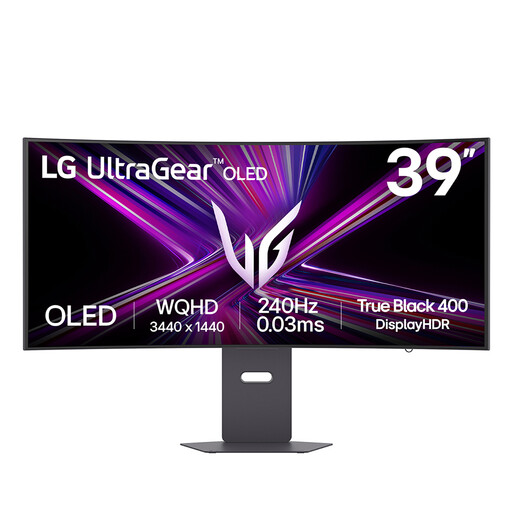
This is an ultrawide OLED option if your games and device support the format. Its product title specifies 240Hz; the 3440 × 1440 format differs from standard 2560 × 1440 QHD. Check panel-care guidance if fixed interfaces occupy much of your screen time.
 No image available
Consider the larger ultrawide format only after checking that your games, device and desk suit it. The product title specifies 240Hz; its 3440 × 1440 format is not standard 2560 × 1440 QHD, and prolonged repeated static content remains an OLED ownership consideration.
 No image available
This non-OLED choice suits a buyer considering IPS rather than OLED and willing to check a 4K setup instead of the QHD route. The product title lists dual modes of 4K at 240Hz and Full HD at 480Hz; confirm which mode your device can use. The two refresh figures do not apply at the same resolution.
 No image available
Consider this VA-panel option if a curved 32-inch QHD display suits your desk; do not treat it as the Fast IPS route. Its product title lists 2560 × 1440, 165Hz and VESA 100 × 100 mounting. Check the supplied stand’s positioning and the screen finish for your room.
No. OLED is worth considering when dark-scene presentation is the priority, but repeated fixed HUDs or extensive desktop use change the ownership trade-off. RTINGS’ accelerated testing identifies permanent image retention as a consideration for static-heavy OLED use, so check the exact model’s care guidance and warranty terms.
Choose a stand or compatible mount that lets you place the screen directly in front of you. The Health and Safety Executive advises a position around an arm’s length away, with the top around eye level, and recommends short, frequent breaks from display-screen work rather than fewer long ones.
Check an appropriate electrical-waste collection or retailer take-back route rather than assuming an old monitor belongs in general waste. UK government guidance covers waste electrical and electronic equipment and retailer take-back; confirm the seller’s applicable arrangements before ordering.