If most of your time is spent reading passages and menus, start with an IPS monitor whose text looks clear at your preferred scaling and whose brightness can be lowered comfortably. OLED is worth considering when dark-scene contrast also matters to you for other games, provided you are willing to manage prolonged static content and check text rendering on the exact model. A high refresh rate alone will not settle a text-led choice.
Who this choice affects
Text-first night readers
If interactive fiction, browser stories and menus fill most of your screen time, judge the monitor by text appearance and usable low brightness before gaming speed. An IPS option also avoids the particular OLED burn-in concern associated with prolonged static content.
Atmosphere-first mixed gamers
If you also play visually rich games, OLED’s deeper blacks may matter more in a dark room. RTINGS identifies black levels as a distinction between OLED and IPS, but you still need to assess how passages and menus look on the model you would use.
Desktop-heavy OLED considerers
If story text, browser tabs or launchers remain visible for long stretches, make panel-care habits part of the OLED decision. RTINGS flags prolonged static content as a burn-in consideration; protection features reduce the need for guesswork about daily use, but do not remove the risk.
What matters when choosing
For a dark-room interactive-fiction monitor, check reading conditions before deciding how much you value OLED contrast or speed in other games. The concerns below separate consumers by the need they would put first.
| Concern |
What to check |
Who this matters to |
| Text and low-light comfort |
Inspect text at your preferred operating-system scaling and check that the brightness can be reduced to a comfortable level. Confirm flicker-free operation on the exact model if it matters to you. |
When I spend a long session reading passages, clear letters and a screen that is not too bright matter more than motion specifications; around 42% of consumers put this reading need first. |
| Dark-scene contrast |
Compare panel types using dark artwork and ordinary reading screens, not an HDR specification alone. RTINGS notes that OLED produces deeper blacks than IPS. |
I want dark backgrounds and artwork to carry the atmosphere, especially when I also play visual games; roughly 33% of consumers prioritise that contrast. |
| Static content and mixed use |
For OLED, check the exact model’s panel-care functions and applicable warranty terms. Consider how often fixed menus, browser elements and other desktop content will stay on screen. |
If I switch between stories, browsing and other games, I need a display whose upkeep suits that routine; about 25% of consumers put mixed-use and static-content considerations first. |
Buying pitfalls
-
Choosing by refresh rate alone
A fast refresh rate can matter in action games, but it does not tell you whether story text is clear or whether the screen can be dimmed comfortably in a dark room.
Check text at your usual scaling and test the brightness range before making refresh rate the deciding feature.
-
Assuming OLED is right for every dark-room reader
OLED’s deep blacks can improve the appearance of dark scenes, while long periods of fixed text and menus call for a separate static-content decision. RTINGS identifies prolonged static exposure as a burn-in consideration.
If you favour OLED, assess text rendering on the exact model and decide whether you will use its screen-saver, sleep and panel-care functions consistently.
Those habits add a continuing panel-management task for a screen used heavily for reading and desktop work.
-
Using a low-blue-light mode instead of adjusting brightness
A low-blue-light setting is a separate choice from how bright the screen appears in your room, and it can change the look of artwork.
Set brightness to a comfortable level first, then compare the mode on and off with the text and colours you actually use.
Relevant brands to consider
BenQ
BenQ’s Eye-Care range is relevant if brightness control and extended reading are central to your choice. Its GW2480 is a 23.8-inch Full HD IPS example, not a specification shared by every BenQ monitor.
- BenQ describes ambient-light brightness adaptation and flicker-free technology in its Eye-Care materials; confirm the functions on the model you choose.
- The GW2480 is a 60Hz-class example. Compare another model if fast action games are a substantial part of your use.
Alienware
Alienware is relevant to shoppers considering a 27-inch OLED gaming display alongside text-led play. Dell specifies the AW2725Q as a 27-inch 4K QD-OLED monitor with a 240Hz refresh rate.
- The AW2725Q offers a specific 4K OLED option for consumers who also value dark scenes and fast gaming.
- Its gaming specifications do not settle how its text will look to you or remove the need to consider prolonged static interfaces.
LG UltraGear
LG UltraGear includes OLED gaming options for mixed play. LG specifies the 27GX700A-B as a 27-inch QHD OLED model with a 280Hz refresh rate.
- The 27GX700A-B is a concrete option to examine if OLED contrast and fast games both matter to you.
- That refresh rate is not a substitute for checking reading clarity, low-brightness use and static-content care.
ASUS ROG
ASUS ROG is relevant if you want to examine OLED panel-care controls alongside gaming specifications. ASUS specifies its XG27AQDMES as a 27-inch QHD QD-OLED model with a 240Hz refresh rate.
- ASUS describes screen-saver and proximity-sensor functions intended to reduce burn-in possibility on applicable models.
- Those functions do not make prolonged fixed story text or desktop interfaces risk-free.
Joybuy monitor choices
These choices include IPS displays for text-led use and an OLED model for consumers who also prioritise dark-scene contrast and fast gaming. For any of them, assess text at your preferred scaling and check whether its lowest usable brightness suits your room.
 No image available
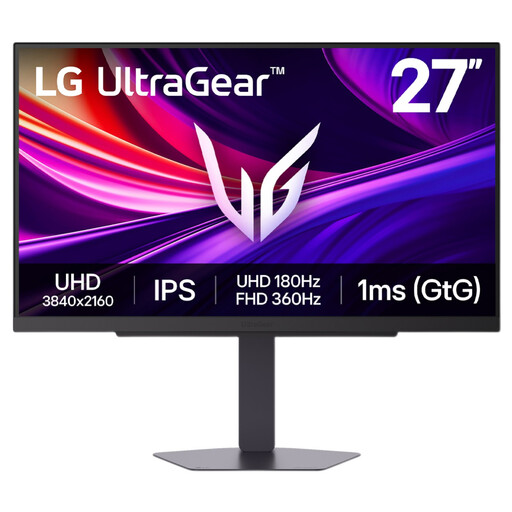
LG UltraGear 27G810A-B 27-inch 4K UHD IPS monitor
Consider this IPS model if you want a display for reading interactive fiction that also has a gaming-focused dual mode. The title specifies 27 inches, 4K UHD and a dual mode with a maximum stated refresh rate of 360Hz; that maximum is not a measure of reading comfort.
Check the lowest brightness and how text looks at your preferred scaling for the exact model.
Joybuy
 No image available
ASUS EYE CARE VY27UQ 4K UHD 60Hz monitor
Consider this model if reading and casual gaming take priority over a high refresh rate. Its title specifies 4K UHD and 60Hz.
Before choosing it for a dark room, check the lowest comfortable brightness and text appearance on the exact display.
Joybuy
 No image available
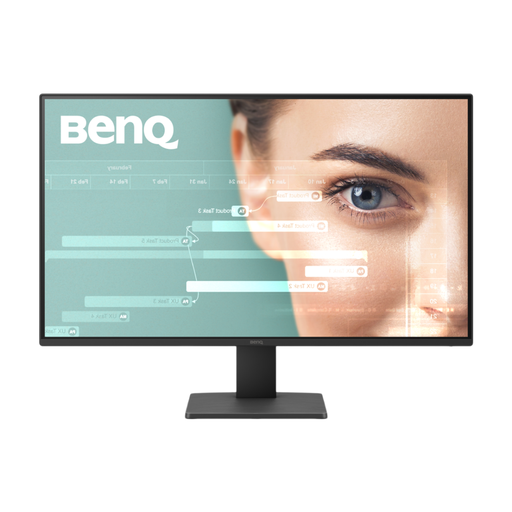
BenQ GW2791 27-inch Full HD IPS 100Hz monitor
This is a text-led IPS option to examine if Full HD at 27 inches suits your preferred reading distance and text size. The title specifies a 27-inch Full HD IPS display and 100Hz refresh rate.
Check text appearance and the lowest comfortable brightness on the exact model. If you need VGA or built-in speakers, confirm those options for the variant offered.
Joybuy
 No image available
AOC Q32V4 31.5-inch 2K Ultra HD IPS monitor
Consider this larger IPS display if you have space for 31.5 inches and can assess whether its text size suits your desk setup. The title identifies an IPS panel and AdaptiveSync; confirm the exact native resolution before comparing text detail with another model.
Check its lowest comfortable brightness and text appearance for dark-room reading.
Joybuy
 No image available
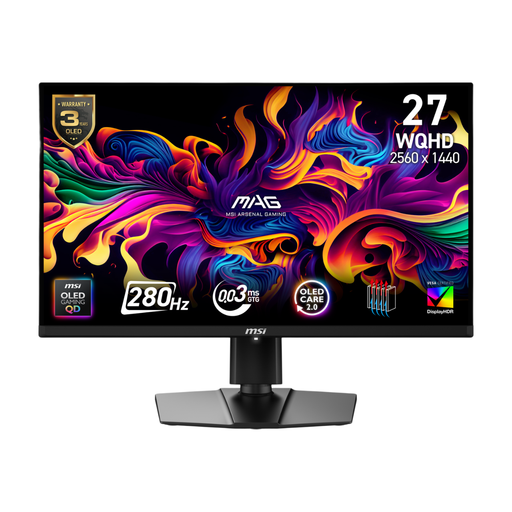
MSI MAG 271QP QD-OLED X28 27-inch QHD monitor
Consider this QD-OLED model if interactive fiction is part of a mixed gaming routine and you value dark-scene contrast enough to manage static content. Its title specifies a 27-inch QHD display, 280Hz refresh rate and 0.03ms response time.
Check text rendering, low-brightness use and the applicable OLED warranty terms before choosing it for prolonged passages and fixed menus. Panel-care functions do not eliminate burn-in risk.
Joybuy
Common questions
Is OLED automatically the right choice for interactive fiction in a dark room?
No. OLED’s deeper blacks can make dark scenes more striking, as RTINGS explains, but text appearance and prolonged static-content use still matter for interactive fiction. Choose by how the exact monitor handles your usual passages and menus, not panel type alone.
Which settings should I try for dark-room reading?
Start by lowering brightness to a level that feels comfortable while keeping text legible. Then compare your preferred interface theme and any low-blue-light mode with it switched on and off; a mode that changes artwork colours may not suit every reader.
Does OLED panel care remove the risk from fixed text and menus?
No. RTINGS identifies prolonged static content as a burn-in consideration, while ASUS describes its OLED care functions as ways to reduce the possibility of burn-in. Check the functions and warranty terms for the exact model, and use sleep or screen-saver settings rather than leaving a fixed interface displayed for long periods.
What should I do with a monitor I replace?
Use an appropriate electrical-equipment recycling route rather than the general waste bin. Recycle Now advises recycling monitors at suitable collection points or recycling centres; check which local route accepts yours.


