Daylight-lounge viewers
If competitions are on while the curtains are open, reflections may obscure parts of the picture. Check the screen against the windows and lamps in your usual viewing position, not just under shop lighting.


For a bright lounge, start with how the exact TV handles window and lamp reflections, then assess its picture in daylight and its motion settings with dance footage. A high-brightness Mini LED or RGB LED LCD is worth considering when daylight visibility is the overriding need; a bright OLED also merits consideration if dark-scene contrast and side-seat viewing matter, provided its reflection handling suits your room. Neither a display label nor a gaming refresh-rate figure settles the choice.
If competitions are on while the curtains are open, reflections may obscure parts of the picture. Check the screen against the windows and lamps in your usual viewing position, not just under shop lighting.
If quick footwork, spins and camera pans are your priority, look at the exact TV’s motion controls and how dance footage appears with those settings adjusted. A gaming specification answers a different question.
If people sit to the side and you also watch darker films, check the picture from those seats as well as head-on. RTINGS notes that bright-room conditions can change how black levels look on a particular OLED, so room lighting remains part of the assessment.
For a dance competition in a bright lounge, assess reflections in the intended screen position before comparing motion settings and side-seat viewing. These checks help distinguish the display types without assuming that every TV using the same technology behaves alike.
Consider when: Daylight and reflections are the main obstacles, particularly if you usually watch with the curtains open.
Check: RTINGS notes that Mini LED has no fixed definition. Compare the exact TV’s reflection handling, side-seat picture and dark-scene local dimming rather than relying on the label.
Consider when: Dark-scene contrast and viewing from side seats matter alongside daytime competitions, and the particular screen’s reflection handling works in your room.
Check: RTINGS found that black levels rose in bright light on a specific matte QD-OLED it tested. Do not assume another OLED will handle your windows in the same way.
| Concern | What to check | Who this matters to |
|---|---|---|
| Glare and daylight visibility | Check reflection handling on the exact size and place the screen relative to windows and lamps; consider brightness alongside glare. | If I watch with the curtains open, I need to see costumes and faces without reflections covering them. Around 42% of consumers put glare and daylight visibility first. |
| Fast-action clarity | Check adjustable motion processing with dance footage; do not use a gaming refresh-rate figure as a broadcast-motion result. | When dancers spin or the camera moves quickly, I want to follow the routine without an artificial-looking motion setting. Clear fast action comes first for around 33% of consumers. |
| Group and mixed-content viewing | Assess the picture from side seats and compare dark scenes under your usual room lighting. | If friends watch from different seats and I also put on films, I need a picture that works beyond one head-on position. Around 25% of consumers prioritise that viewing flexibility. |
Samsung describes the QN80H’s 144Hz capability in gaming terms. That figure alone does not establish how a televised dance routine will look.
Compare reflection handling first, then check motion controls using live or recorded competition footage. Treat gaming refresh support as a separate consideration if you also play games.
RTINGS says there is no set definition of Mini LED. TVs carrying the label can differ in local dimming, reflections and viewing from the side.
Compare evidence for the exact model and size, particularly if viewers sit off-centre or you watch darker programmes too.
A bright-room claim for one OLED does not establish reflection performance for another. RTINGS has observed raised black levels in bright conditions on a particular matte QD-OLED.
Check the intended OLED against your window and lamp positions, and review the retailer’s applicable return terms before purchase.
In the UK, watching a competition live through a TV service brings TV Licensing requirements into the decision. Replacing a large set also means arranging what happens to the old one.
Check TV Licensing guidance for how you plan to watch, and ask the retailer about its electrical-equipment take-back or collection arrangements before delivery.
Sony’s BRAVIA 9 II is an RGB LED LCD range to examine if you want a large screen for a bright lounge.
Samsung’s Neo QLED QN80H is a Mini LED range with several screen sizes for buyers comparing LCD options.
LG’s OLED evo G6 is an OLED range to consider if dark-scene contrast matters alongside bright-room viewing.
These TVs offer different screen sizes and display types to consider for a bright lounge. Compare each exact variant’s reflections and dance-broadcast motion before deciding; a display label or refresh-rate figure is not a substitute for those checks.
 No image available
Consider this 55-inch OLED if you want to compare an OLED screen with larger LCD options for the lounge. Check how the exact TV handles your window reflections and adjust its motion settings with dance footage; refresh-rate figures alone cannot answer either question.
 No image available
Consider the 75Q7C if you want a larger screen while assessing a Mini LED option for daylight viewing. Its listed configuration includes up to 2048 local dimming zones, a 144Hz native refresh rate and audio by Bang & Olufsen; these figures do not establish reflection handling or dance-broadcast motion. Check both on the exact screen.
 No image available
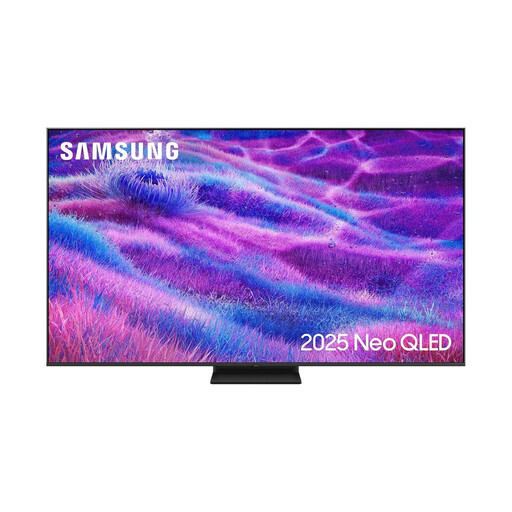
Consider this 75-inch model if you are planning a larger lounge screen. Its title lists 4K resolution and Wi-Fi; check the exact TV’s reflections and motion settings against your usual lighting and dance footage before choosing it for bright-room viewing.
 No image available
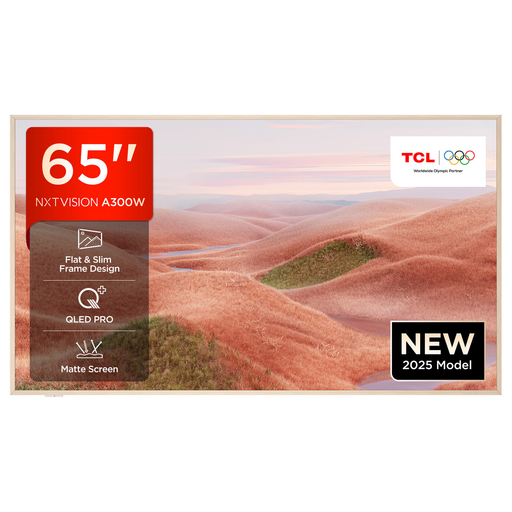
Consider this 65-inch QLED if its size suits your seating arrangement. The product title describes a matte anti-glare screen, but the detailed description presents that finish as an option: confirm that this exact variant has it before relying on it for a bright lounge. Check dance-broadcast motion separately.
Start with the exact TV’s reflection handling rather than choosing by display type alone. A high-brightness Mini LED LCD is worth considering when daylight is your main concern; a bright OLED also merits consideration when dark-scene contrast and side-seat viewing matter, provided its screen suits your room’s reflections.
Not necessarily: a 144Hz gaming capability does not establish broadcast-motion performance. Samsung describes that figure on the QN80H in gaming terms, so check adjustable motion processing with competition footage rather than choosing on the number alone.
Avoid positioning the screen directly opposite windows or exposed lamps where possible, and assess reflections at the time you normally watch. If you plan to wall-mount it, check the exact model’s dimensions, mounting requirements and cable clearance before fixing its position.
In the UK, you need TV Licence coverage to watch a programme live through a TV service, including live streams. TV Licensing also says coverage is needed to watch or download BBC programmes on BBC iPlayer, including on demand; check its guidance against the service you intend to use.
Check the retailer’s electrical-equipment take-back or collection arrangements before your replacement arrives, particularly for a large screen. GOV.UK sets out disposal-route responsibilities for retailers and distributors of household electrical equipment; confirm the practical arrangement offered for your purchase.