Dark-room performance viewers
You usually watch with the lights down and want black costumes, dim backgrounds and bright spotlights to remain distinct.


For dance competitions watched mainly in a dark room, start with OLED if separating dark costumes from spotlights matters most: its pixels produce their own light, an advantage for deep blacks described by Which?. Consider Mini LED/QLED if a particular screen size or documented high-refresh feature matters more, but judge dark scenes and motion on the exact TV rather than by its technology label alone.
You usually watch with the lights down and want black costumes, dim backgrounds and bright spotlights to remain distinct.
Rapid footwork, spins and camera pans draw your attention to blur or judder. The exact TV’s motion settings matter as much as a refresh-rate figure.
The TV also needs to work in a brighter or shared room, so screen size, viewing position and energy information matter alongside dark-scene contrast.
Choose it when: Dark stages and black costumes are your main concern; individually lit pixels can produce very deep blacks, as Which? explains.
Bear in mind: Brightness, HDR formats, sound and screen sizes still differ between OLED models.
Choose it when: You also need a particular large size, HDR brightness or high-refresh feature documented for the model you are considering.
Bear in mind: Its backlight is not controlled pixel by pixel like OLED; inspect dark-scene uniformity and light around spotlights on the exact TV.
| Concern | What to check | Who this matters to |
|---|---|---|
| Dark-scene contrast | Compare dark performance footage if possible, paying attention to black costumes and light around spotlights. Check the HDR formats used by your preferred source. | If dark clothing disappears into the stage background, I lose details that matter to the performance. Around 46% of consumers would put black-level separation first. |
| Fast-motion clarity | Check the exact model’s native refresh rate and adjustable motion controls; try familiar dance footage where possible. | I want to follow quick footwork and camera pans without distracting blur or altered-looking movement. Motion clarity would come first for roughly 36% of consumers. |
| Size and room flexibility | Measure the viewing position and installation space. Compare the energy label and product information sheet for the screen size you intend to buy. | The screen has to fit my room and remain useful when the lights are on, while its energy information helps me compare options. About 18% of consumers would make that practical fit their primary concern. |
Samsung lists a 144Hz motion feature for the QN80H, while TCL lists a native 144Hz display for the Q9BK. Neither specification establishes how a particular programme source or motion setting will look.
Use refresh specifications to narrow your choices, then compare adjustable motion modes with familiar footage if you can.
A technology name does not settle HDR-format support, sound, size or the appearance of dark stage scenes on an individual TV.
Check the exact variant’s panel, HDR formats and motion features, then assess its picture with the kind of content you watch.
The screen size you choose affects which product information you need to compare. Replacing an existing TV also means arranging what happens to the old one.
Compare the energy label and product information sheet for the exact size, and ask the seller about its delivery, installation and old-TV collection terms before checkout.
LG’s UK B6 OLED range is relevant to viewers comparing dark-stage contrast.
Samsung’s QN80H Neo QLED range offers a Mini LED route for comparing sizes and stated motion features.
TCL’s Q9BK QD-Mini LED range is relevant when comparing HDR-format support and high-refresh specifications.
Panasonic’s Z80 OLED range is another route for comparing dark-scene contrast and HDR formats.
These OLED and Mini LED TVs offer different screen sizes for watching dance competitions. Check the fit of each size and the exact model’s motion and picture settings before choosing.
 No image available
Consider this OLED model if dark-stage viewing is your priority and a 55-inch screen fits your seating position.
Check its motion settings with your usual dance broadcasts rather than relying on a refresh-rate claim alone.
 No image available
Consider this 83-inch screen only after checking that the seating position and installation space suit its size.
The product name also specifies Wi-Fi; assess dark scenes and motion on the exact TV for your viewing source.
 No image available
This 42-inch OLED is an option when the screen must fit a smaller installation space; check its size against your seating position.
Dolby Vision is named in the product title. Confirm the native panel refresh rate and motion controls for broadcast viewing.
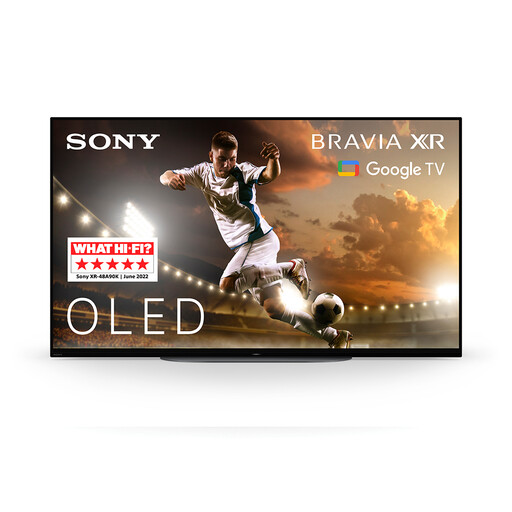 No image available
Consider this 48-inch OLED if its size works better for your viewing position than the other sizes shown here.
Dolby Vision is named in the product title. Check the exact panel refresh rate and motion options before judging its fit for fast choreography.
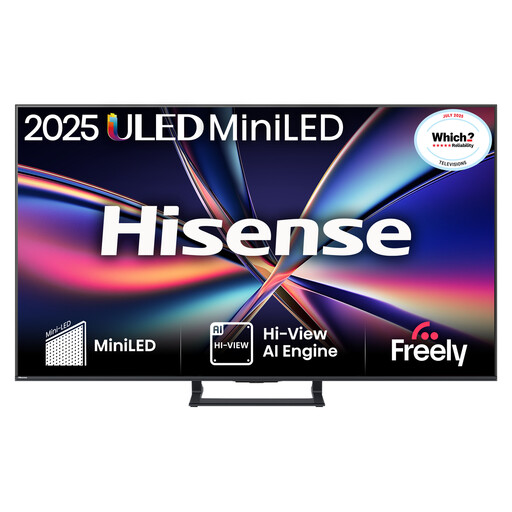 No image available
This Mini LED model offers a 55-inch alternative for viewers comparing dark-room and shared-room use.
Its product name mentions a 144Hz Game Mode PRO feature; check the motion options used for dance broadcasts and inspect dark scenes on the exact TV.
No. OLED is a strong starting point when deep blacks are your priority, because its pixels produce their own light, as Which? explains. A Mini LED/QLED TV may better fit a particular size or brighter-room requirement; compare dark-scene appearance on the exact models.
Not necessarily. LG, Samsung and TCL describe these capabilities on particular models, but the programme source and the TV’s motion settings also affect what you see. Try familiar footage and compare settings where possible.
Yes, if you watch it live on a TV or streaming service in the UK, according to TV Licensing. Its guidance also says a licence is needed for BBC iPlayer viewing.
Compare the energy label and product information sheet for the exact screen size you intend to buy. If you are replacing a TV, ask the seller how old-TV take-back or collection works and confirm any delivery or collection arrangements before checkout.