Choose an OLED TV if historical dramas are mainly watched in a dim room and flatmates sit across the sofa: deep blacks and wide viewing angles are relevant to that setting. If the shared room is regularly bright or reflective, consider a Mini LED or QLED TV instead, but check the exact screen’s reflection handling. Either way, measure the furniture and compare audio connections and energy information before choosing.
Who is this TV for?
Evening drama viewers sharing a sofa
If most viewing happens in a dimmer room, dark-scene detail and a picture that works from off-centre seats may shape your choice. LG UK describes deep blacks and wide viewing angles as characteristics of its OLED range; check the particular set in your seating arrangement.
Flatmates in a bright communal room
With curtains open or lamps on, consider how daylight and visible reflections affect the screen. Samsung UK positions QLED as a bright-room option, but the screen treatment still needs checking on the exact model.
Co-tenants choosing one shared screen
You need a set that fits the furniture, offers a workable listening arrangement and suits how the flatmates actually watch television. Check the tenancy arrangement before deciding how any TV Licence requirement will be handled.
What matters when choosing?
Start with when the shared room is used and where everyone sits. Then check the exact TV’s sound options, physical fit and energy information rather than choosing by display label alone.
OLED TV
Consider it when: Historical dramas are mostly watched in controllable light, with viewers spread across the sofa. LG UK highlights deep blacks and wide viewing angles for OLED.
Trade-off: Check the model’s brightness and reflection handling if the room is also used in daylight.
Mini LED or QLED TV
Consider it when: Daytime viewing, windows or lamps make a brighter-room option more relevant; Samsung UK positions QLED for bright viewing.
Trade-off: The display label alone does not establish dark-room contrast or the picture from side seats. Compare those qualities on the specific set.
| Concern |
What to check |
Who this matters to |
| Dark scenes and side seats |
Compare dark-scene detail and the picture from your usual off-centre seats on the exact model. |
If we watch low-lit interiors from different parts of the sofa, I want everyone to follow the picture; around 36% of consumers put dark scenes and side-seat viewing first. |
| Daylight and reflections |
Check the screen’s reflection treatment against the room’s windows and lamps. Samsung UK distinguishes anti-reflection from anti-glare. |
With the curtains open, I need to see the drama without a lamp or window dominating the screen; roughly 29% of consumers make bright-room viewing their primary concern. |
| Dialogue and shared listening |
Check the exact model’s built-in sound and the connections required for your preferred headphones or external audio. |
Quiet dialogue needs to work for several of us, even if we postpone a soundbar; about 21% of consumers prioritise dialogue and flexible listening. |
| Fit and household practicalities |
Measure the unit and stand space, compare the energy label, and check the tenancy arrangement if a TV Licence is needed. |
Before agreeing on a shared TV, I need to know it will fit and how we will manage its use; around 14% of consumers put these practicalities first. |
Buying pitfalls to avoid
-
Assuming every OLED suits a bright room
Deep blacks and wide viewing angles do not tell you how a particular screen will handle daylight or reflections.
Note when you usually watch and where the windows and lamps are, then assess the exact model’s screen treatment.
-
Treating anti-glare and anti-reflection as the same feature
Samsung UK distinguishes treatments that diffuse incoming light from those intended to soften visible reflections. The distinction matters if a particular window or lamp appears on the screen.
Identify whether broad glare or mirror-like reflections are the problem, and check what the chosen model specifies.
-
Assuming every flatmate needs a separate TV Licence
GOV.UK ties the licence requirement to watching or recording live programmes or using BBC iPlayer, rather than simply owning a TV. TV Licensing says one licence is needed for the address under a joint tenancy; other tenancy arrangements need checking separately.
Check your viewing habits and tenancy agreement against TV Licensing guidance before agreeing how to share the responsibility.
-
Choosing by screen diagonal alone
A screen size does not establish whether the stand fits the TV unit or whether a proposed wall mount suits the set.
Measure the available space and compare it with the exact model’s width, stand positions, weight and mounting specification.
Relevant brands to consider
LG
LG’s UK OLED range is relevant if evening viewing and seats spread across the room shape your choice.
- LG UK describes deep blacks and wide viewing angles for its OLED range; the OLED55C6ELB is a 55-inch example.
- Compare the exact set’s energy information and performance in your room rather than treating those range descriptions as guarantees.
Samsung
Samsung’s OLED, QLED and Neo QLED ranges give flatmates display options to investigate for different room lighting.
- Samsung UK positions QLED for bright viewing and identifies its QN70F Neo QLED as a Mini LED model.
- Check reflection handling, dimensions and energy information on the chosen model; a display category is not a complete performance verdict.
Sony
Sony’s BRAVIA OLED models are relevant if picture presentation and built-in audio both matter before adding a separate soundbar.
- Sony UK describes Acoustic Surface Audio+ as sound coming from the screen and lists audio connectivity for its BRAVIA 8 documentation.
- Confirm the exact model variant, stand arrangement and required audio connections before purchase.
Joybuy TVs for these viewing needs
These OLED and Mini LED TVs offer different starting points for evening dramas or a brighter shared room. Check each set against your lighting, seating, furniture and listening needs.
 No image available
Samsung 55-inch OLED S90F 4K Vision AI Smart TV (2025)
Consider this OLED model if evening dramas are your main use but the shared room also has lamps or windows to account for. Its title identifies a 55-inch 4K set; check its screen treatment in relation to your room, along with the stand dimensions and energy information.
View on Joybuy
 No image available
Hisense 55U7QTUK Pro 55-inch Mini LED 4K HDR TV
This Mini LED model is worth considering if the communal room is often bright. The product name also identifies VIDAA OS and a built-in subwoofer; assess reflections and off-centre viewing in your seating arrangement, and check the stand measurements before ordering.
View on Joybuy
 No image available
TCL 65Q7C 65-inch QD-Mini LED 4K HDR Google TV
Consider this QD-Mini LED set if a larger screen is being considered for the shared room. Its title identifies audio by Bang & Olufsen, but the 65-inch diagonal alone cannot establish furniture fit; check the full dimensions, reflections and views from side seats.
View on Joybuy
 No image available
Sony BRAVIA A90 XR42A90K 42-inch OLED 4K HDR TV
This 42-inch OLED set may suit a room where a larger screen would be difficult to place. Its product name identifies Acoustic Surface Audio+; check the precise stand dimensions, room-light performance and any audio connections your flatmates need.
View on Joybuy
 No image available
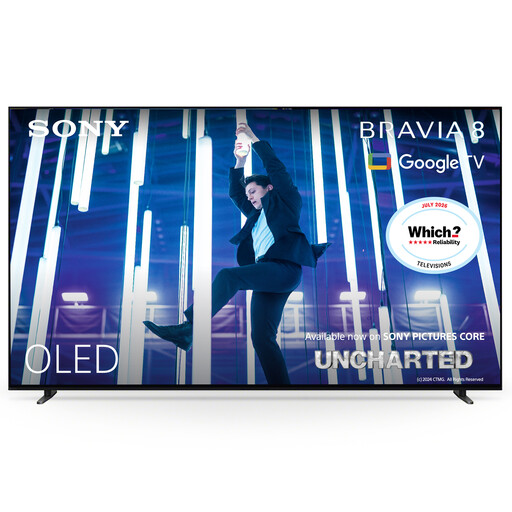
Sony BRAVIA 8 K55XR80BP 55-inch OLED 4K HDR TV
Consider this OLED set for evening viewing if built-in screen-based audio also matters. The product name identifies Acoustic Surface Audio+; check the K55XR80BP variant’s stand dimensions, reflection handling and required audio connections rather than applying specifications from another BRAVIA 8 variant.
View on Joybuy
Frequently asked questions
Do flatmates need a TV Licence to watch historical dramas?
A TV Licence is required if you watch or record programmes as they are broadcast, or use BBC iPlayer, according to GOV.UK. The requirement depends on what you watch, not on whether the TV is new.
Can one TV Licence cover a shared flat?
TV Licensing says one licence is needed for the address when occupants have a joint tenancy. If flatmates have separate room contracts or self-contained accommodation, check the rules for that arrangement before assuming one licence covers everyone.
What should we check before placing or wall-mounting a TV?
Compare the exact model’s full dimensions, stand positions and weight with the available space; for wall mounting, check its specified mounting pattern too. A screen diagonal does not tell you whether the set or its stand will fit.
How should flatmates compare TV energy information?
Use each television’s energy label and product information sheet to compare consumption on the same basis. GOV.UK identifies standard dynamic range consumption in kWh per 1,000 hours as a television-label field; consider viewing mode and screen size alongside the efficiency letter.


