Dark-room story-game players
If you play visually led adventures or RPGs after dark, black levels, visible detail in shadows and HDR highlights may matter more to you than the highest refresh-rate figure.


For cinematic adventures in a dark room, start with the image you want from night scenes: a 4K OLED suits players prioritising deep blacks, provided its connections and warranty terms work for their setup. A Mini LED LCD offers another local-dimming HDR route, but check the exact model for blooming and variable refresh rate (VRR) flicker; a conventional VA monitor can show deep blacks, though a model without local dimming may deliver less distinct HDR highlights.
If you play visually led adventures or RPGs after dark, black levels, visible detail in shadows and HDR highlights may matter more to you than the highest refresh-rate figure.
If you switch between a PS5, Xbox Series X|S and PC, check the resolution, refresh rate and VRR mode available through the input you will actually use.
If you want deeper blacks than your current display, compare the exact monitor’s HDR behaviour and dark-scene motion alongside its resolution and ownership terms.
Choose the dark-scene presentation you want, then check that its resolution and inputs match your gaming devices; for OLED, read the applicable panel-care and warranty terms as part of that decision.
| Concern | What to check | Who this matters to |
|---|---|---|
| Dark-scene contrast and HDR | Check the panel type and independent observations of black levels, local dimming and blooming for the exact model. | If night scenes and small bright details draw me into a story, I want them to remain convincing in a dark room. Around 42% of consumers would put this image need first. |
| Platform and motion | Check the HDMI or DisplayPort input you will use, plus supported resolution, refresh rate and VRR modes. | When I move between a console and PC, I need the monitor’s available modes to match what each device and game can output. For around 33% of consumers, that compatibility is the primary concern. |
| Ownership and compromises | Compare the exact model’s dark-motion behaviour and, for OLED, its care features and applicable burn-in warranty wording. | If I also leave desktop apps or game HUDs on screen, I want to understand the panel-care terms and the compromises of other display types. That is the leading need for around 25% of consumers. |
A monitor’s 165 Hz or 240 Hz specification does not mean a connected console, PC and game will use that mode together.
Check the relevant input and the active resolution, refresh rate, HDR and VRR settings after connecting your device. PlayStation’s connected-display information can help PS5 users check supported output.
OLED pixels, Mini LED dimming zones and a VA panel’s native contrast produce different results. RTINGS observed blooming on the Samsung Odyssey Neo G7 and noted that the VA Gigabyte GS27QC lacks local dimming.
Look for independent dark-room observations of the exact model, including blooming, HDR highlights, VRR flicker and motion in dark scenes.
Screen-care tools and burn-in warranty terms are separate considerations, particularly if static desktop elements or game HUDs stay visible for long periods.
Read the terms for the exact model and purchase channel. Dell says its QD-OLED coverage has a three-year maximum and includes burn-in; do not assume another monitor has identical cover.
UK government guidance places electrical and electronic equipment within the WEEE framework, while local disposal arrangements can differ.
Check your local authority’s instructions for taking a monitor to a household recycling centre or using an available retailer take-back service.
The ROG Swift OLED PG32UCDM Gen3 represents the 32-inch 4K QD-OLED route for dark-room gaming.
Dell’s AW3225QF is a curved 31.6-inch 4K QD-OLED option for players who want a curved desktop screen.
The curved 4K Odyssey Neo G7 offers a 32-inch Mini LED LCD route rather than OLED.
The 27-inch Q27G3XMN is a 1440p Mini LED alternative for players who do not require 4K.
These OLED options cover standard and wider desktop formats. Check the resolution and screen shape against your games and devices rather than assuming every option suits the same setup.
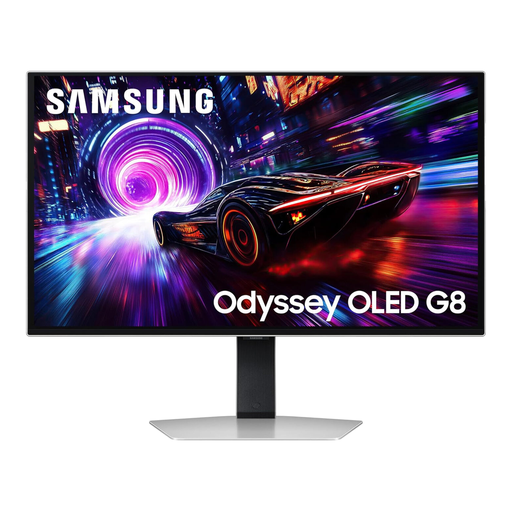 Image unavailable
Consider this OLED model if you want a 32-inch screen for dark-room gaming. Confirm its HDMI input capabilities for your device and read the applicable burn-in warranty terms.
 Image unavailable
Consider the smaller QHD format if 4K is not essential to your setup. The product title specifies 240 Hz and 0.03 ms; check the modes available to your device and the applicable burn-in warranty terms.
 Image unavailable
Consider its 32:9 format if you want an especially wide PC desktop. The title specifies a 1800R curve, 240 Hz and DisplayHDR 400 True Black; check how your games handle 32:9 and read the applicable OLED warranty terms.
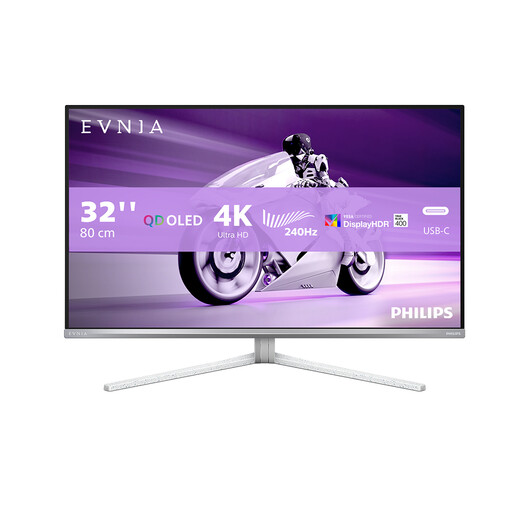 Image unavailable
Consider this 32-inch UHD OLED if you want a standard desktop format. Its listing gives conflicting refresh-rate figures, so confirm the exact model specification before relying on a particular mode; check the applicable burn-in warranty terms too.
 Image unavailable
Consider this wider WQHD screen if that format suits your desktop and games better than a standard 16:9 display. The title specifies 240 Hz; confirm wide-format support on your platform and read the applicable burn-in warranty terms.
Check that the monitor’s HDMI input supports the 4K/120 Hz mode you want rather than relying on a refresh-rate label or a DisplayPort specification. PlayStation says 120 Hz output is available for supporting games and displays; its connected-display information can help you check the active resolution, VRR and HDR status.
No: 240 Hz is a monitor capability, not a frame-rate promise for a game. The device, connection, game and selected settings determine the output you can use, so check your platform’s supported mode.
Check screen-care features and warranty cover separately for the exact model. ASUS describes OLED Care Pro features for its PG32UCDM Gen3, while Dell says its QD-OLED coverage has a three-year maximum and includes burn-in; neither statement establishes the terms for a different monitor or purchase channel.
Use a suitable electrical-equipment recycling route rather than general household rubbish. UK government guidance places electrical and electronic equipment under the WEEE framework; check your local authority’s instructions or an available retailer take-back service for the practical arrangements.