Daytime silent-film viewers
If you watch beside windows or with lamps on, a visible reflection may interrupt intertitles and facial detail. Start by considering where light falls on the screen, rather than choosing by panel type alone.


If daylight fills the lounge, compare a brightness-oriented Mini LED TV with an OLED model that explicitly offers reflection control; neither panel name tells you how a window will appear on the screen. For silent films, weigh contrast and film-oriented picture settings against your room lighting, then check the exact model’s fit and UK energy information.
If you watch beside windows or with lamps on, a visible reflection may interrupt intertitles and facial detail. Start by considering where light falls on the screen, rather than choosing by panel type alone.
If you can close blinds or change the lighting, you may give more weight to black-and-white contrast, tonal detail and film-oriented picture settings.
If the same TV also serves everyday streaming, balance its daytime screen treatment with its physical fit, exact model features and UK energy information.
Separate direct reflections from general room brightness before comparing panels. A brightness-oriented Mini LED and a reflection-controlled OLED address different priorities, but the exact model’s screen treatment still matters.
Consider it: When daylight remains strong and you cannot reliably dim the room.
Bear in mind: Mini LED describes the backlight, not whether a window or lamp will reflect visibly.
Consider it: When direct reflections are the main distraction and you also value OLED contrast for monochrome films.
Bear in mind: Reflection treatment is model-specific; an OLED label alone does not establish bright-room suitability.
| Concern | What to check | Who this matters to |
|---|---|---|
| Direct reflections | Locate the window or lamp reflected in the viewing position. Check the exact model for a stated anti-glare or anti-reflection treatment; Samsung UK distinguishes between these approaches. | If a bright window appears over intertitles, I want that distraction addressed before other picture features. Around 40% of consumers would put reflection control first. |
| Film presentation | Check the exact TV’s cinema or filmmaker mode and the formats supported by the films and services you use; a mode cannot remove a physical reflection. | When I can manage the room lighting, I care most about monochrome tones, shadows and a film-oriented image. Roughly 30% of consumers would prioritise that presentation. |
| Sustained daylight | Compare model-specific brightness information and, for Mini LED candidates, the stated backlight and local-dimming features. Check screen treatment separately. | If the curtains stay open throughout daytime viewing, I need the picture to remain readable even without a sharp reflection. About 20% of consumers would make general brightness their primary concern. |
| Fit and ownership | Check stand dimensions or mounting requirements alongside the exact model’s UK energy label and product information sheet. | Before choosing a large screen, I need it to fit my furniture or wall and want comparable energy information. Around 10% of consumers would put these practical checks first. |
A sharp window reflection and a generally light-filled room can disrupt viewing in different ways. Samsung UK distinguishes anti-reflection from anti-glare treatment.
Look at the screen position during your usual viewing hours, then check which treatment the exact TV specifies.
Features such as Glare Free, Reflection Free Premium and film-oriented modes are stated for particular Samsung, LG or Sony models, not every TV using the same panel technology.
Match the full UK model code and screen size on the retailer listing to the manufacturer’s specifications, including any stand or wall-mount version.
Stand width, depth and mounting holes can determine whether a TV fits. Sony, for example, lists a 300 × 300 mm VESA hole pitch for the K-65XR70.
Measure your furniture and wall space, then check the dimensions, weight and mounting specification of the exact size you intend to buy.
If the existing setup will not accommodate the TV, a different unit, compatible mount or installation help may be needed.
Screen size and model-specific energy information matter when comparing TVs; OLED or Mini LED wording alone is not a running-cost comparison.
For a UK purchase, compare the energy label and product information sheet for each exact model and size. GOV.UK includes televisions within its guidance on energy information for electronic displays.
These brands provide examples of different bright-room and film-viewing features; check the named model rather than extending a feature claim across a whole range.
Samsung’s UK QN90F provides a Mini LED example for comparing daylight-oriented features with screen treatment.
LG’s C6 and G6 offer different OLED features to examine when film presentation and reflections both matter.
Sony’s BRAVIA 7 is a Mini LED LCD example for buyers considering a brightness-oriented route with film-viewing settings.
These TVs offer different starting points for a bright lounge: OLED models for film-focused viewing, Mini LED models to consider for sustained daylight, and a QLED model whose stated matte screen needs a variant check. Assess each against the position of your windows and the light you can control.
 No image available
Consider this 55-inch OLED if film presentation matters and you want to check how its stated anti-glare treatment handles your lounge’s reflections.
Confirm the exact screen treatment, physical fit and UK energy information for this model.
 No image available
Consider this large Mini LED model if sustained daylight and a spacious viewing area are your priorities.
The product title states up to 2048 local-dimming zones and a 144 Hz native refresh rate; neither figure establishes how a window reflection will look. Check its screen treatment, dimensions and UK energy information.
 No image available
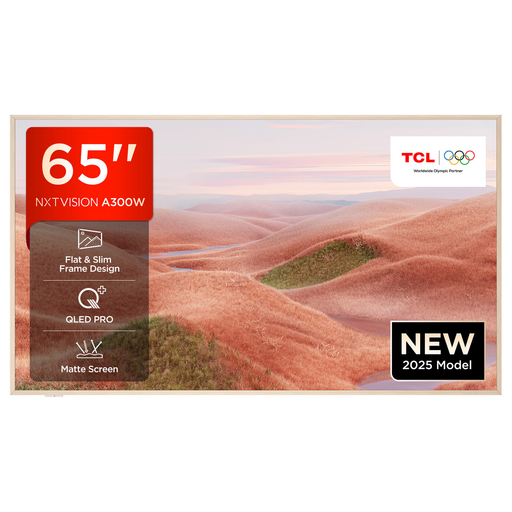
Consider this 65-inch model if reducing visible reflections is a priority, but confirm the screen supplied with this variant before relying on it.
The listing describes a matte anti-glare screen in its title while also describing that treatment as an option. Check its inclusion, installation fit and UK energy information.
 No image available
Consider this 55-inch Mini LED model if general daylight brightness is your main concern, while checking direct reflections separately.
The product name specifies VIDAA OS. Confirm the exact UK variant’s screen treatment, room fit and energy information.
 No image available
Consider this 83-inch model for film viewing if you can manage the room lighting and have space for the screen.
Check its screen treatment and film settings, then confirm the exact dimensions, mounting arrangement and UK energy information.
Consider a brightness-oriented Mini LED when sustained daylight is the main problem, or an OLED with explicitly stated reflection control when direct reflections and monochrome contrast both matter. Check the exact model: neither panel label guarantees its screen treatment or the result in your room.
Not for the visual presentation of silent films: assess reflections, contrast and picture settings first. If you plan to play an accompanying score through the TV or another audio system, check the exact model’s available audio connections.
Compare the UK energy label and product information sheet for the exact model and screen size, rather than inferring energy use from OLED or Mini LED terminology. GOV.UK’s guidance covers energy information for in-scope electronic displays, including televisions.
Check the available retailer take-back or local electrical-recycling arrangements before replacing it. GOV.UK describes the UK waste electrical and electronic equipment framework as supporting recovery, reuse and recycling; the collection route available to you needs confirming locally.
Check the care guidance for the exact OLED model, particularly if static menus or images may remain on screen for long periods. Sony’s guidance for an older OLED model family discusses image retention, but its maintenance instructions should not be assumed to apply to a different current TV.