Choose an OLED TV if evening film contrast and a view from several seats matter most; consider QLED or Mini LED if daylight and room lighting are the bigger obstacles. Before settling on a model, measure the available space and check its viewing angles, headphone connections and inputs—particularly if a silent film’s musical score needs to be heard without disturbing flatmates.
Who is this for?
Evening film-night hosts
If people watch from different seats, contrast and side-seat visibility matter alongside screen size. LG describes its OLED range as offering deep blacks, high contrast and wide viewing angles through independently controlled pixels.
Bright-room flat sharers
If films are often on during the day or with the lights on, compare brightness and reflections on the exact TV. Samsung positions QLED for bright viewing and Neo QLED for more precise contrast control.
Quiet-viewing flatmates
If a film has a score or accompaniment, headphones may be more practical than the TV speakers late at night. Check the exact TV and headphones: Samsung documents two-device Bluetooth audio on compatible sets, while Sony specifies A2DP support for Bluetooth audio pairing.
What matters when choosing?
OLED TV
Choose when: Evening viewing, dark-scene contrast and seats spread across the room take priority. LG attributes deep blacks, high contrast and wide viewing angles to OLED’s independently controlled pixels.
Check: Compare brightness and reflection handling on the exact model if the communal room is often brightly lit.
QLED or Mini LED TV
Choose when: Windows, lamps or daytime viewing make a bright-room display the priority. Samsung positions QLED for bright viewing and its Mini LED-based Neo QLED range for more precise contrast control.
Check: The technology name alone does not establish a model’s black levels, reflection handling or picture quality from side seats.
| Concern |
What to check |
Who this matters to |
| Quiet audio |
Confirm the exact model’s headphone-output options and compatibility with the headphones you intend to use. Check separately if two listeners need audio at once. |
If I want to hear a film’s score late at night without disturbing others, a workable private-audio connection comes first. Around 42% of consumers put quiet listening first. |
| Group picture quality |
Compare dark-scene contrast, reflections and the view from seats to the side, under your usual room lighting. |
When several flatmates share a film night, I need the picture to remain clear beyond the central seat. For around 33% of consumers, group picture quality is the primary concern. |
| Room fit and connections |
Measure the TV and stand footprint against the available space, then count the HDMI sources the flat will connect. |
A screen that crowds the TV unit or requires constant cable swapping would make shared viewing awkward. Room fit and connections come first for around 25% of consumers. |
What should you avoid?
-
Assuming a Bluetooth badge means headphone support
Bluetooth audio depends on the TV model, the device and the supported profile. Sony specifies A2DP for pairing compatible TVs with audio devices; Samsung also notes that distance and obstacles can disrupt a connection.
Check the model’s audio-output instructions and compatibility with your intended headphones before buying.
If the TV cannot provide a compatible audio output, a separate transmitter or different headphones may be needed.
-
Choosing by panel name alone
OLED’s contrast-led appeal and QLED or Mini LED’s bright-room positioning address different viewing conditions; neither label settles how a particular screen handles reflections or side seats.
Compare models under conditions like those in your shared room, including where each viewer will sit.
-
Measuring the screen diagonal but not the TV unit
The diagonal does not tell you whether the stand and connected cables will fit. Panasonic lists its 42-inch Z90B as 933 mm wide and 300 mm deep with its recommended pedestal.
Measure the furniture or wall position, allow for cable routes and count the devices that need HDMI inputs.
A different stand, wall mount, longer suitable cables or an HDMI switch may be needed for the planned setup.
-
Assuming streaming never needs a TV Licence
TV Licensing distinguishes live viewing and BBC iPlayer use from non-live on-demand viewing on other services. What the household watches matters, not whether the TV is labelled smart.
Check the licence requirement for the services and viewing modes the flat intends to use.
Brands to consider
LG
An OLED range to examine when evening contrast and visibility from different seats are priorities.
- LG attributes deep blacks, high contrast and wide viewing angles to OLED’s independently controlled pixels.
- Its headphone-connection guidance does not establish that every LG TV works with every pair of headphones; check the exact model.
Samsung
QLED, Neo QLED and OLED options for comparing bright-room and contrast-led viewing.
- Samsung documents Dual Audio on compatible Smart TVs manufactured from 2022 and separate Bluetooth-device and TV-speaker volume adjustment where Multi-output Audio is supported.
- Check the model and A2DP devices before planning a two-headphone setup; distance and obstacles can affect Bluetooth connections.
Panasonic
A model-specific option to compare when space and connections need careful checking.
- Panasonic lists its UK 42-inch Z90B with a 4K OLED panel, Filmmaker Mode, Bluetooth A2DP audio in/out and four HDMI inputs.
- Those connections belong to that model and should not be assumed for other Panasonic TVs or regional variants.
Sony
A BRAVIA range worth checking model by model if Bluetooth headphones are part of the viewing plan.
- Sony’s support guidance identifies A2DP as the profile needed for Bluetooth audio pairing on compatible TVs.
- Sony does not guarantee connection with every Bluetooth audio device; consult the exact TV’s Help Guide.
Joybuy TVs for shared viewing
These OLED, QLED and LED TVs span 40- to 50-inch screen sizes for considering in a shared room. Match the display to your lighting, then check the exact model’s dimensions, side-seat picture and headphone options before deciding.
 No image available
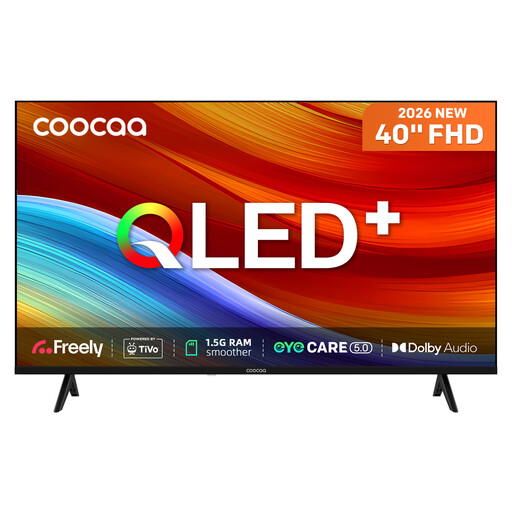
Coocaa 40CTQH38ZUK 40-inch QLED TV
Consider this 40-inch option if a larger screen would crowd the shared room. It is a Direct-LED QLED model with Full HD resolution and HDR10; check its headphone outputs and picture from your side seats.
View on Joybuy
 No image available
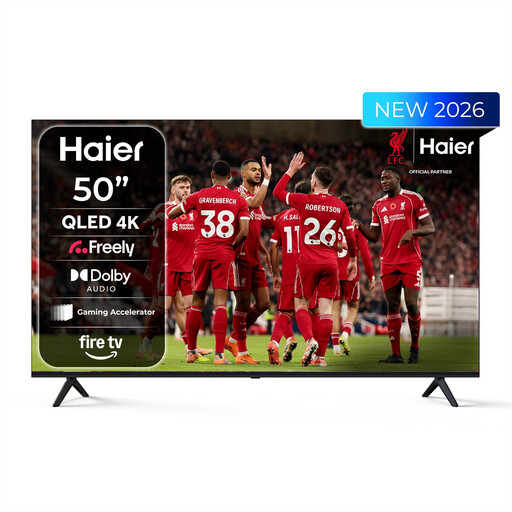
Haier H50S80GUF 50-inch 4K QLED TV with Freely and Fire TV
Consider this 50-inch QLED model if the seating layout and TV unit can accommodate it. It has 4K Ultra HD resolution and HDR10+; confirm its dimensions, reflection handling and headphone compatibility for your room.
View on Joybuy
 No image available
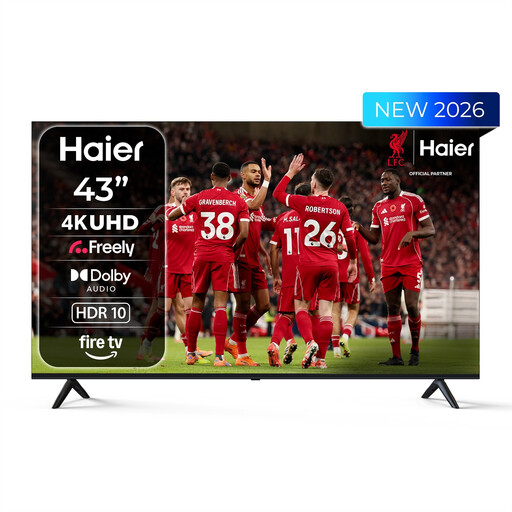
Haier H43K85GUF 43-inch 4K LED TV with Freely and Fire TV
This 43-inch model is worth considering when a 50-inch TV may be difficult to place. It is a 4K Ultra HD LED TV with HDR10; check its physical footprint, side-seat picture and audio outputs before choosing it for group viewing.
View on Joybuy
 No image available
Sony BRAVIA XR42A90K 42-inch 4K OLED TV
Consider this 42-inch OLED when evening film contrast matters and space is limited. It has 4K resolution and Google TV; check the exact model’s dimensions and headphone-audio compatibility before relying on it for quiet viewing.
View on Joybuy
 No image available
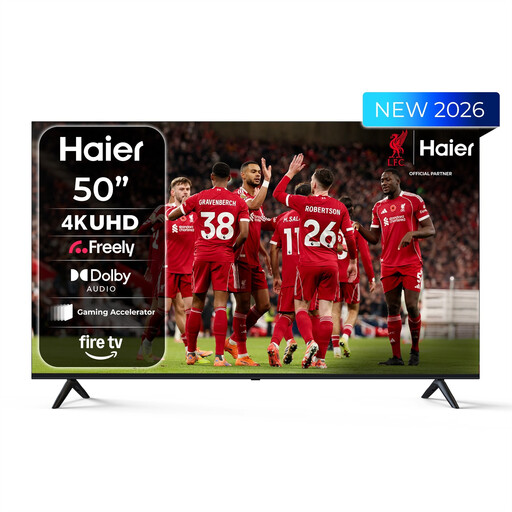
Haier H50K85GUF 50-inch 4K LED TV with Freely and Fire TV
Consider this 50-inch screen if the room can accommodate a larger shared display. It is a 4K Ultra HD LED TV with HDR10; assess its fit, off-centre viewing and headphone connections on the exact model.
View on Joybuy
Common questions
Do we need a TV Licence just to own a TV in a shared flat?
Owning the TV is not the test described by TV Licensing. Its guidance says a licence is needed to watch live TV on any service or to use BBC iPlayer; non-live on-demand programmes on other services do not require one on that basis.
Can two flatmates listen through Bluetooth headphones at once?
Yes, on a TV that supports two compatible Bluetooth audio devices—not on every Bluetooth-equipped set. Samsung documents Dual Audio on compatible Samsung Smart TVs manufactured from 2022 and specifies A2DP devices; confirm the exact TV and both pairs of headphones before buying.
How can we check whether headphones will work from our seats?
Start with the exact TV model’s audio-output instructions and the headphones’ compatibility, then check the connection from the intended seats. Samsung cautions that obstacles and excessive distance can disrupt Bluetooth audio, while Sony says compatible Bluetooth pairing requires A2DP support.
What product-safety check matters when buying a TV for Great Britain?
Check the TV’s UK-market product information and documentation with the seller. The Office for Product Safety & Standards explains that electrical equipment placed on the Great Britain market must meet the requirements of the Electrical Equipment (Safety) Regulations 2016; that guidance does not by itself establish the applicable route for Northern Ireland.


