Local-match hosts
If friends or family play together in the same room, responsive controls matter alongside a picture that remains usable from the side seats. RTINGS.com identifies viewing angle as important for wide seating arrangements.


Choose the screen size and side-seat picture quality around the people playing local basketball, then check the exact TV and console setup for the gaming modes you want. OLED is worth considering when films in a dim room matter just as much as games; a Mini LED/LCD set is another route when daylight and reflections shape the choice. Neither panel label confirms 4K at 120Hz, variable refresh rate or a good view from every seat.
If friends or family play together in the same room, responsive controls matter alongside a picture that remains usable from the side seats. RTINGS.com identifies viewing angle as important for wide seating arrangements.
If the TV also handles evening films in a dim or controllable room, consider contrast and screen size alongside its gaming connections. Samsung explains that OLED pixels can be controlled individually; check how the particular screen suits your seating and lighting.
If you play or watch films with daylight or lamps on, assess reflections, screen placement and the particular model's picture in that lighting before choosing a panel type.
For local basketball matches, establish the room and seating layout before comparing OLED and Mini LED/LCD; whichever route you take, confirm gaming modes on the input you will actually use.
Consider it when: Films in a dim or controllable room are as important as local games. Samsung describes individually controlled OLED pixels, which support precise dark-scene contrast.
Keep in mind: Check the specific screen's reflections and its picture from the side seats rather than assuming the panel label settles either question.
Consider it when: The room is often bright and you can compare particular models for brightness and reflection handling.
Keep in mind: Local dimming and viewing angles vary by model, so the Mini LED label alone cannot establish how the picture will look from every seat.
| Concern | Buying checks | Who it matters to |
|---|---|---|
| Responsive play | Check the chosen HDMI input for 4K at 120Hz and variable refresh rate (VRR), then check the console, cable and game's supported mode. Confirm how game mode is enabled. | When timing my moves in a fast match, I want the TV and console to deliver the gaming mode I intend to use. Roughly 31% of consumers put responsiveness first. |
| Shared screen and seating | Measure the usual eye-to-screen distance and assess the actual picture from likely side seats. | If several of us play from different spots, everyone needs to follow the action without straining to see it. Around 31% of consumers make shared visibility their primary concern. |
| Dark-room contrast | Compare the particular OLED or Mini LED model's dark-scene picture and gaming settings in conditions like your room. | For evening films as well as games, I care most about how darker scenes look. Roughly 23% of consumers prioritise cinema contrast. |
| Bright-room viewing | Assess windows, lamps, screen reflections and placement at the times you normally use the TV. | If daylight falls across the room when we play, I need a picture I can comfortably see in that lighting. Around 15% of consumers put bright-room viewing first. |
A headline refresh rate does not establish that your console can use 4K at 120Hz or VRR through every input. Sony's BRAVIA setup guidance notes that the correct port and an enabled input setting can matter.
Check the exact model's input specifications and settings before ordering, then confirm the selected output mode on your console.
Xbox Support warns that a receiver or soundbar between the console and TV can affect video features and quality.
Connect the console directly to the TV to check the intended mode first. If you need an intermediary device, confirm that its video pass-through supports your required format.
Your existing cable or audio equipment may need replacing if it cannot carry the mode you choose.
A screen that suits the central seat may be uncomfortable at a short viewing distance or less clear to players sitting off-centre. TCL's UK size guidance treats viewing distance as a starting point, while RTINGS.com stresses the importance of viewing angle for wide seating.
Measure from the usual eye positions to the planned screen location, and assess a candidate TV from the side seats where possible.
GOV.UK warns that products bought from sellers outside the UK may not be manufactured or labelled in accordance with UK safety laws.
Check who is selling the TV, along with its product marking, instructions, warnings and manufacturer contact details.
LG's UK gaming guidance discusses refresh rate, VRR, input lag and 4K picture quality, making its gaming-focused TVs relevant to compare for this setup.
Samsung's UK range includes OLED TVs and models marketed with gaming-oriented HDMI features.
Sony's BRAVIA range is relevant if you want to compare home-cinema viewing with console-gaming setup.
TCL is relevant to buyers comparing larger Mini LED screens and stated gaming modes on particular UK models.
These OLED and LED TV choices span compact to very large screens for gaming and home-cinema use. Match each one to your seating layout, then check the exact console mode and HDMI input before deciding.
 Image unavailable
Consider this 55-inch option if that screen size fits your group's seating distance. The title specifies 4K HDR and 165Hz Game Mode Ultra; check the chosen HDMI input, console and game for the particular 4K/120Hz mode you want.
 Image unavailable
Consider the 83-inch screen for shared viewing only after measuring the room and side-seat positions. Check the exact HDMI input and supported console output mode if 4K at 120Hz is part of your plan.
 Image unavailable
This 42-inch 4K HDR OLED is worth assessing where a compact screen suits the seating arrangement. For local matches played from farther back, check that everyone can read the on-screen detail; also confirm the intended console mode on the exact input.
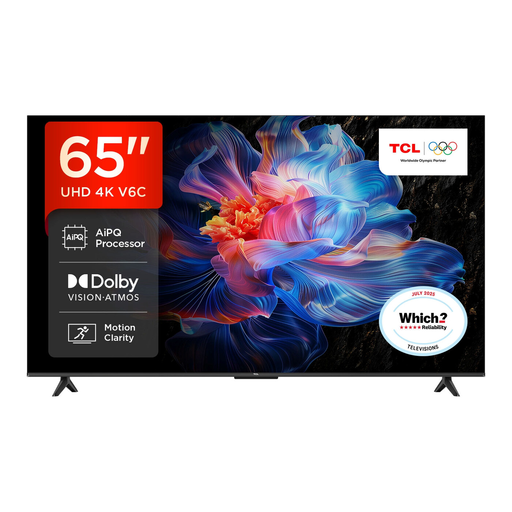 Image unavailable
This 65-inch 4K HDR screen is a size to assess against your usual player seats. Its title specifies 120Hz Game Accelerator at FHD; do not treat that as confirmation of 4K at 120Hz.
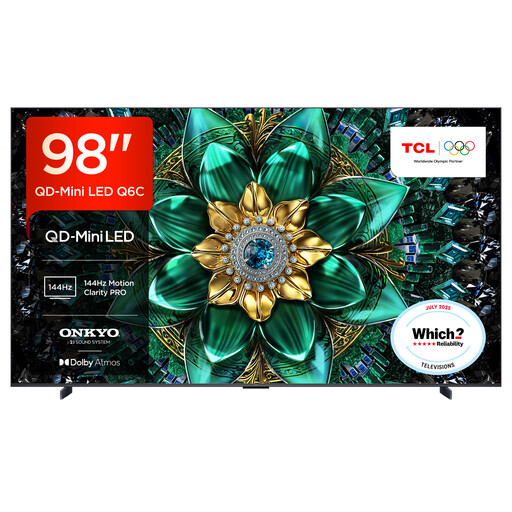 Image unavailable
Consider this 98-inch 4K HDR screen only where viewing distance, installation space and side-seat positions suit its scale. The title specifies a 144Hz native refresh rate, which does not by itself confirm 4K at 120Hz from your console and chosen HDMI input.
You need an Xbox Series X, an appropriate Ultra High Speed HDMI cable and a TV input that supports the intended 4K/120Hz mode, according to Xbox Support. Select 4K UHD and 120Hz in the console settings, and check whether the basketball game itself offers the frame-rate mode you want.
Connect it directly to the TV first if you need to establish which video modes work. Xbox Support warns that an intervening receiver or soundbar can affect video features; check that equipment's pass-through capability before placing it back in the signal path.
Choose size from your usual eye-to-screen distance and the seats the players will actually use. TCL's UK size guide suggests 65 inches at 2.0 metres and 75 inches at 2.3 metres as starting points, not rules for every room; assess visibility from the side seats too.
Ordinary console gameplay is not among the viewing activities listed in TV Licensing's guidance. If you also watch or record live TV, or use BBC iPlayer on the television or another device, check the licence requirement for that use.
Check the seller's identity and the TV's instructions, warnings, product marking and manufacturer details. GOV.UK warns that goods bought from sellers outside the UK may not be manufactured or labelled in accordance with UK safety laws.