Small-batch tapenade makers
If you mainly make one bowl of chunky tapenade, dips or dressings and have limited cupboard space, a pulse-capable mini chopper is a relevant format. Check that your usual quantity reaches its blade.


Choose a pulse-capable mini chopper for small bowls of tapenade and limited storage, or a compact food processor if you also want to slice and grate. A larger processor makes more sense when several people will use it for broader food preparation, provided it can handle your usual tapenade quantity. Whichever format you choose, check its cleaning instructions and agree how shared parts will be cleaned between users.
If you mainly make one bowl of chunky tapenade, dips or dressings and have limited cupboard space, a pulse-capable mini chopper is a relevant format. Check that your usual quantity reaches its blade.
If several cooks use the same appliance, removable parts and clear care instructions matter alongside a routine for cleaning bowls, lids and blades. Agree how ingredients and equipment will be handled if anyone has an allergy.
If tapenade is only one job, a processor with the slicing, grating or larger-batch capacity you will actually use may be more suitable than a chopper dedicated to small quantities.
Choose the format around your usual batch and other preparation tasks, then check texture control and how every shared component must be cleaned.
Choose it when: You make one small batch at a time and cupboard space is tight.
Trade-off: It offers less room for shared batch preparation and does not provide the slicing and grating functions sought from a processor.
Choose it when: You want to make tapenade and use a knife blade or discs for other preparation without moving to a large appliance.
Trade-off: Extra accessories mean more pieces to wash and keep together; bowl volume alone does not establish how well a small batch will process.
Choose it when: Several people will regularly use the appliance for wider food preparation as well as tapenade.
Trade-off: It needs more storage space, and a large bowl may be inconvenient for one small dip.
| Concern | What to check | Who this matters to |
|---|---|---|
| Chunky texture | Check for pulse control and a chopping blade; consider whether your normal batch will reach the blade. | I want to stop chopping while the olives still have texture, rather than leave the machine running. Around 33% of consumers would put texture control first. |
| Cleaning between users | Identify which parts can be removed and how the maker says to wash them; agree a separate process where allergen control is needed. | When I share a bowl and blade, I need to know they have been cleaned before I use them. For around 42% of consumers, that cleaning routine is the primary concern. |
| Capacity and other tasks | Compare working capacity, storage space and the blades or discs you would use beyond tapenade. | If our kitchen also prepares larger batches or sliced ingredients, I need the appliance to earn its storage space. Broader capacity and functions come first for around 25% of consumers. |
Food Network UK's tapenade recipe uses a steel blade and short pulses before processing only until chunky. Continuous running can take the mixture beyond the texture you want.
Check for pulse control on the exact model. Use short bursts and stop to assess the mixture.
A large stated capacity does not tell you whether a small quantity of olives will meet the blade effectively.
Compare the maker's working-capacity guidance with the amount you normally make. If you mainly prepare one small dip, consider a mini chopper before choosing a larger bowl for other tasks.
Dishwasher instructions vary by model. Magimix warns that its dishwasher-safe plastic accessories can deteriorate with unsuitable care.
Follow the manual's rack, programme and drying guidance, and agree who washes, dries and returns each shared component.
Repeated use of unsuitable cycles or detergents may shorten the useful life of plastic accessories.
Removable parts still need a consistent cleaning and ingredient-separation routine. Food Standards Agency guidance for food businesses calls for systems to prevent, control and detect contamination, including allergen contamination.
For a food-business kitchen, follow the applicable contamination-control process. In a household, discuss ingredients, allergies and cleaning expectations before sharing bowls, blades and lids.
These models and ranges illustrate different appliance formats; check the features and care instructions of the particular model you are considering.
Kenwood's MultiPro Go FDP23.140GR is a compact food-processor example for cooks who want more than a mini chopper.
KitchenAid's 5KFC3516 is a mini food chopper aimed at small-volume jobs such as dips, sauces and dressings.
Magimix offers processor formats for buyers considering broader preparation tasks, including its smaller Mini Plus and larger models.
These food processors and larger-bowl choppers suit consideration when tapenade is one of several shared-kitchen preparation jobs. For a single small bowl, check whether your usual quantity will reach the blade before choosing among them.
 No image available
Consider this processor if you will use it for wider preparation as well as tapenade; check that a small batch reaches the blade.
The listed variant has a 3 L bowl, 1000 W rating, integrated digital scale and eight accessories. Follow the exact model's care instructions when sharing its parts.
 No image available
Consider this multi-vessel model if shared household preparation extends beyond tapenade; check that your usual olive quantity works in its processor bowl.
The listed variant has a 1200 W rating, 2.1 L jug, 700 ml cup, five automatic programmes and dishwasher-safe parts. Its product information limits use to household purposes, so do not choose it for a food-business kitchen.
 No image available
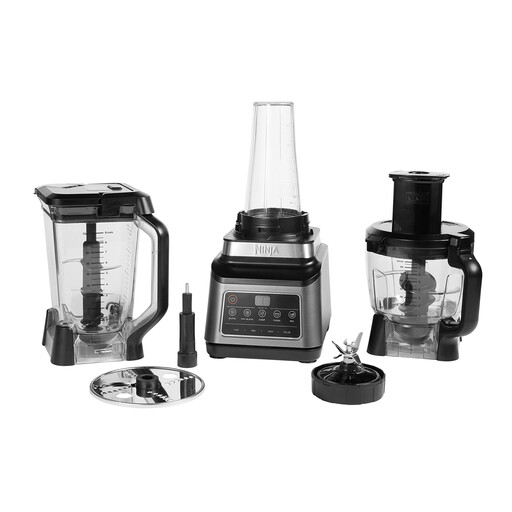
Consider the processor-and-blender format if both types of preparation would be useful in your shared kitchen; check the effective quantity for a small tapenade batch.
The listed variant has a 750 W rating and a 2 L processor bowl. Confirm the washing requirements for each component before agreeing a shared clean-up routine.
 No image available
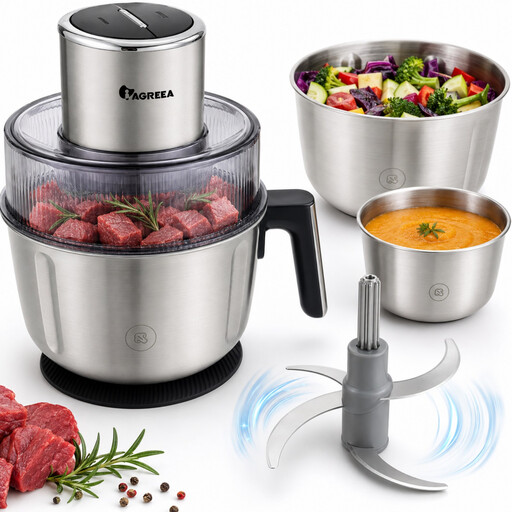
Consider this chopping-focused option if the nesting bowls suit your storage arrangements; check that your tapenade quantity reaches the blade in the bowl you intend to use.
The listed variant has a 350 W rating, two speeds and 2.5 L, 2.2 L and 1.8 L stainless-steel bowls. Check the care instructions for both bowls and blade assembly.
Pulse control and a suitable chopping blade let you stop and assess the texture. Food Network UK's tapenade recipe specifies a steel blade and short pulses before processing only until chunky; check the control on the exact appliance you choose.
A mini chopper can suit one small batch if your usual quantity works in its bowl. KitchenAid UK positions its 830 ml 5KFC3516 for small-volume dips and sauces; consider a processor instead if you also need slicing, grating or more working capacity.
No: follow the instructions for the exact parts and model. For its accessories, Magimix recommends a short, low-temperature programme and warns that dishwasher-safe plastics can still deteriorate; keep the motor base out of water.
Agree which ingredients will be used and how bowls, blades and lids will be cleaned between users, particularly if someone has an allergy. In a food-business kitchen, Food Standards Agency guidance calls for systems to prevent, control and detect contamination, including allergen contamination; that business guidance does not by itself determine a private household's legal duties.