
24/7 Customer Support

Free returns

Same-day & Next-day Delivery

Quality Guaranteed

Unlock Your Welcome Offers: FREE Delivery | Up to 80% OFF | Free 30-day JoyPlus trial
Download the APP
A one-step hair dryer and volumiser can simplify drying, smoothing and root styling, but the wrong design may leave you with a bulky tool, uneven results or limited use. UK shoppers should look beyond phrases such as “salon-style blowout at home” and compare the practical details that affect everyday use.
A hot air brush may work well for drying and shaping, but it does not necessarily replace a hair straightening brush or curling tool. Fine hair usually needs lower heat and controlled airflow, while thick or curly hair may require sectioning, a concentrator or a higher setting.
Check whether the device is designed for wet, towel-dried or fully dry hair. Some blow-dry brushes are intended for damp hair, whereas heated straightening brushes should generally be used only on dry hair unless the instructions specifically state otherwise.
An ionic hair dryer brush may help reduce static and give hair a smoother appearance, but the result also depends on hair condition, humidity, technique and heat exposure. Ionic features do not remove the need for heat protection or suitable temperature selection.
Likewise, claims about “less damage” should be considered alongside the actual temperature range, heat settings, airflow and how closely the brush contacts the hair.
A cordless hair straightener can be convenient for commuting or travel, but battery runtime and charging time matter. A tool that runs for around 30 minutes may be practical for quick touch-ups but less suitable for styling long, thick hair.
For corded hair dryer brushes, check the cable length, handle balance and storage requirements. Removable attachments are useful, but only if they lock securely and can be cooled safely before changing.
Look for at least two heat settings plus a cool setting, or a wider temperature range if you have varied styling needs. The K·SKIN KD382, for example, offers six settings from 130°C to 200°C. Lower temperatures may be more appropriate for fine or chemically treated hair, while thicker hair may need more heat and smaller sections.
Temperature control is more useful than a high maximum temperature alone. A constant-temperature design can also help limit fluctuations during styling, although it does not eliminate heat exposure.
An oval volumising hair brush is designed to lift the roots and turn the ends under or out. A paddle brush attachment is more suitable for smoothing larger sections, while a round brush can create bends, waves and root lift.
Mixed bristles may help with detangling, but avoid forcing the tool through knots. Ball-tipped bristles can feel more comfortable against the hair, yet the heated barrel or teeth still need to be kept away from the scalp and skin.
A multi-styler hair tool with interchangeable heads offers more options, but it will usually take longer to set up than a simple blow-dry brush. Consider whether you genuinely need curling, straightening and volumising attachments before paying for a larger kit.
For a corded appliance, verify that it is supplied for UK standard voltage and includes an appropriate UK plug or approved adaptor. Check the product listing for conformity markings and safety instructions, and follow the manufacturer’s guidance around water, ventilation and storage.
Do not use heated hair styling tools near a bath, shower or sink. Keep air intakes clear of hair and dust, unplug after use and allow hot attachments to cool fully before putting them away.
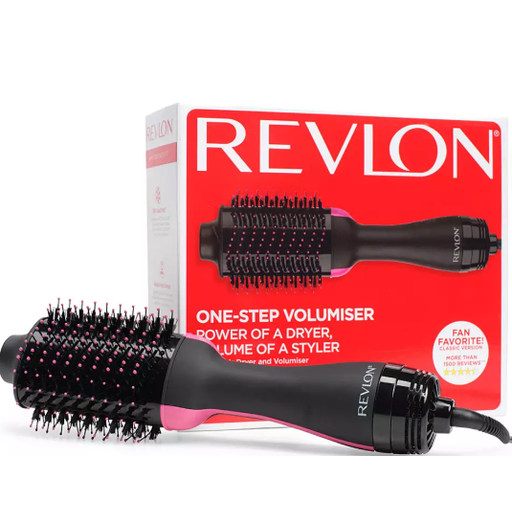
Why This Fits Their Persona: A straightforward 2-in-1 option for shoppers who want to dry and add root volume without managing several separate hair styling tools. It is listed for mid to long hair and includes two heat settings plus cool.
Its intended use and basic heat controls are clearly defined, making it easier to match with a simple drying and volumising routine rather than expecting full multi-styling performance.
Ceramic coating, ionic technology, mixed bristles and a cool setting are listed features.
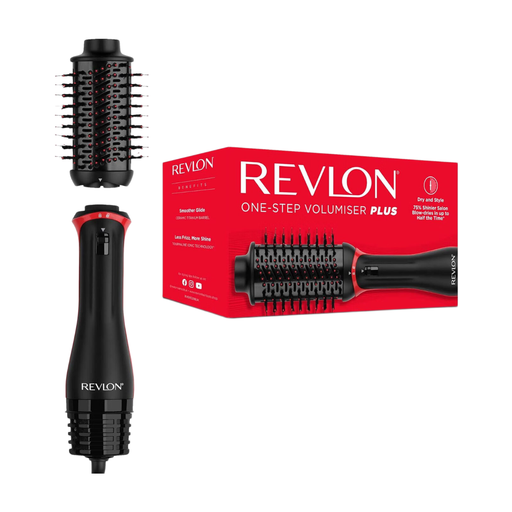
Why This Fits Their Persona: Suitable for users who value a detachable head, a slimmer handle and a smaller oval brush for closer root styling and easier storage.
The detachable design addresses the common storage problem, while four heat settings provide more choice than a simple two-setting brush.
Ceramic Titanium Tourmaline coating, mixed bristles, four heat settings and a detachable head are specified.
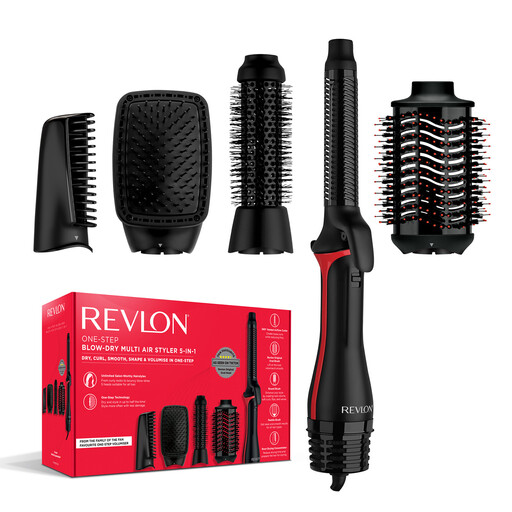
Why This Fits Their Persona: Designed for shoppers who regularly switch between drying, curling, straightening, smoothing and volumising. Five attachments cover more routines than a single-purpose hair dryer brush.
The attachment list makes its capabilities clear, reducing the risk of buying a basic volumiser when you actually need a hair dryer and curler or straightening function.
Five listed attachments, three heat settings plus cool shot, a 2.5-metre cable and UK-standard voltage.
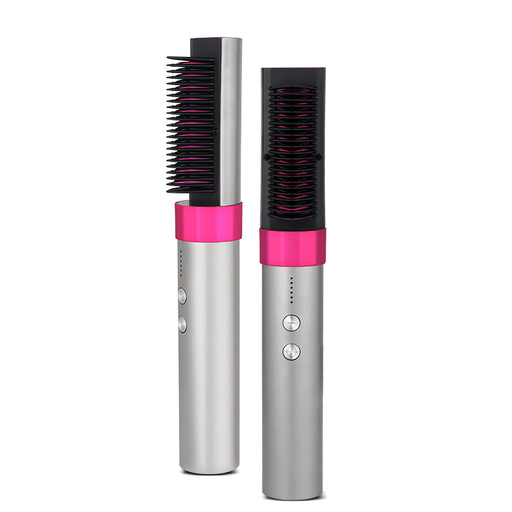
Why This Fits Their Persona: A cordless option for dry-hair smoothing, fringe adjustments and quick styling away from a socket. It is particularly relevant for commuters and short touch-ups.
Its stated battery runtime makes the portability trade-off visible: approximately 30 minutes per full charge, rather than unlimited corded use.
3000mAh battery, six temperature settings from 130°C to 200°C, PTC ceramic heating and anti-scald comb teeth.
We have compiled a complete, real-time list of products that fully satisfy these strict selection criteria and UK safety regulations.
Most are intended for towel-dried or damp hair rather than hair dripping with water. A heated straightening brush is usually intended for fully dry hair. Always follow the specific product instructions and do not use any electrical styling tool near water.
Lifespan varies with build quality, frequency of use, storage and maintenance. Keep the air intake clear, avoid wrapping the cable tightly around the handle and stop using the appliance if it smells unusual, overheats or shows damage. Review the stated warranty before purchase, as cover differs between products.
A corded blow-dry brush generally uses mains electricity while operating and may have a higher power demand because it heats and moves air. A cordless hair straightener uses rechargeable battery power, but its runtime is limited. For an accurate running-cost comparison, check each product’s wattage, charging requirements and your electricity tariff.