
24/7 Customer Support

Free returns

Same-day & Next-day Delivery

Quality Guaranteed

Unlock Your Welcome Offers: FREE Delivery | Up to 80% OFF | Free 30-day JoyPlus trial
Download the APP
As a Joybuy Product Recommendation Officer, my role is to help you navigate the crowded shelves of ready-to-drink beverages. The rise of the bottled oolong tea drink in the UK offers a refreshing alternative to standard fizzy drinks and juices. However, not all options are created equal. Many shoppers, seeking a healthier choice, can fall into common traps that lead to disappointment and wasted money.
This guide will break down what you really need to look for, helping you find a drink that genuinely meets your needs for flavour, convenience and health-consciousness.
Before you add a new ready to drink iced tea to your basket, be aware of these frequent marketing pitfalls.
To avoid these traps, focus on two key details on the product label or description. This simple check will empower you to see past the marketing and choose a product that aligns with your preferences.
This is the most critical factor. Don't just look at the front of the bottle; turn it over and examine the nutritional information.
For an authentic and satisfying taste, the source of the flavour matters.
Based on these practical criteria, here are a few recommendations from our catalogue, matched to different needs and lifestyles.

Why This Fits Their Persona: This is for the individual who wants pure, refreshing hydration without any sugar, calories or sweeteners. It's an ideal choice for replacing water or unsweetened hot tea during a busy day, at the gym or with a meal.
It completely sidesteps the "healthy halo" trap by being genuinely healthy. The nutritional information is clear: 0 sugar, 0 calories, 0 fat. There is no hidden sweetness.
Made from 100% real tea extract using premium Shuixian Oolong leaves, it delivers an authentic, robust tea flavour with a smooth aftertaste. The multipack is convenient for stocking up.
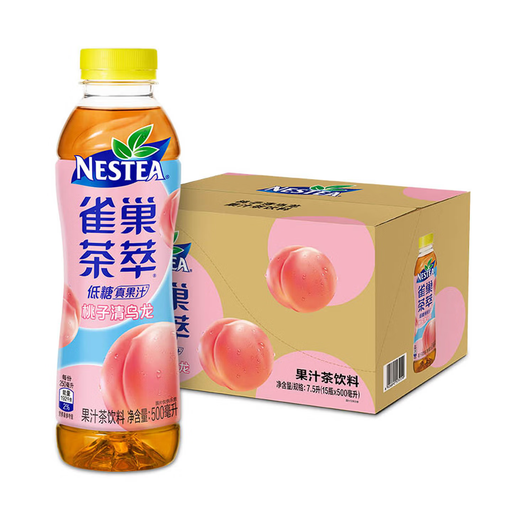
Why This Fits Their Persona: This is for someone looking for a flavourful and refreshing cold drink but wants something more interesting than a standard fizzy pop. The familiar peach flavour makes it an easy and enjoyable entry into oolong tea drinks.
It avoids the "natural flavour" ambiguity by specifying it is made with 1.5% concentrated peach juice and 1% instant oolong tea. This provides transparency about the source of its taste.
It offers a balanced taste profile, combining the sweetness of ripe peaches with the smooth, aromatic notes of oolong tea. It's a classic peach oolong tea that is widely appealing.

Why This Fits Their Persona: Perfect for keeping the office or home fridge stocked with a reliable, crowd-pleasing option. The case of 15 bottles ensures a convenient, healthy drink is always on hand for colleagues or family members.
This Nongfu Spring oriental leaf tea is explicitly zero sugar, zero calories and zero fat. It's a straightforward, what-you-see-is-what-you-get product, making it a safe and smart choice for bulk purchasing.
Made with 100% tea extract with no added preservatives or artificial flavours, it provides a pure, rich tea aroma. The multipack format offers excellent value and convenience for regular consumption.
We have compiled a complete, real-time list of products that fully satisfy these strict selection criteria and UK safety regulations.
1. Is bottled oolong tea actually healthy? It entirely depends on the specific product. A sugar free oolong tea with no additives can be a very healthy choice for hydration, much like home-brewed tea. However, sweetened versions should be viewed as a treat. Always check the "sugars per 100ml" on the nutritional label to make an informed decision.
2. Should I store ready-to-drink oolong tea in the fridge? Most bottled oolong tea is shelf-stable before opening and can be stored in a cool, dry cupboard. However, for the most refreshing experience, it is almost always recommended to serve them chilled. Once a bottle is opened, it should be kept in the refrigerator and consumed within 24-48 hours, as advised on the packaging.
3. What is the difference between oolong, green and black tea? The main difference is the level of oxidisation the tea leaves undergo after being picked. Green tea is unoxidised, which preserves its fresh, grassy character. Black tea is fully oxidised, giving it a deep colour and robust flavour. Oolong tea sits in the middle; it is partially oxidised. This process gives it a uniquely smooth and complex flavour profile, often with floral or roasted notes, that is less sharp than green tea and less bold than black tea.