
24/7 Customer Support

Free returns

Same-day & Next-day Delivery

Quality Guaranteed

Unlock Your Welcome Offers: FREE Delivery | Up to 80% OFF | Free 30-day JoyPlus trial
Download the APP
Ready-to-drink oolong tea drinks are convenient for packed lunches, office fridges, Asian meals and travel. However, choosing between bottled oolong tea, fruit blends and multipacks is not simply a matter of picking the most attractive label. Sugar levels, serving size, flavouring and storage requirements can significantly affect value and suitability.
This guide from the Joybuy Product Recommendation Officer sets out the practical checks worth making before buying ready-to-drink oolong tea in the UK.
A peach or plum tea may sound light and refreshing but can contain a considerable amount of sugar. For example, the listed Cooling Hydration Ripe Fruit Plum Oolong Tea 487ml provides 10.2g of sugars per 100ml. That equates to approximately 49.7g of sugars across the full bottle if consumed in one sitting.
Similarly, the POCAS Sweet Popping Boba Peach Oolong Tea lists 10.0g of sugars per 100ml, while its dragon fruit and peach-style variant lists 12.5g. Fruit juice, sugar, syrup and popping boba can all contribute to the final figure.
They do not. The listed Suntory Low Sugar Oolong Tea 500ml contains 0.5g of sugars and 3 kcal per 100ml. Its 500ml multipack equivalent lists 4.7g of sugars and 20 kcal per 100ml. By contrast, several sugar-free products list 0g sugar and 0 kcal per 100ml.
Always check the nutrition panel rather than relying on front-of-pack wording. In the UK, the terms used on packaging have specific regulatory meanings, but imported products may still present information in formats that require careful reading.
A 1.25L bottle can offer better value for sharing at home or in an office, but it is less convenient for a commute. Smaller 250ml bottles may suit children’s lunchboxes or portion-controlled serving occasions, while 420–500ml bottles are more practical for individual use.
Once opened, many products should be refrigerated and consumed within 24 hours. Check the product label, storage conditions and best-before information before ordering an oolong tea multipack.
Compare figures per 100ml first, then calculate the amount in the entire bottle. A 500ml drink with 4g of sugar per 100ml contains around 20g in total. This is more useful than comparing two bottles based only on different serving sizes.
For a sugar-free oolong tea or zero-calorie oolong tea, look for 0g sugar and 0 kcal per 100ml on the listed nutrition panel. Some unsweetened teas contain vitamin C, sodium bicarbonate or ascorbic acid, so review the ingredients if you prefer a short formulation.
Oolong tea can have roasted, floral, mellow or lightly bitter notes. Japanese oolong tea products may focus on a robust tea taste, while Chinese oolong tea can include varieties such as Shui Xian or Dong Ding. Korean oolong tea drinks often combine tea with fruit flavours, including peach.
For fruit oolong tea, check whether the drink contains juice, concentrate, pulp, flavouring or a combination. These ingredients create different textures and sweetness levels. A peach oolong tea with popping boba is a very different purchase from an unsweetened tea with peach flavouring.
A single 500ml bottle works well for commuting, study sessions and meals. Multipacks can reduce the need for repeat orders and suit office cupboards or family sharing, but they require more storage space.
Large bottles are practical for serving chilled from the fridge. Individual PET bottles are more suitable when portability matters. For all imported drinks, review the UK-facing product information, allergens, responsible party details and label instructions before consumption.
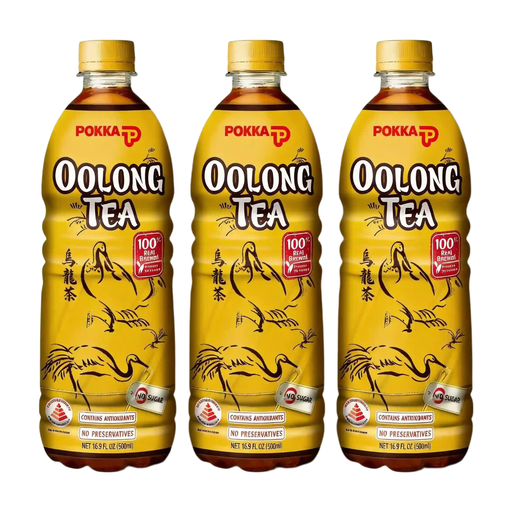
Why This Fits Their Persona: A three-bottle format gives students, first-time buyers and weekday commuters a manageable way to try unsweetened bottled oolong tea without committing to a larger case.
The listed nutrition panel shows 0g sugar and 0 kcal per 100ml, avoiding the hidden sweetness found in many fruit tea drinks.
500ml individual bottles; ingredients list water, oolong tea and ascorbic acid.

Why This Fits Their Persona: Suitable for shoppers who want a recognisable Japanese-style tea profile with modest sweetness and enough bottles for regular meals or workdays.
It is labelled low sugar rather than sugar-free, and the listed panel states 4.7g sugars and 20 kcal per 100ml, making the difference clear.
500ml bottles; listed tea leaves include Shui Xian oolong from Fujian.

Why This Fits Their Persona: A case of individual bottles is convenient for shared office storage, study areas, packed lunches or frequent on-the-go use.
The supplied nutrition information states 0g sugar and 0 kcal per 100ml, rather than using a vague “lighter” description.
15 x 500ml format; listed ingredients include oolong tea leaves, sodium bicarbonate and vitamin C.

Why This Fits Their Persona: This Korean ready-to-drink tea suits shoppers seeking peach flavour without the sugar level of many sweetened fruit tea drinks.
The product information identifies it as sugar-free and zero calorie; check the current UK label for the final nutrition declaration before purchase.
500ml portable bottle; peach and oolong flavour combination; described as vegan-friendly.
We have compiled a complete, real-time list of products that fully satisfy these strict selection criteria and UK safety regulations.
Yes, it is commonly served chilled alongside rice dishes, noodles, sushi, dim sum and fried foods. Unsweetened versions generally provide a cleaner tea taste, while peach and plum varieties add noticeable sweetness.
Follow the label for the specific product. Several listed drinks advise refrigeration and consumption within 24 hours after opening. Unopened bottles should be stored in a cool, dry place away from direct sunlight and checked against the printed best-before date.
A product listing may describe a drink as both, but the nutrition panel is the decisive reference. Look for 0g sugars and 0 kcal per 100ml, then check the bottle size and ingredients before ordering.