
24/7 Customer Support

Free returns

Same-day & Next-day Delivery

Quality Guaranteed

Unlock Your Welcome Offers: FREE Delivery | Up to 80% OFF | Free 30-day JoyPlus trial
Download the APP
Open-ear Bluetooth headphones can make listening more practical when you need to hear announcements, traffic or colleagues around you. Unlike conventional in-ear wireless Bluetooth earbuds, they sit outside the ear canal, clip around the ear or use bone-conduction-style sound delivery.
However, product listings can make similar designs appear interchangeable. A low price may hide limited battery capacity, while phrases such as “waterproof”, “AI headphones” or “noise-cancelling” may not explain exactly what the product can withstand or which sounds it reduces. This guide highlights the main buying pitfalls and compares suitable options for different UK lifestyles.
Open-ear earbuds are designed to let outside sound remain audible. That is useful for road awareness and office conversations, but it is different from active noise cancellation. An open design is unlikely to provide the same isolation as sealed in-ear headphones on a train or aeroplane.
Some models include call noise reduction, which processes microphone input to make your voice clearer during hands-free calls. This does not necessarily mean that music playback will block surrounding noise. Check whether a listing refers to microphone noise reduction, sound isolation or active noise cancellation.
“Water-resistant”, “sports headphones” and “waterproof headphones” are not interchangeable descriptions. Look for an IP rating and check whether it applies to the earbuds only or to the charging case as well.
For example, an IP55 rating generally indicates protection against dust and water jets under specified test conditions. It does not mean that a product can be submerged. The Sanag S8S Ultra listing specifies IPX7 for the earbuds, while also warning that the charging case is not fully waterproof. Always dry the earphones and charging port before charging.
A quoted playback figure can depend on volume, codec, calls and other features. Open-ear headphones with a charging case may offer substantially more total listening time than the earbuds alone, so compare both figures.
A model stating five to seven hours of playback may suit a commute and gym session, but a traveller may prefer a longer-battery-life headphones design with a larger case. Also check the charging connector: USB-C is convenient because it is widely used with current phones, tablets and travel chargers.
Open-ear headphones usually use one of three designs:
For running headphones, fit is more important than appearance. Look for adjustable or flexible hooks, a secure contact point and controls that can be operated without reaching for your phone. A loose fit can lead to sound leakage, discomfort or the risk of losing an earbud.
Bluetooth 5.4 appears on several current models in this selection. It indicates the Bluetooth version used for the connection, but real-world stability also depends on the phone, surroundings and obstacles. A stated transmission distance of up to 10–15 metres is generally measured in open conditions.
Consider whether you need multipoint connection. The EDIFIER A6 supports connection with two devices, which may help office workers switching between a laptop and mobile phone. For ordinary commuting, a reliable single-device connection may be sufficient.
For gym sessions or outdoor walks, check the stated rating rather than relying on promotional wording. The EDIFIER A6 has an IP55 rating, while the Verbex X7S listing specifies IPX8. These ratings use different test criteria, so they should not be treated as a direct performance ranking.
Do not use any headphones at high volume for extended periods. Open-ear listening helps preserve environmental awareness, but loud playback can still affect hearing and may mask traffic or warnings.
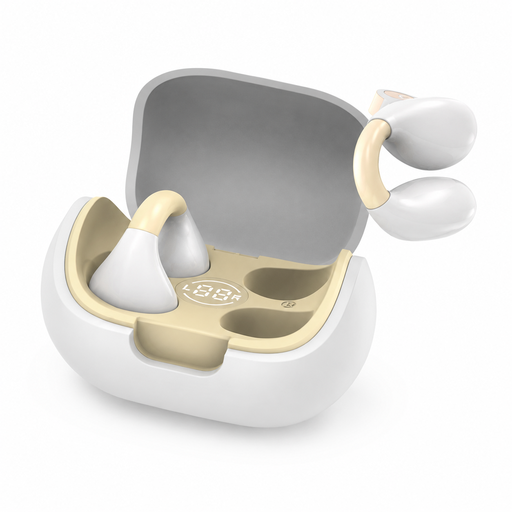
Why This Fits Their Persona: A straightforward ear-hook option for commuters, casual walkers and first-time open-ear buyers who want touch controls and a charging case without choosing a feature-heavy model.
The listing states a five-to-seven-hour playback time and up to 15 metres of Bluetooth transmission, making the operating expectations clear.
Bluetooth 5.4, touch control, ear-hook wearing style and a 300mAh charging box.

Why This Fits Their Persona: Suitable for office workers and commuters wanting adjustable ear hooks, detailed specification information and the ability to switch between two connected devices.
Its listing separates AI call noise cancellation from the open-ear playback design and states the IP55 rating rather than using only a general water-resistant claim.
LDAC and SBC support, up to 10 hours per charge, up to 40 hours with the case and multipoint connection.
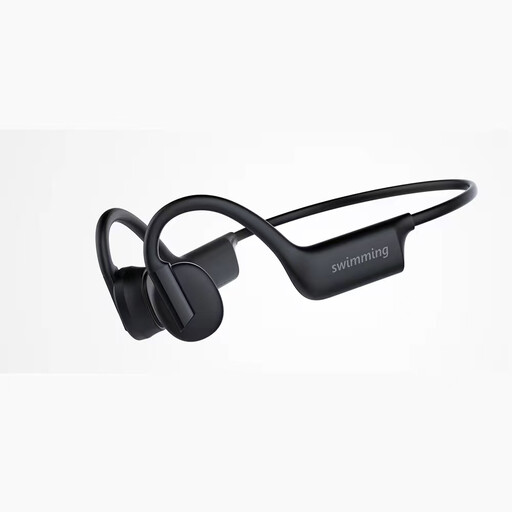
Why This Fits Their Persona: A feature-led option for users who need onboard storage, magnetic charging and a stated water-resistance specification for demanding outdoor routines.
The listing identifies its 32GB memory, eight-hour maximum battery life and IPX8 rating, so buyers can compare specific figures rather than vague “sports” wording.
32GB onboard memory, magnetic charging, ear-hook fit and a listed 10-metre-plus wireless distance.
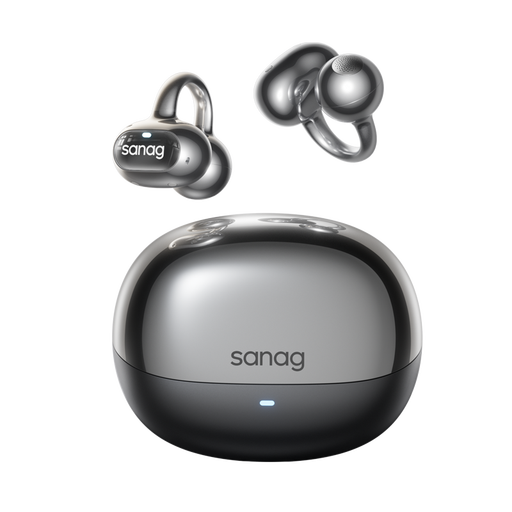
Why This Fits Their Persona: Designed for shoppers interested in app-based recording, transcription and face-to-face translation alongside open-ear listening for work or travel.
The supplied information identifies the app requirement, approximately seven-hour earbud battery life and IPX7 earbud rating, while noting that the case is not fully waterproof.
Bluetooth 5.4, Type-C charging, touch controls and stated AI recording, transcription and translation functions.
We have compiled a complete, real-time list of products that fully satisfy these strict selection criteria and UK safety regulations.
They can be suitable when you want to hear your surroundings, but fit and volume remain important. Choose a secure ear-hook or ear-clip design, check the stated water rating and avoid relying on open-ear audio in environments where external noise is overwhelming.
Service life depends on charging habits, battery wear, moisture exposure and physical handling. Keep the charging contacts dry, avoid extreme temperatures and store the headphones safely. A model with a replaceable battery is uncommon, so check the warranty and care instructions before buying.
Their main running cost is electricity for charging, which is usually modest. The more practical consideration is charging frequency. A case with a larger battery can reduce the need to find a socket during travel, while a model with onboard memory may reduce reliance on a phone for compatible playback.