
24/7 Customer Support

Free returns

Same-day & Next-day Delivery

Quality Guaranteed

Unlock Your Welcome Offers: FREE Delivery | Up to 80% OFF | Free 30-day JoyPlus trial
Download the APP
Open-ear headphones are gaining popularity across the UK, and for good reason. For runners navigating city parks, cyclists on their daily commute or professionals who need to stay aware of their office environment, the ability to listen to audio without blocking out the world is a significant advantage. However, the market is flooded with options, and it is easy to fall for marketing hype that leads to a disappointing purchase.
As a Joybuy Product Recommendation Officer, my role is to help you see past the buzzwords. Many buyers find their new headphones are uncomfortable after an hour, slip off during a workout or fail after a few encounters with British weather. Before you invest, let’s look at the common pitfalls and the essential features you should be scrutinising.
To make an informed choice, focus on the specifications that directly impact performance and longevity. Here are the three non-negotiable factors to check.
The design of the hook is paramount for a stable fit. Look for ear hook headphones made from flexible, soft-touch materials like silicone that can mould to the unique shape of your ear. Some models feature adjustable or rotatable hooks, offering a more customised and secure fit. This is especially critical for headphones for running or other high-impact sports, where constant movement can easily dislodge poorly fitted earbuds. The weight distribution is also key; a design that balances the weight evenly around the ear will feel more comfortable and stable for extended wear.
An IP rating consists of two numbers. The first indicates dust protection, and the second indicates water protection. For wireless sports earbuds, the water resistance rating is the most important.
Always check for a specific IP rating to ensure your headphones can handle your intended activity level and the unpredictable UK climate.
As mentioned, open-ear headphones use either bone or air conduction. If privacy is a concern—for example, in a quiet office or on public transport—it is worth investigating how a model manages sound leakage. Many modern air conduction headphones incorporate directional acoustic technology, which focuses the sound towards your ear canal to minimise what others can hear. While no open-ear design can be completely silent to those around you, some perform significantly better than others.
Based on these practical criteria, here are a few recommendations matched to different user needs.

Why This Fits Their Persona: Ideal for UK runners and gym-goers who need gear that performs in all conditions. The combination of a high water-resistance rating and a fully adjustable fit ensures they stay secure and functional during intense workouts, rain or shine.
It counters the vague "sweatproof" claim with a verifiable IP55 dust and water-resistance rating. The rotatable ear hooks directly solve the "insecure fit" problem by allowing a customised fit for different ear shapes.
Features a long 40-hour total playtime with the case and supports multipoint connection, allowing you to switch between two devices seamlessly.

Why This Fits Their Persona: Perfect for the UK professional who needs to take calls on a busy commute and stay aware in the office. Its extremely light build and focus on comfort make it suitable for wearing all day without fatigue.
It delivers on the "all-day comfort" promise with a verifiable weight of just 8.3g per earbud and an ergonomic hook. It also uses DirectPitch technology to minimise sound leakage, addressing a key concern for office use.
Provides a premium audio experience while maintaining full situational awareness. The IP54 rating ensures it can handle a sweaty workout or a light drizzle on the way to a meeting.
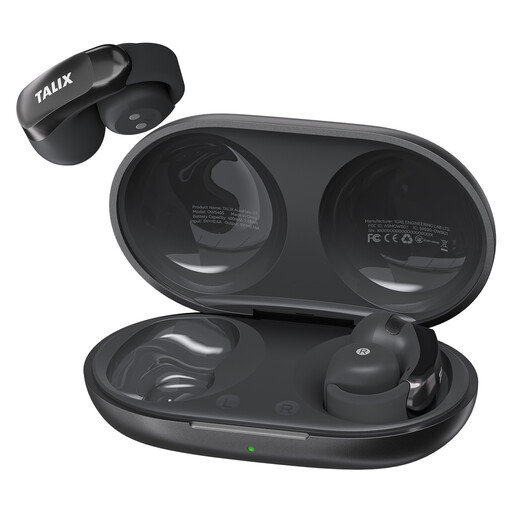
Why This Fits Their Persona: An excellent entry point for those new to open-ear technology. It provides the core benefits—a secure fit, clear calls and situational awareness—without the premium price tag, making it great for daily use and casual fitness.
It avoids over-promising by providing a clear IPX4 waterproof rating, which accurately sets expectations for its resistance to sweat and light rain. The soft silicone earhook design addresses the need for a secure, comfortable fit.
Extremely lightweight at only 5.2g per earbud. It also offers fast charging, giving you 2 hours of playback from just a 10-minute charge, which is very convenient for a busy lifestyle.
We have compiled a complete, real-time list of products that fully satisfy these strict selection criteria and UK safety regulations.
Are open-ear headphones safe for running on UK roads? Yes, one of their primary benefits is safety. Because they don't block your ear canal, they provide excellent situational awareness. You can hear traffic, cyclists, pedestrians and other potential hazards, making them a much safer choice for outdoor exercise in urban and suburban environments compared to traditional, noise-isolating earbuds.
Can people around me hear my music with open-ear headphones? This is a common concern and depends on the technology and volume. True bone conduction headphones typically have minimal sound leakage. Air conduction models can be more audible to others, especially at high volumes in quiet settings. However, many newer models use directional sound technology to minimise this. As a rule of thumb, if you are in a quiet office or on a packed train, it is considerate to keep the volume at a moderate level.
How long do open-ear headphones typically last? The lifespan depends on build quality, battery health and usage. Look for models with a solid IP rating (like IP54 or higher) to ensure durability against moisture. The lithium-ion batteries in the earbuds and charging case will naturally degrade over time. A typical pair should offer several years of reliable use. Models with a total battery life of 20+ hours (including the case) require less frequent charging cycles, which can help prolong the battery's overall lifespan.