Panoramic-world explorers
You want landscapes and quest information across one continuous screen. An ultrawide format is worth considering if your games offer settings that suit it and you have room for the display on your desk.


For open-world quests, choose a 21:9 or 32:9 monitor if a panoramic single-screen view matters most; choose a 32-inch 4K screen if you prefer detailed images in a conventional 16:9 frame. The wider options call for closer checks on desk fit and game display settings, while every route requires a source device and connection capable of the resolution and refresh rate you intend to use.
The useful starting point is the kind of view you want during a quest: a wider landscape, detailed conventional framing, or room to balance visual detail with fast action.
You want landscapes and quest information across one continuous screen. An ultrawide format is worth considering if your games offer settings that suit it and you have room for the display on your desk.
You prefer a conventional 16:9 frame for detailed environments, maps and menus, while still wanting a large screen for gaming and video.
You move between exploration and combat or racing. Compare the resolution and refresh-rate modes you would actually use with the output your device and connection can deliver.
Choose the screen shape before comparing headline refresh rates: 21:9 and 32:9 offer different kinds of panoramic layout, while 16:9 keeps conventional framing.
Consider it: When you want a large ultrawide view without moving to a 32:9 layout. LG UK lists its 45GX950A with a 5120×2160 mode at 165Hz.
Trade-off: The 5K2K mode has more pixels to drive than 4K; the model's 330Hz dual mode uses a lower resolution.
Consider it: When horizontal span is your priority and you want one super-ultrawide screen. Samsung UK lists its G93SC as a 49-inch Dual QHD model.
Trade-off: Its extra-wide shape makes desk width and your games' display settings especially important checks.
Consider it: When detailed 3840×2160 presentation in a conventional frame matters more than an ultrawide view. Dell UK lists the 31.6-inch Alienware AW3225QF at up to 240Hz.
Trade-off: It does not provide the horizontal span of the 21:9 or 32:9 routes, and using its stated 4K refresh mode depends on the source device and connection.
| Concern | What to check | Who this matters to |
|---|---|---|
| Panoramic view | Compare 21:9 with 32:9, then check the display options in the games you intend to play. | I want more of the landscape across one uninterrupted screen, provided my games suit the wider shape. Around 36% of consumers put that panoramic view first. |
| 4K detail and framing | Check the native resolution and whether you prefer a conventional 16:9 image to extra width. | For detailed environments and readable maps, I would rather keep a familiar screen shape than extend the view sideways. Roughly 27% of consumers prioritise that combination. |
| Motion and output | Match the desired resolution and refresh-rate mode to your device, port and cable. | When a quest turns into combat or racing, I care about the mode my setup can actually run. Around 19% of consumers place that balance ahead of the other concerns. |
| Setup and ownership | Check the stand footprint and desk space; for OLED, review the exact model's static-image controls. | I need the screen to fit my desk and work for both gaming and time spent with fixed desktop content. About 18% of consumers make those practicalities their primary concern. |
A 49-inch 32:9 screen, a 45-inch 21:9 screen and a 32-inch 16:9 screen present game worlds differently. Their diagonal measurements do not tell you whether the shape or stand will suit your desk.
Choose your preferred aspect ratio, then compare the exact model's stand footprint and dimensions with your available space.
LG UK lists the 45GX950A at 5120×2160 and 165Hz, with a separate lower-resolution 330Hz mode. A headline refresh figure does not describe every available display mode.
Check the resolution-and-refresh combination you want against your source device, port and cable before ordering.
Samsung UK describes brightness controls for detected static logos and taskbars on the G93SC. Those model-specific settings can affect how the screen behaves when fixed content is displayed.
Read the care guidance for the exact OLED model and decide whether its settings suit your mix of gaming and desktop use.
Delivery and cancellation information matters when ordering a large monitor online. An old monitor also needs an appropriate electrical-equipment reuse or recycling route rather than ordinary household disposal.
Keep the listing and order terms, and check a suitable local reuse or recycling route when replacing your monitor.
These manufacturer examples illustrate the three screen formats; check the specifications of the particular model you are considering rather than treating a brand name as a display specification.
LG UK's 45GX950A is an example of a large, curved 21:9 OLED route for open-world play.
Samsung UK's G93SC illustrates the 49-inch curved 32:9 OLED route for a particularly wide single-screen layout.
Dell UK's AW3225QF is an example of a large 16:9 4K QD-OLED screen rather than an ultrawide.
These choices include 49-inch super-ultrawides, smaller wide-format monitors and a 32-inch conventional-format option. Use your preferred screen shape to narrow the list, then check each model's dimensions and intended output mode.
 No image available
Consider this for a single-screen panoramic view if you have room for a 49-inch display. The listed 32:9 panel has 5120×1440 resolution, 1800R curvature and a 240Hz refresh rate.
Check desk width and load capacity, the output mode your device can provide, and the model's OLED-care guidance for fixed desktop content.
 No image available
This 32:9 option suits consumers seeking a very wide, continuous game view. Its listed VA panel has 5120×1440 resolution, a 1500R curve and a 165Hz refresh rate.
Check the desk space and handling requirements, and confirm which resolution and refresh-rate modes its HDMI or DisplayPort connections offer with your device.
 No image available
Consider this QHD monitor if you want a wide gaming screen without choosing a 49-inch display. Its product title lists a 240Hz refresh rate.
Check its stand footprint against your desk and review the exact OLED-care settings if you also spend time with static desktop content.
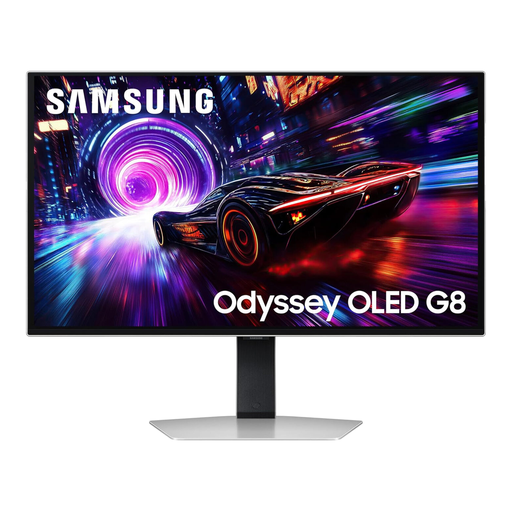 No image available
Consider this 32-inch option if you prefer conventional framing to a super-ultrawide layout.
Before ordering, confirm the exact model identifier and port configuration for the unit, including the resolution and refresh-rate connection you plan to use.
 No image available
This is a smaller wide-format choice for consumers who want more horizontal room than a conventional screen without moving to a 49-inch display.
Confirm its exact native resolution and connection limits for your device, then compare its dimensions and stand with your desk space.
Choose 21:9 if you want an ultrawide view without the full width of a super-ultrawide; choose 32:9 if horizontal span is your priority and your desk and games suit it. LG UK lists the 45GX950A as a 21:9 5120×2160 model, while Samsung UK lists the 49-inch G93SC as 32:9 Dual QHD.
Yes: check the resolution and refresh-rate combination you want against your device, port and cable. A monitor's highest advertised refresh rate may apply to a different mode from the one you plan to use, as LG UK's separate 165Hz 5K2K and lower-resolution 330Hz modes illustrate.
Review the exact model's static-image controls and decide whether their behaviour suits your use. Samsung UK says the G93SC can adjust brightness for detected logos and taskbars and dims after inactivity; do not assume another OLED model has the same controls.
Check the seller's pre-order delivery and cancellation information and keep a copy with your order. GOV.UK says consumers must be told about cancellation up to 14 days after delivery for applicable distance sales; the contract and any applicable exceptions matter. Cancellation for a change of mind is distinct from remedies for faulty, damaged or misdescribed goods.
Use an appropriate electrical-equipment reuse or recycling route rather than putting it in ordinary household waste. GOV.UK identifies the UK Waste Electrical and Electronic Equipment Regulations 2013, as amended, as the framework for managing electrical waste.