What matters when choosing?
Start with where each person will sit and whether the microphones must move with them. Then check how the complete setup records and lets you listen to both voices.
Shared handheld recorder
Choose it when: Two people will stay on opposite sides of one desk and you want a self-contained recording setup.
Accept that: A central position gives neither voice the isolation of its own close microphone; desk knocks and room sound still matter.
One close microphone per speaker
Choose it when: Each seated speaker can remain close to a microphone and controlling unwanted side or rear sound is important.
Accept that: Two microphone positions need suitable recording connections, placement and more setup time.
Dual wireless lavalier system
Choose it when: Both speakers need their own worn microphone or may move away from fixed desk positions.
Accept that: Charging and clothing placement add preparation, and movement against clothing can affect the recording.
| Concern |
What to check |
Who this matters to |
| Both voices at one desk |
Check the pickup directions against the seating plan and whether each voice can be recorded on its own track. |
If we sit opposite each other, I need neither voice to disappear when we speak normally. Around 42% of consumers put shared-desk coverage first. |
| Speech in an imperfect room |
Check whether microphones can sit close to each speaker and be directed away from persistent noise. |
In a room with traffic or other voices nearby, I want speech I can follow without relying on noise processing to fix the space. For around 33% of consumers, room noise and clarity are the primary concern. |
| Recording and preservation |
Check the recording path, headphone monitoring and your plan for copying and retaining files. |
If the interview cannot easily be repeated, I need to know both voices are being recorded and that the file can be kept. Recording assurance comes first for around 25% of consumers. |
Joybuy wireless microphone options
These two-transmitter kits are options for placing a microphone with each person rather than recording both voices from one point on the desk. Before choosing either, confirm how your intended device records and monitors the two voices.
 No image available
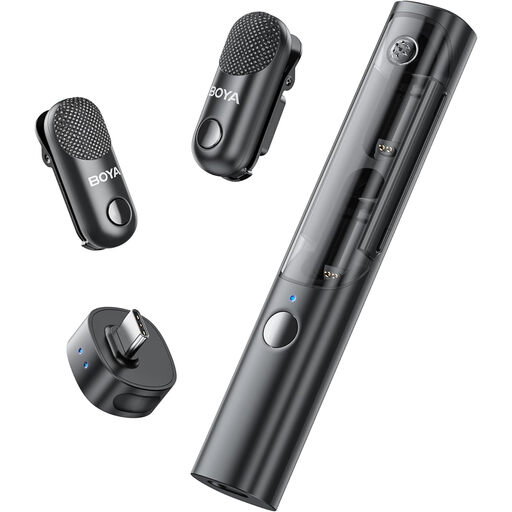
BOYA Magic-05 USB-C wireless lavalier kit (2 TX + 1 RX + charging case)
The two transmitters make this a candidate for giving each seated speaker a worn microphone. The listed kit includes one receiver and a charging case; check how your intended recording device captures and monitors both voices before the interview.
View on Joybuy
 No image available
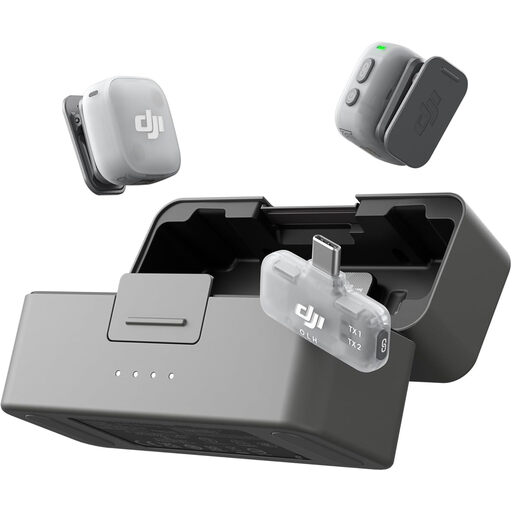
DJI Mic Mini 2 (2 TX + 1 Mobile RX + Charging Case)
This two-transmitter kit is a candidate for placing a microphone with each participant. It is listed with one mobile receiver and a charging case; check compatibility with your recording device, how it handles both voices and whether you can monitor them.
View on Joybuy
Common questions
Can one USB cardioid microphone record both people at a shared desk?
It may capture both voices, but do not assume they will be equally clear. Shure explains that cardioid pickup favours the front over the sides and rear; for opposing seats, test a front/rear-capable recorder or give each person a close microphone.
Where should a shared recorder go during the interview?
Place it so each person speaks towards an intended pickup direction, then test from their actual seats. Keep it away from likely desk knocks and reduce avoidable room noise; the Oral History Society also advises placing microphones close to speakers.
What should I agree with the interviewee before recording?
Explain the recording and its intended use, and obtain the interviewee’s permission before starting, as the Oral History Society advises. For an organisation processing personal data, check the lawful basis that applies to its project; if it relies on UK GDPR consent, the Information Commissioner’s Office says that consent must be specific and informed.
Is a computer microphone enough for an oral-history interview?
It may make a recording, but suitability depends on placement and the recording workflow. The University of Leicester’s oral-history equipment guidance favours a dedicated digital sound recorder for oral-history projects; whichever device you use, test both voices and plan how the file will be kept.


