For a routine school-holiday lunch, choose water or plain milk: NHS guidance identifies these as the preferred drinks for children and advises against fizzy drinks for babies and young children. If you want 100% orange juice, the NHS advises no more than a combined 150ml of fruit juice and smoothies per day, served with meals. For an occasional sparkling orange drink, compare sugars per 100ml, the amount you plan to serve and the juice percentage; an orange-flavoured soft drink is not necessarily orange juice.
Who is choosing the lunch drink?
The right comparison depends on whether you need a routine drink, an occasional fizzy option or a serving of orange juice.
Parents planning everyday holiday lunches
If the drink will be served regularly, start with water or plain milk. NHS guidance favours these for children; it also advises against fizzy drinks for babies and young children because they are acidic and can damage tooth enamel.
Families planning an occasional fizzy lunch
If bubbles are part of a shared meal, check the particular drink. Sparkling flavoured water and orange soft drinks can have different sugar figures, ingredients and juice percentages, so the name alone will not tell you what is in the glass.
Shoppers looking for orange juice
If you mean a juice serving rather than orange flavour, read the ingredient list and juice percentage. Tropicana UK describes Original Orange as 100% orange juice; the sparkling product examples below are different kinds of drink.
What should you check first?
Water or plain milk
Choose when: You need a routine drink for a child’s lunch; NHS guidance identifies water and milk as the preferred choices.
Bear in mind: Neither provides orange flavour, fizz or an orange-juice serving.
Still 100% orange juice
Choose when: You specifically want orange juice rather than a sparkling soft drink.
Bear in mind: The NHS advises a combined limit of 150ml of fruit juice and smoothies per day, served at mealtimes.
Sparkling orange drink
Choose when: Fizz is wanted for an occasional lunch and you can compare the intended portion with the drink’s label.
Bear in mind: Juice content and sugars vary between products; NHS guidance says fizzy drinks should not be given to babies and young children.
Once you have chosen the type of drink, compare labels using the same measure and the portion that will actually be served.
| Priority |
What to check |
Your needs |
| Sugars |
Compare sugars per 100ml on liquid drinks, then check the amount in the intended serving. Keep labels using different units, such as per 100g, distinct rather than treating them as identical measures. |
I want to compare drinks fairly even when one comes in a can and another in a large bottle. Tesco Groceries lists 0.2g sugars per 100ml for Tesco Orange & Mango Sparkling Water, while its Sanpellegrino Orange listing gives 4.4g per 100ml. |
| Juice content |
Read the ingredients and stated juice percentage. Check whether the product is 100% juice, flavoured sparkling water or a sparkling soft drink containing some juice. |
If I ask for orange juice, I want to know whether the drink is actually juice. Tropicana UK describes Original Orange as 100% orange juice; Marks & Spencer lists 13% orange juice from concentrate in its Sparkling Brazilian Orange. |
| Serving size |
Check sugars for the amount likely to be poured or consumed, not just per 100ml. For 100% juice, account for other juice or smoothies consumed that day. |
A whole can or bottle may be more than I intend to serve at lunch. Tesco Groceries lists 14.5g sugars per 330ml can of Sanpellegrino Orange; NHS guidance sets a combined daily fruit-juice and smoothie limit of 150ml, to be taken with meals. |
| Fizz and timing |
Check whether the drink is carbonated, even if its listed sugar figure is small. If serving juice, keep it with the meal rather than offering it for repeated sipping. |
For a younger child, I need to consider more than the sugar figure. The NHS says fizzy drinks are acidic and should not be given to babies and young children; it recommends having fruit juice and smoothies at mealtimes. |
What is easy to overlook?
-
Assuming a drink containing juice is 100% orange juice
A sparkling drink can contain orange juice without being a juice serving. Marks & Spencer lists 13% orange juice from concentrate in Sparkling Brazilian Orange, whereas Tropicana UK describes still Original Orange as 100% orange juice.
Check the ingredient list and juice percentage before deciding whether you want juice, an orange-flavoured drink or a fizzy soft drink.
-
Comparing packs without checking the amount served
The sugar figure for a whole drink depends on its portion size. Tesco Groceries lists 0.5g sugars per 250ml glass of Tesco Orange & Mango Sparkling Water and 11g per 250ml serving of Fanta Orange; its Sanpellegrino Orange listing gives 14.5g per 330ml can.
Start with sugars per 100ml for a like-for-like comparison, then check the figure for the portion you intend to serve.
-
Making a fizzy orange drink the routine lunch option
A small sugar figure does not make a carbonated drink the same choice as water. NHS guidance identifies water and milk as the preferred drinks for children and says fizzy drinks should not be given to babies and young children.
Keep water or plain milk as the routine option. If fizz is wanted for another lunch occasion, check the product and who will be drinking it.
-
Reading “no added sugar” as “no sugars”
Tropicana UK describes Original Orange as having no added sugar, but its label lists 8.4g sugars per 100ml. The NHS daily guidance still applies to fruit juice and smoothies.
If serving 100% orange juice, measure the portion against the combined 150ml daily juice-and-smoothie guidance and serve it with the meal.
What do the brand examples show?
These named products illustrate different formulations; their labels do not describe every drink made by the same brand.
Tesco
Tesco Orange & Mango Sparkling Water is an orange-and-mango flavoured sparkling water, not a 100% orange-juice product.
- Tesco Groceries lists 0.2g sugars per 100ml and 0.5g per 250ml glass.
- The product contains sweeteners and should not be treated as an orange-juice serving.
M&S
Sparkling Brazilian Orange is a sparkling soft drink with orange-derived ingredients.
- Marks & Spencer lists 13% orange juice from concentrate and 5% comminuted oranges.
- Its label lists sugar and 4.4g sugars per 100g. The container is pressurised and should not be shaken.
Tropicana
Original Orange is a still orange-juice example for shoppers seeking juice rather than fizz.
- Tropicana UK describes it as 100% orange juice with no added sugar and lists orange juice as the ingredient.
- The manufacturer lists 8.4g sugars per 100ml; NHS guidance limits fruit juice and smoothies to a combined 150ml per day, served with meals.
Sanpellegrino
Sanpellegrino Orange is a sparkling orange soft drink, distinct from 100% orange juice.
- Tesco Groceries lists 16% orange juice from concentrate.
- The same listing gives 4.4g sugars per 100ml and 14.5g per 330ml can; check the intended serving.
Orangina
Orangina is a sparkling citrus drink with pulp, rather than a 100% orange juice.
- Tesco Groceries lists 12% citrus juice from concentrate and 2% pulp for its 420ml product.
- That listing describes a drink with sugar and sweeteners and gives 1.2g sugars per 100ml; check the amount poured from the bottle.
Joybuy orange-drink options
These Joybuy options are packaged orange-flavoured drinks for an occasional lunch. They are not a substitute for choosing water or plain milk as a routine children’s drink, and their names alone do not establish their sugar or juice content.
 No image available
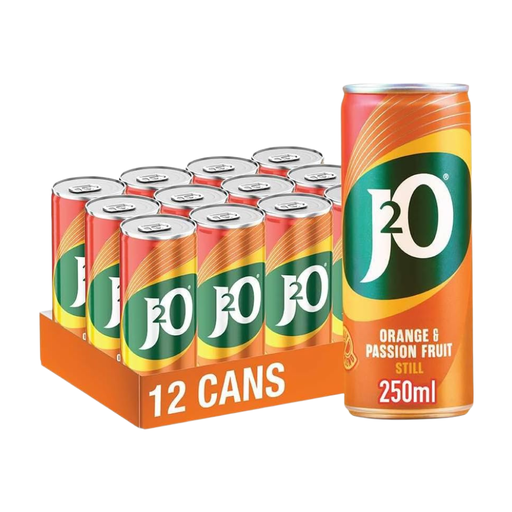
J2O Orange & Passion Fruit 12 × 250ml
The 12 × 250ml format gives you individually sized drinks for a shared lunch. Check the current pack for sugars, ingredients and whether it meets your preference for a sparkling drink.
View on Joybuy
 No image available
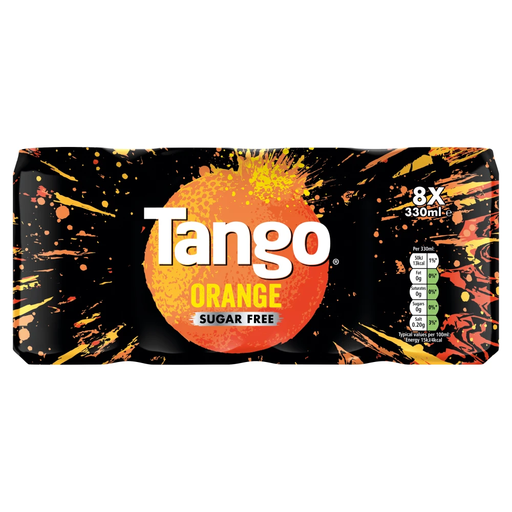
Tango Orange Sugar Free 8 × 330ml
This carbonated orange drink comes in an eight-pack of 330ml cans. If the sugar-free variant is important to your choice, compare the current can’s nutrition and ingredients with the amount you plan to serve.
View on Joybuy
 No image available
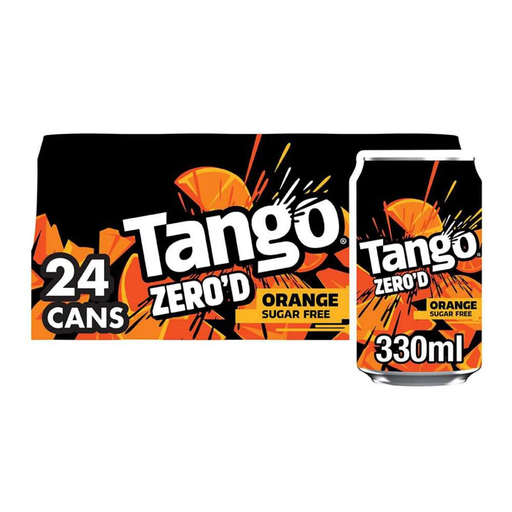
Tango Orange Zero'd 24 × 330ml
The 24 × 330ml format is suited to planning drinks for more than one lunch. Check the current can’s sugars per 100ml and ingredients if the Zero'd variant is central to your decision.
View on Joybuy
 No image available
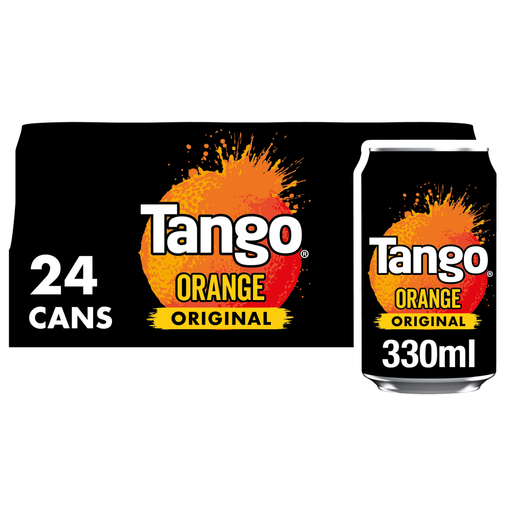
Tango Orange 24 × 330ml
This 24-pack offers individual 330ml servings for a shared lunch. Compare the current can’s sugars per 100ml and per can before deciding how much to serve.
View on Joybuy
 No image available
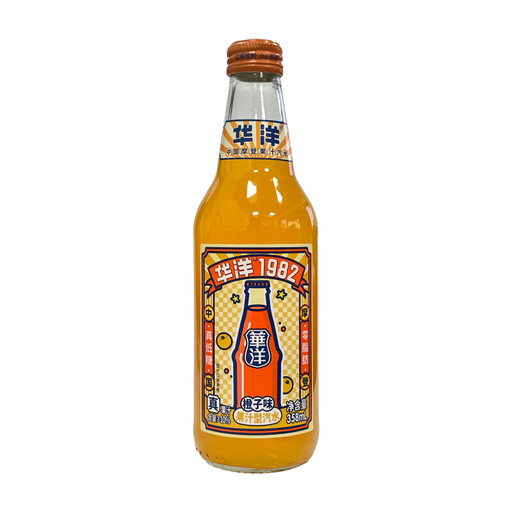
Huayang 1982 Orange Juice Soda Drink 358ml
This 358ml orange-flavour juice soda drink is an option when fizz is wanted at an occasional lunch. Check the current label for sugars and juice percentage before comparing it with other orange drinks.
View on Joybuy
Questions about orange drinks
Is a sparkling orange drink the same as orange juice?
Not necessarily. Check the ingredients and juice percentage: Tropicana UK describes still Original Orange as 100% orange juice, while Tesco Groceries lists 16% orange juice from concentrate in Sanpellegrino Orange, a sparkling soft drink.
How much orange juice should I serve with a child’s lunch?
NHS guidance advises no more than a combined 150ml of fruit juice and smoothies per day for children and adults, served at mealtimes. Include any other juice or smoothie consumed that day when measuring a lunch portion.
Does a lower sugar figure make a fizzy drink suitable for a young child?
No: sugar is not the only consideration. The NHS says fizzy drinks are acidic and should not be given to babies and young children; it identifies water and milk as the preferred drinks for children.
What should I check on a large sparkling bottle?
Compare its sugar figure with the amount you intend to pour, then follow the container instructions. Marks & Spencer lists 4.4g sugars per 100g for Sparkling Brazilian Orange and warns that its pressurised container should be opened with care and not shaken.


