What should you check?
Decide whether you want straight juice or a drink made from concentrate, then compare sugar on the serving basis you will actually use.
Diluted orange squash
Choose it when: You want to prepare an orange drink by the glass and compare sugar per diluted serving.
Bear in mind: It is not straight juice; mixing instructions, sweeteners and allergens differ between products.
100% orange juice
Choose it when: You specifically want juice rather than a drink made from concentrate.
Bear in mind: According to the NHS, its naturally occurring sugars count as free sugars even when no sugar is added.
| Priority |
What to check |
Your needs |
| Sugar label |
Read the sugars figure as well as the no-added-sugar claim. Check whether it applies to straight juice or a diluted drink. Tropicana lists 13g per 150ml for Original Orange; the NHS says sugars in unsweetened juice count as free sugars. |
I want to know how much sugar is in the serving I pour, rather than choosing on the front-of-pack wording alone. |
| Prepared serving |
For squash, compare the stated prepared-serving size and follow the dilution directions. Tesco lists 2.2g sugars per 250ml diluted as instructed; Sainsbury's lists less than 0.5g per 250ml for Fruit & Barley Orange. |
If I will refill a glass during a gaming session, I want to compare drinks made at their stated mixing strength. |
| Ingredients |
Check the current sweetener and allergen information. Tesco, Asda and Sainsbury's orange concentrates list sweeteners and sodium metabisulphite; Sainsbury's Fruit & Barley Orange also lists barley extract. |
I may prefer to avoid a particular sweetener or need to check for sulphites or cereals containing gluten. |
| Juice serving |
Measure straight juice separately from squash. The NHS advises limiting fruit juice and smoothies to a combined 150ml a day and having them with meals. |
When I choose 100% orange juice, I want a measured serving with food rather than repeatedly topping up the glass. |
Brand and retailer examples
These named products illustrate different label and ingredient checks; the figures apply to the specified drinks and serving sizes, not to every product from each brand.
Tropicana
Tropicana describes Original Orange as 100% pressed orange juice, not from concentrate, with no added sugar.
- Its ingredient is orange juice, according to Tropicana.
- Tropicana lists 13g sugars per 150ml; no added sugar does not mean no sugar.
Tesco
Tesco No Added Sugar High Juice Orange is a concentrate to dilute, rather than straight orange juice.
- Tesco lists 2.2g sugars per 250ml when diluted according to instructions.
- Its ingredient information includes sweeteners and sodium metabisulphite.
Sainsbury's
Its no-added-sugar High Juice Orange Squash and Fruit & Barley Orange are different prepared-drink options.
- Sainsbury's lists 2.4g sugars per 250ml for High Juice and less than 0.5g per 250ml for Fruit & Barley Orange.
- Both list sweeteners and sodium metabisulphite; Fruit & Barley Orange also has a cereals-containing-gluten allergen statement.
Asda
Asda 50% Fruit No Added Sugar High Juice Orange is a drink to dilute as directed.
- Asda lists 2.5g sugars per 250ml diluted serving.
- Its ingredients include sweeteners and sodium metabisulphite; Asda identifies sulphites in its allergy advice.
M&S
M&S offers both Mediterranean Orange High Juice concentrate and Smooth Orange Juice; they should be compared as different drink types.
- Marks & Spencer labels the High Juice no added sugar and lists 1.1g sugars per 100g.
- The High Juice contains sucralose and sulphites. Smooth Orange Juice is not from concentrate and lists 9.3g sugars per 100g.
Joybuy orange drink options
These options include a no-added-sugar orange squash to dilute and two ready-to-drink orange fizzy drinks. The fizzy drinks are not 100% orange juice, so check their current pack claims if “no added sugar” is your deciding requirement.
 No image available
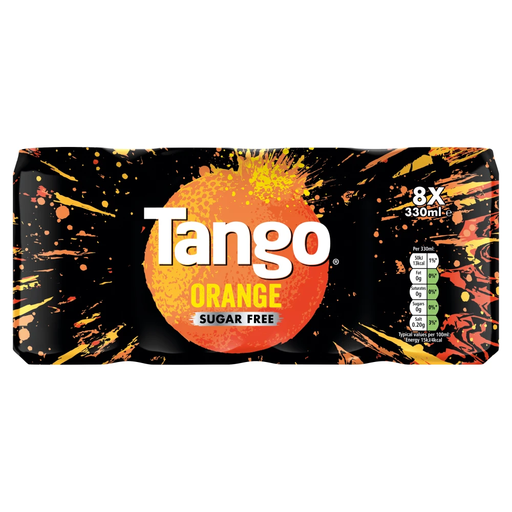
Tango Orange Sugar Free, 8 × 330ml
A ready-to-drink fizzy orange option for a snack occasion, rather than orange juice or squash. Check the current pack for its no-added-sugar claim if that wording matters to you.
View on Joybuy
 No image available
Robinsons No Added Sugar Orange Squash, 1L
This squash fits a drink you prepare by the glass; dilute it according to the pack directions. Check the current ingredients and allergen information for sweeteners and sulphites, and use the prepared-serving nutrition panel for a precise sugar comparison.
View on Joybuy
 No image available
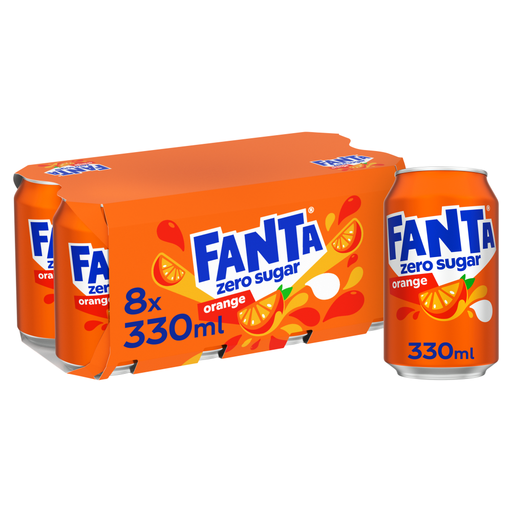
Fanta Orange Zero Sugar, 8 × 330ml
A ready-to-drink fizzy orange option, not straight juice or squash. Check the current pack's nutrition panel against the Zero Sugar name before relying on its sugar wording, and confirm any no-added-sugar claim separately.
View on Joybuy
Questions about orange drinks
Does no added sugar mean orange juice contains no sugar?
No. The NHS says naturally occurring sugars in unsweetened fruit juice count as free sugars. Tropicana Original Orange, for example, is labelled no added sugar but lists 13g sugars per 150ml.
Which suits a drink you can refill during gaming: juice or squash?
If you are comparing a larger prepared orange drink by its labelled sugar amount, check no-added-sugar squashes diluted as directed; Tesco, Asda and Sainsbury's list different amounts per 250ml serving. If you specifically want 100% juice, measure it separately: the NHS advises limiting juice and smoothies to a combined 150ml a day.
When should I have a serving of 100% orange juice?
The NHS advises having juice and smoothies with meals and limiting them to a combined 150ml a day. That guidance concerns juice and smoothies, not the mixing quantity for a squash concentrate.
Do no-added-sugar orange squashes contain sweeteners or allergens?
Some do. The checked Tesco, Asda and Sainsbury's concentrates list sweeteners and sodium metabisulphite or sulphites. Sainsbury's Fruit & Barley Orange also contains barley extract and carries a cereals-containing-gluten allergen statement; check the current pack of the product you choose.
Does a larger glass of juice count as more than one 5 A Day portion?
No. According to the NHS, a 150ml serving of fruit juice, vegetable juice or smoothie counts once towards 5 A Day; drinking more does not add another portion.


