Travellers looking for orange juice
If juice content is the deciding factor, look for a product labelled 100% orange juice. Then choose a pack size that suits what you plan to drink during the journey.


Choose a product labelled 100% orange juice if you want juice; choose a sparkling orange drink if fizz matters more, but check its juice percentage rather than treating the two as equivalent. For a train journey, consider how much you will drink and follow the exact pack’s storage instructions, particularly if you expect leftovers.
If juice content is the deciding factor, look for a product labelled 100% orange juice. Then choose a pack size that suits what you plan to drink during the journey.
A sparkling orange drink suits a preference for carbonation. Check the stated juice percentage, ingredients and nutrition label rather than assuming it has the same composition as orange juice.
A smaller pack may be easier to finish on one journey than a household-size bottle. If you plan to keep any drink for later, check its after-opening storage instructions.
Decide whether you want juice or fizz first; then compare the label and pack format for the journey you have planned.
| Priority | What to check | Your needs |
|---|---|---|
| Type of drink | Read the product description, ingredients and juice percentage. Tesco describes Orangina as containing 12% citrus juice; Sainsbury’s describes Sanpellegrino Orange as containing 16% orange juice from concentrate. | I want to know whether I am buying 100% orange juice or a fizzy drink that contains some juice. |
| Juice portion | Check the volume you intend to drink. NHS 5 A Day guidance says fruit juice, vegetable juice and smoothies count only once and recommends limiting their combined amount to 150ml a day. | A bottle may contain more than I intend to drink as juice during the journey. |
| Ingredients and sugars | Compare sugars using the same basis, such as per 100ml, and check the ingredients for sugar or sweeteners. A sparkling orange drink’s formulation cannot be judged from its flavour name alone. | If I am comparing two drinks, I want to read their labels on the same basis rather than guess from the packaging. |
| Pack format | Check the volume of each bottle or can and whether it is sold singly or in a multipack. | For one train journey, I may want one drink rather than a larger pack to take home or share. |
| Storage | Read the unopened and after-opening instructions on the exact pack. M&S says its Smooth Orange Juice should be kept cool and dry before opening, then refrigerated and drunk within four days. | If I cannot refrigerate leftovers, I need to plan when I will open the drink and how much I will finish. |
Some sparkling orange products are soft drinks containing a stated proportion of juice. Tesco’s Orangina listing specifies 12% citrus juice, while Sainsbury’s Sanpellegrino Orange listing specifies 16% orange juice from concentrate.
If you want juice rather than an orange-flavoured fizzy drink, check the product description, ingredients and juice percentage.
NHS guidance says fruit juice, vegetable juice and smoothies count only once towards 5 A Day and recommends a combined limit of 150ml a day. A larger bottle does not create extra portions.
Check the bottle’s volume against the amount of juice you intend to drink.
A larger container may leave you with a drink that needs refrigeration. M&S instructs shoppers to refrigerate its Smooth Orange Juice after opening and drink it within four days.
Check the exact pack’s storage directions before choosing a size you expect to leave unfinished.
Keeping leftovers may mean carrying the opened pack and arranging refrigeration after the journey.
These examples help identify drink types and pack formats; a retailer’s range does not make every product suitable for the same journey.
A reference point for 100% orange juice: Tropicana describes its Smooth Orange Value Pack as pressed fruit juice, not from concentrate.
A branded orange-juice option in supermarket ranges; Sainsbury’s lists innocent Pure Orange Juice Smooth in a 900ml pack.
Its listings provide examples of both orange juice and sparkling orange soft drinks.
Its listings include orange juice as well as Sanpellegrino Orange, described as a sparkling beverage.
A useful example when storage before and after opening matters.
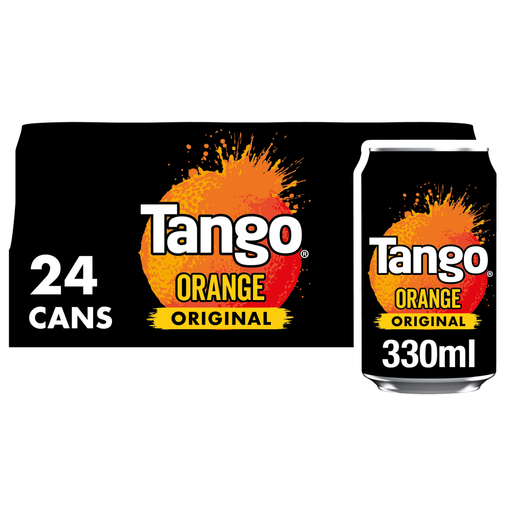
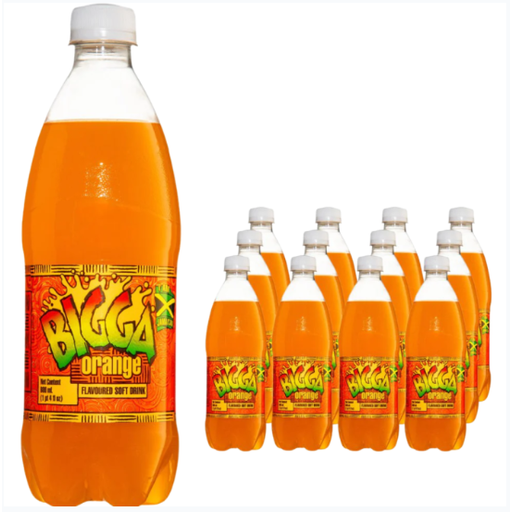
These are sparkling orange drink options for the fizzy-drink side of the train-journey decision. Both are multipacks, so check whether the quantity suits your plans.
 No image available
If you want a fizzy orange drink for the journey, this pack contains 24 cans of 330ml each rather than a single drink. Check the can label for its ingredients and nutrition information.
 No image available
This fizzy orange option comes as 12 bottles of 600ml each, a substantial quantity if you only need one drink for the train. Check the bottle label for juice content, ingredients, nutrition and storage instructions when deciding whether it suits you.
Not necessarily. Tesco describes Orangina as a sparkling drink containing 12% citrus juice, and Sainsbury’s describes Sanpellegrino Orange as a sparkling beverage containing 16% orange juice from concentrate. Check the description and stated juice percentage if you want 100% orange juice.
No. NHS guidance says fruit juice, vegetable juice and smoothies count only once towards 5 A Day and recommends limiting their combined amount to 150ml a day. The size of a retail bottle does not change that guidance.
Check the unopened and after-opening storage instructions on the exact pack. M&S says its Smooth Orange Juice should be stored cool and dry before opening, then refrigerated and drunk within four days.
No. Check the nutrition information for the specific drinks, comparing figures on the same basis, such as per 100ml. Read the ingredients too: sparkling orange drinks may contain sugar, sweeteners or both.