Hosts serving different preferences
Offering a 100% juice alongside a juice drink or diluted squash lets guests choose between different orange-drink types. Check each label before treating them as interchangeable.


Choose 100% orange juice for guests who want a drink made from oranges alone; the Tropicana and innocent examples list 13g and 12g sugars per 150ml respectively. If sugars per served glass are the priority, the checked Tesco ready-to-drink juice drink and correctly diluted high-juice squash each list 2.2g per 250ml, but both contain sweeteners and neither is sugar-free. For a longer evening, plan juice portions: NHS guidance recommends no more than 150ml of fruit juice and smoothies combined per day.
The useful distinction for a mixed group is whether guests want pure juice, a drink with less sugar per serving, or particular ingredients avoided.
Offering a 100% juice alongside a juice drink or diluted squash lets guests choose between different orange-drink types. Check each label before treating them as interchangeable.
Compare the nutrition figures for the portion you will actually serve. Tesco lists 2.2g sugars per 250ml carton of its no-added-sugar juice drink and per 250ml glass of its High Juice when diluted as directed; its listing for innocent Smooth Orange Juice gives 12g per 150ml.
Pure juice, juice drinks and squash have different ingredient lists. The checked Tesco High Juice lists sweeteners and sodium metabisulphite, so ask guests about restrictions and read the current pack before serving.
Start with the type of drink, then compare sugars in the prepared portion and choose a format that suits the number of guests.
| Priority | What to check | Your needs |
|---|---|---|
| Sugars per glass | Read ‘of which sugars’ for the portion served. Tesco lists 2.2g per 250ml carton of its no-added-sugar juice drink and per 250ml glass of High Juice diluted as directed; the serving sizes differ from the 150ml juice figures. | I want to compare what will go into each glass, rather than choose by a ‘no added sugar’ claim alone. |
| Drink type | Distinguish 100% orange juice from a juice drink or concentrated squash. Check the ingredient list for juice content, sweeteners and flavourings. | Some guests want juice made only from oranges; others would prefer a formulated orange drink. |
| Ingredients | Read the current ingredients and allergen information. The checked Tesco High Juice lists sucralose, acesulfame K and sodium metabisulphite; Marks & Spencer lists sucralose and sulphites for its Mediterranean Orange High Juice. | Before I pour drinks for a group, I need to know whether anyone avoids particular sweeteners or sulphites. |
| Portions and storage | NHS guidance recommends no more than 150ml of fruit juice and smoothies combined per day. Check dilution directions for squash and after-opening instructions for chilled juice. | Individual drinks may simplify serving, while squash needs water and preparation. I also want a plan for any opened juice left after the game. |
A no-added-sugar label does not give the amount of sugar in the finished drink. The checked Tesco juice drink and prepared High Juice each list 0.9g sugars per 100ml.
Compare ‘of which sugars’ for the serving you intend to pour, then check whether the product is juice, a juice drink or squash.
NHS guidance counts sugars in unsweetened fruit juice as free sugars and recommends a maximum of 150ml of fruit juice and smoothies combined per day.
Plan measured juice servings and have water or another suitable drink available during the rest of the evening.
The checked Tesco High Juice lists sucralose, acesulfame K and sodium metabisulphite; Marks & Spencer lists sucralose and sulphites for its Mediterranean Orange High Juice.
Ask guests about ingredient restrictions and check the current label of the exact product before serving.
The checked innocent Smooth Orange Juice and Marks & Spencer Pure Squeezed Orange Juice Smooth both state that opened packs should be refrigerated and consumed within four days.
Choose a pack size with the likely juice servings in mind, and follow its after-opening instructions.
These examples show how product types and labels differ; a brand name alone does not establish the ingredients or nutrition of every drink it sells.
A 100% orange juice option for guests who specifically want juice rather than a formulated orange drink.
A smooth 100% orange juice option in the checked product listing.
The checked own-label options include both a ready-to-drink no-added-sugar juice drink and a dilutable High Juice.
Its checked Stamford Street Co. product is an orange juice drink, not 100% juice.
The checked range includes a pure squeezed juice and a separate no-added-sugar High Juice.
These Joybuy options are individually portioned orange drinks and a dilutable squash for a board game night. Check their current pack labels when comparing sugars or ingredients; they are not substitutes for guests who specifically want 100% orange juice.
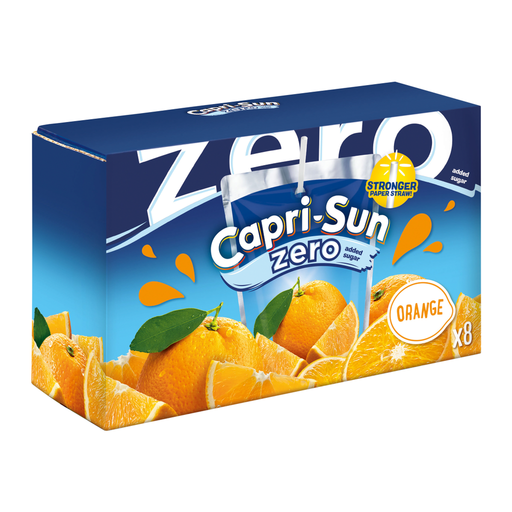 Image unavailable
The 200ml pouches offer individual servings without mixing drinks at the table. Do not assume ‘Zero’ means sugar-free: check the current nutrition panel and ingredients before choosing it for a sugar or sweetener preference.
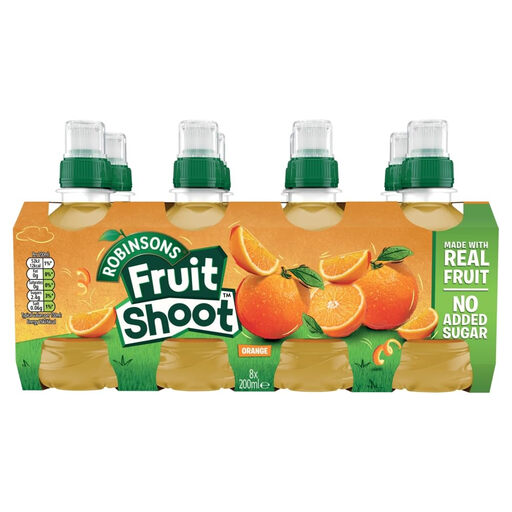 Image unavailable
The eight 200ml bottles provide separate portions for guests. Compare the current ‘of which sugars’ value with other drinks by serving size, and check the ingredients if guests avoid sweeteners.
 Image unavailable
A 1L squash gives the host a drink to prepare as guests need it. Follow the pack’s dilution directions, and check sugars for the prepared serving plus the current sweetener and allergen declarations.
No. Tesco lists 0.9g sugars per 100ml for both its checked no-added-sugar juice drink and its High Juice when prepared as directed. Read ‘of which sugars’ and the ingredients rather than relying on the front-of-pack wording.
NHS guidance recommends limiting fruit juice and smoothies to 150ml combined per day. Plan a measured juice glass for guests who want one, with another suitable drink available during the rest of the game night.
No. The checked Tesco no-added-sugar juice drink lists sucralose, while its High Juice lists sucralose and acesulfame K. Check the current ingredients of the exact drink before serving it.
Check the dilution directions and current ingredients and allergen information. The checked Tesco High Juice lists sodium metabisulphite, and Marks & Spencer lists sulphites for its Mediterranean Orange High Juice.
Follow the storage instructions on the exact pack. Tesco’s listing for innocent Smooth Orange Juice and Marks & Spencer’s listing for Pure Squeezed Orange Juice Smooth both say to refrigerate after opening and consume within four days.