Choose 100% orange juice if an all-orange ingredient list matters, but remember that its naturally occurring sugars count as free sugars: the NHS advises keeping fruit juice and smoothies to a combined 150ml a day and having them at mealtimes. If lower listed sugars are the priority, compare orange juice drinks and squash diluted as directed, checking fruit content, sweeteners and allergens rather than assuming “no added sugar” means sugar-free.
Who is each option for?
Parents choosing an after-school drink
If orange juice is part of the snack, consider whether it is being served at a mealtime and how much juice or smoothie has been consumed that day. The NHS advises a combined daily limit of 150ml for children and adults.
Families who want only orange juice
A 100% orange juice can meet an all-orange ingredient preference without being sugar-free. The NHS counts sugars in unsweetened fruit juice as free sugars.
Families comparing listed sugar amounts
Orange juice drinks and squash can have different fruit contents, sweeteners and preparation instructions from pure juice. Compare the exact product’s ingredients and nutrition figures on the same prepared-drink basis.
What should you check?
100% orange juice
Choose it when: An all-orange ingredient list matters and the juice can be measured and served at a mealtime.
Bear in mind: Juicing does not remove free sugars; the NHS advises no more than 150ml of fruit juice and smoothies combined each day.
Ready-to-drink juice drink
Choose it when: A portable, pre-mixed drink matters more than a 100% juice ingredient list.
Bear in mind: Check the fruit percentage, sweeteners and amount in the bottle; a juice drink is not the same product as pure juice.
High-juice squash
Choose it when: You want to prepare an orange-flavoured drink by diluting a concentrate with water.
Bear in mind: Figures for a prepared drink depend on following its dilution directions; check the ingredients for sweeteners and allergens.
| Priority | What to check | Your needs |
|---|
| Sugar wording |
Read the sugars figure per 100ml and for the amount served. Check the ingredients as well as any “no added sugar” wording; the NHS counts sugars in unsweetened fruit juice as free sugars. |
I want to know how much sugar is in the drink, not assume that a front-of-pack claim means sugar-free. |
| Juice portion |
For fruit juice and smoothies, the NHS advises no more than 150ml combined per day and recommends keeping them to mealtimes. Measure the juice rather than using the pack size as a serving guide. |
If I offer orange juice after school, I need to account for any other juice or smoothie that day and serve it with a meal. |
| Fruit and sweeteners |
Check whether the product is 100% juice, a juice drink or squash, then read its fruit percentage and sweeteners. Sainsbury’s Fruit Slurps, for example, lists 8% fruit juice and contains acesulfame K and sucralose. |
An all-orange ingredient list matters to me more than the listed sugar figure in a different type of drink—or I may prefer to compare those alternatives. |
| Preparation |
For squash, follow the dilution directions before comparing sugars per 100ml of prepared drink with a ready-to-drink product. Check the current pack for allergens; M&S Mediterranean Orange High Juice lists sulphites. |
I’m happy to mix a drink, but I want the nutrition comparison to reflect what will actually go in the glass. |
Common buying mistakes
-
Treating “no added sugar” as sugar-free
Tropicana Smooth Orange lists 13g sugars per 150ml despite being 100% orange juice with no added sugar. The NHS counts sugars in unsweetened fruit juice as free sugars.
Compare the total sugars for the amount you plan to serve and keep fruit juice within the NHS combined 150ml daily juice-and-smoothie guidance.
-
Comparing squash before it is diluted
ASDA’s 50% Fruit No Added Sugar High Juice lists 1.0g sugars per 100ml when diluted as directed. A drink made with a different amount of concentrate is not on that stated basis.
Follow the product’s mixing directions, then compare the prepared drink with other drinks using their stated nutrition units.
-
Assuming a portable bottle is pure juice
Sainsbury’s Fruit Slurps comes in 250ml bottles but is an orange juice drink listing 8% fruit juice and sweeteners. Its bottle size and composition should not be mistaken for a serving of 100% juice.
Check the product category, fruit percentage and sugars for the amount you intend to pour or serve.
-
Overlooking ingredients behind the front label
M&S Mediterranean Orange High Juice lists sucralose and sulphites alongside its no-added-sugar description. Those details may matter when choosing for household preferences or a relevant allergy or sensitivity.
Read the current pack’s ingredients and allergen statement before serving.
Brand and retailer examples
These examples show how products described as no added sugar can differ in fruit content, sugars and preparation.
Tropicana
Tropicana Smooth Orange is a 100% orange juice option.
- Tropicana describes it as pure pressed orange juice, not from concentrate, with no added sugar.
- Tropicana lists 13g sugars per 150ml; an all-orange ingredient list does not make juice sugar-free.
Innocent
Innocent Smooth Orange is another pure-juice option for shoppers seeking squeezed oranges only.
- The Tesco listing gives 7.8g sugars per 100ml and describes the ingredients as 100% orange juice.
- The listing calls for refrigeration and use within four days of opening.
Tesco
Tesco’s Growers Harvest example is an orange juice drink, rather than 100% orange juice.
- The product is described as a no-added-sugar orange juice drink with sweetener and added vitamin C.
- Check its ingredient list if pure juice, rather than a juice drink, is what you want.
Sainsbury’s
Fruit Slurps is a ready-to-drink orange juice drink sold in 250ml bottles.
- Sainsbury’s lists 0.7g sugars per 100ml for this product.
- It lists 8% fruit juice plus acesulfame K and sucralose, so it is not a pure-juice alternative with the same ingredients.
Asda
Asda’s examples include both a squash to dilute and a ready-to-drink orange juice drink.
- ASDA 50% Fruit No Added Sugar High Juice lists 1.0g sugars per 100ml when diluted as directed; JUST ESSENTIALS Orange Juice Drink lists 3.0g per 100ml.
- The products have different fruit contents and contain sweeteners. Use the squash’s prepared-drink figure only when following its dilution directions.
M&S
Mediterranean Orange High Juice is a concentrate intended to be diluted with water.
- M&S states 50% fruit juice and lists 1.1g sugars per 100g of prepared product.
- Its ingredients include sucralose and sulphites. Check the pack for current ingredients and allergy information.
Orange drink options on Joybuy
These options include portable orange juice drinks and a no-added-sugar squash to dilute. Check the exact pack if a no-added-sugar claim is essential: the Fruitshoot option is labelled Low Sugar, which is a different claim.
 No image available
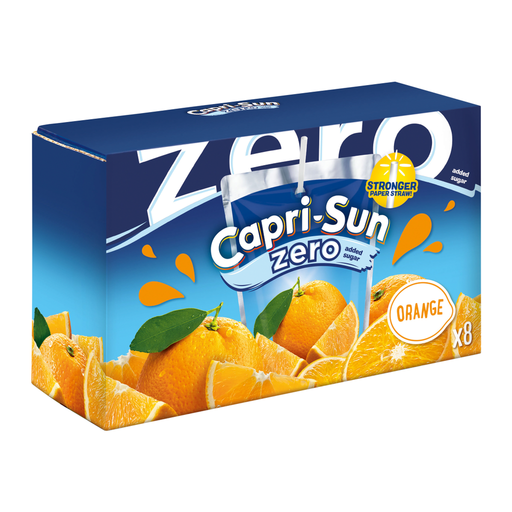
Capri-Sun Zero Orange 8 x 200ml
Eight 200ml pouches offer individual portions for snacks away from home. The product information lists 0.6g sugars per 100ml, 8% juice from orange and lemon, and sucralose; its zero-sugar wording conflicts with the stated sugars figure, so check the pack before relying on that claim.
The product warning says it is unsuitable for children under 3 years because of a choking hazard.
View on Joybuy
 No image available
Robinsons No Added Sugar Orange Squash 1L
This squash is for a drink mixed with water, not for drinking undiluted. Its ingredients list 10% orange fruit from concentrate, sucralose, acesulfame K and sulphites; check the pack’s dilution directions before preparing or comparing a serving.
The product warning says it is unsuitable for children under 36 months.
View on Joybuy
 No image available
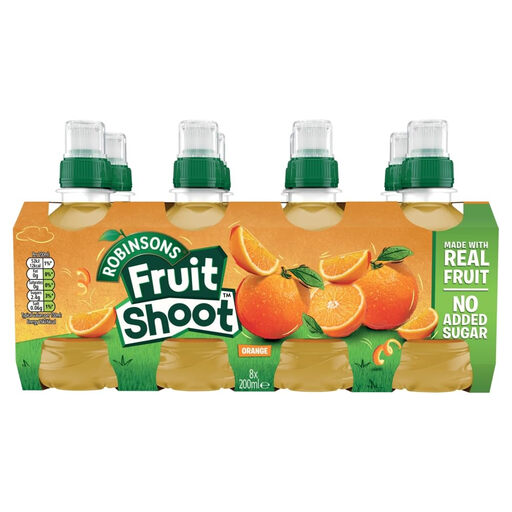
Fruitshoot Orange Low Sugar 8 x 200ml
Eight 200ml bottles provide a portable orange juice drink. The product information lists 1.2g sugars per 100ml, 12% orange juice from concentrate, sucralose and acesulfame K. If you specifically want a “no added sugar” claim, check the pack rather than relying on the Low Sugar title.
The cap warning identifies a choking risk for children under 36 months; refrigerate after opening as directed.
View on Joybuy
Questions about orange drinks
Does “no added sugar” mean orange juice is sugar-free?
No. Orange juice can contain naturally occurring sugars even when no sugar is added. The NHS counts sugars in unsweetened fruit juice as free sugars, so check the total sugars figure and the amount served.
How should orange juice fit into an after-school snack?
The NHS advises children and adults to have no more than 150ml of fruit juice and smoothies combined each day and to keep them to mealtimes. If the after-school snack is not a meal, save the juice for a mealtime; otherwise measure it within that day’s total.
Why might a no-added-sugar orange drink contain sweeteners?
A juice drink or squash can have a different ingredient list from 100% orange juice. The Sainsbury’s Fruit Slurps and ASDA High Juice examples list sweeteners; check the fruit percentage and ingredients if those differences matter to your choice.
What matters when choosing orange high-juice squash?
Follow the dilution directions before using a prepared-drink nutrition figure. Also check the current ingredients and allergen statement: M&S Mediterranean Orange High Juice lists sulphites.
Should I check the pack after reading an online listing?
Yes. Check the pack you are buying for its current ingredients, allergens, nutrition figures and preparation directions. M&S notes that product information can change, making the physical label especially important when an ingredient matters to your household.


