Choose 100% orange juice if you want a fruit-only drink without sweeteners and plan to serve it in small portions: the NHS says sugars in unsweetened juice count as free sugars and advises limiting juice and smoothies to a combined 150ml a day. A ready-to-drink juice drink or diluted squash may suit a larger cold drink, but compare its sugars as prepared, fruit content, sweeteners and dilution instructions rather than assuming ‘no added sugar’ means sugar-free.
Who is each option for?
Holidaymakers choosing pure orange juice
If you want a fruit-only orange juice without sweeteners, a 100% juice is the relevant type. Plan it as a small serving rather than the drink you sip throughout the day: the NHS advises a combined limit of 150ml a day for fruit juice and smoothies.
Families making drinks with water
A squash or high-juice concentrate suits a drink mixed to serve, provided you are happy to follow its dilution directions. Check the prepared drink’s sugars and the ingredient and allergen information, especially if particular sweeteners or sulphites matter to your household.
Shoppers comparing no-added-sugar labels
The phrase appears on different types of orange drink. Compare the product name, fruit content and sugars figure before choosing between 100% juice, a ready-to-drink juice drink and squash.
What should you check before choosing?
100% orange juice
Choose it when: You want a fruit-only juice without sweeteners and are planning a small serving.
Bear in mind: No added sugar does not mean sugar-free; the NHS counts sugars in unsweetened juice as free sugars.
Ready-to-drink juice drink
Choose it when: You want an orange drink you can serve without dilution and accept a product that is not pure juice.
Bear in mind: The Stamford Street Co. example sold by Sainsbury's contains sweetener and 50% orange juice from concentrate.
Diluted squash or high juice
Choose it when: You want to mix a larger orange-flavoured drink with water.
Bear in mind: Check the mixing directions and ingredients; Tesco’s No Added Sugar High Juice Orange, for example, contains sweeteners and is not 100% juice.
| Priority | What to check | Your needs |
|---|
| Drink type |
Read the product name and fruit percentage. Check whether it is 100% juice, a ready-to-drink juice drink or a concentrate that needs water. |
I want to know how much of the drink is orange juice, rather than relying on the front-of-pack phrase alone. |
| Sugars |
Compare sugars per 100ml and per serving on the same basis. For squash, check whether the figures describe the concentrate or the diluted drink; ‘no added sugar’ does not mean sugar-free. |
If sugars in the drink matter to me, I need the figure for the amount I will actually serve. The NHS says sugars in unsweetened fruit juice count as free sugars. |
| Ingredients |
Read the sweetener list and allergen information. Tesco’s High Juice Orange and Sainsbury’s Fruit and Barley Orange squash list sweeteners and sodium metabisulphite. |
I may prefer fruit-only juice, or I may accept a sweetened juice drink or squash; I want to check the ingredients before deciding. |
| Serving and storage |
For juice, note the NHS’s combined 150ml daily limit for fruit juice and smoothies. Check dilution, refrigeration and use-after-opening directions on the chosen pack. |
When planning drinks for days away, I need a pack size and preparation method that fit how many people will use it. |
Common label and storage mistakes
-
Reading ‘no added sugar’ as ‘sugar-free’
Unsweetened orange juice still contains sugars. The NHS counts sugars in unsweetened fruit juice as free sugars, so the wording on the front does not replace the nutrition panel.
Read the sugars figure for the portion you intend to serve. For juice, keep in mind the NHS’s combined 150ml daily limit for fruit juice and smoothies.
-
Comparing juice with squash on different bases
A figure for pure juice and one for squash after dilution describe different drinks. Comparing the numbers without checking the preparation instructions can obscure what will be in the glass.
Identify the drink type first, then compare nutrition values for the amount as served. Tesco directs shoppers to mix one part High Juice Orange with four parts water.
-
Missing sweeteners or sulphites
Some no-added-sugar orange drinks use sweeteners. Tesco High Juice Orange and Sainsbury’s Fruit and Barley Orange squash also list sodium metabisulphite.
If these ingredients matter to you, check the current pack’s ingredient and allergen information before buying.
-
Choosing a pack without checking opened-life instructions
The innocent Pure Orange Juice with Bits product sold by Sainsbury's requires refrigeration and its page says to drink it within four days of opening.
Check storage and opened-life directions against how many people will share the bottle and how long you will be away.
An opened bottle that cannot be used within its stated period may go to waste.
Brand and own-label examples
These examples show how the drink types differ; a brand name alone does not tell you whether a particular pack is pure juice, a juice drink or squash.
Tropicana
A pure-juice example for shoppers who want orange juice without sweeteners.
- Tropicana describes Smooth Orange as 100% pure pressed fruit juice, not from concentrate, with no added sugar.
- It is still juice containing naturally occurring sugars; check the serving size rather than treating it as a sugar-free drink.
innocent
A pure-juice example if you prefer orange juice with bits.
- Sainsbury's describes innocent Pure Orange Juice with Bits as 100% fruit juice with no added sugar.
- The 900ml product requires refrigeration; Sainsbury's says to drink it within four days of opening.
Tesco
An own-label concentrate for making an orange drink with water, rather than serving pure juice.
- Tesco No Added Sugar High Juice Orange is a concentrated orange juice drink mixed one part concentrate to four parts water.
- It contains sucralose, acesulfame K and sodium metabisulphite; check its nutrition values on the diluted-drink basis stated by Tesco.
Sainsbury's
Own-label examples include a ready-to-drink orange juice drink and a fruit-and-barley squash.
- Stamford Street Co. Orange Juice Drink is a ready-to-drink option; Sainsbury's describes its Fruit and Barley Orange No Added Sugar product as a squash with 10% fruit from concentrate.
- These are not 100% orange juices. Check each product’s sweeteners, preparation directions and storage instructions separately.
Orange drink options on Joybuy
These options cover an orange squash mixed with water and individually portioned ready-to-drink orange drinks. If the exact ‘no added sugar’ wording matters, check it on the chosen pack: ‘low sugar’ and ‘Zero’ are different product names.
 No image available
Robinsons No Added Sugar Orange Squash 1L
This is a squash for making an orange drink with water, rather than a ready-to-drink juice. Dilute it before serving and refrigerate after opening; check the ingredients if you avoid acesulfame K, sucralose or sulphites.
View on Joybuy
No image available
Fruitshoot Orange Low Sugar 8 × 200ml
The eight individual bottles offer a ready-to-drink format for travel. ‘Low Sugar’ does not establish a no-added-sugar pack claim, so check the wording if that is your requirement. The product information warns that caps pose a choking risk for children under 36 months.
View on Joybuy
 No image available
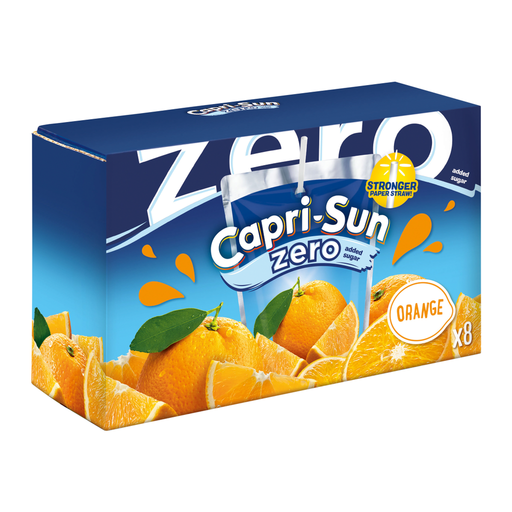
Capri-Sun Zero Orange 8 × 200ml
The eight individual portions offer another ready-to-drink format. Check the pack’s sugars figure and any no-added-sugar wording rather than interpreting ‘Zero’ as a nutrition value. The product information lists sucralose and warns that the straw poses a choking risk for children under three.
View on Joybuy
Questions about no-added-sugar orange drinks
Does ‘no added sugar’ orange juice mean sugar-free?
No. The NHS says sugars in unsweetened fruit juice still count as free sugars. Read the nutrition panel for sugars per 100ml and for the portion you intend to serve.
Should I take pure juice or squash on a summer holiday?
Choose 100% juice if you want a fruit-only drink without sweeteners and will serve it in small portions. Squash suits a drink made with water if its ingredients and mixing directions work for you; it is not the same product as pure juice. The NHS advises limiting fruit juice and smoothies to a combined 150ml a day.
How much orange juice should I serve?
The NHS advises limiting fruit juice and smoothies to a combined total of 150ml a day. Check the pack’s serving information when pouring juice, particularly from a larger bottle.
What should I read on an orange-drink pack?
Start with the product name and ingredients to distinguish juice, a juice drink and squash. Then compare sugars per serving, fruit content, sweeteners and allergen information, and check any dilution, refrigeration and opened-life directions that affect how you will use it.


