Night workers who enjoy orange juice
A measured glass can fit alongside food on a break. If you are choosing it as a snack, remember that juice has much less fibre than whole fruit, as Diabetes UK explains.


Choose a measured glass of 100% orange juice during a night-shift break if you specifically want juice, and have it with food rather than treating it as the whole snack. NHS guidance counts the sugars in unsweetened juice as free sugars; Tropicana lists 13g sugars in a 150ml serving of its Smooth Orange juice. If reducing sugar matters more than choosing juice, compare the ingredients and nutrition of squash or orange drinks on a prepared-serving basis: ‘no added sugar’ does not mean zero sugar.
A measured glass can fit alongside food on a break. If you are choosing it as a snack, remember that juice has much less fibre than whole fruit, as Diabetes UK explains.
Check whether the product is 100% juice, squash or a ready-to-drink orange drink. Juice content, sweeteners and sugars per prepared serving help distinguish options that may look similar on the front of the pack.
Check the carbohydrate figure for the amount you intend to drink, not just a ‘no added sugar’ claim. Diabetes UK notes that juice contributes free sugars and contains less fibre than whole fruit.
Decide whether you want juice or orange flavour from another type of drink. Then compare the nutrition for the amount you will actually drink and plan what food, if any, will accompany it.
Choose when: You want juice itself and can measure a glass to have with food.
Bear in mind: NHS guidance counts its naturally occurring sugars as free sugars, even when no sugar has been added.
Choose when: An orange-flavoured drink suits you and you are happy to check its dilution instructions and ingredients.
Bear in mind: It is not 100% juice or necessarily sugar-free. Marks & Spencer says its Mediterranean Orange High Juice contains naturally occurring sugars and sucralose.
Choose when: Orange flavour matters more to you than buying fruit juice, and the pack confirms a sugar figure that fits your needs.
Bear in mind: A low-sugar description is not the same as zero sugar; check the actual drink rather than assuming either claim applies to every variant.
| Priority | What to check | Your needs |
|---|---|---|
| Drink type | Read the product description and juice content. Check whether it needs diluting and whether sweeteners are listed. | I want to know whether I am buying orange juice, squash or an orange-flavoured drink; they are not interchangeable products. |
| Sugars and carbohydrates | Compare ‘of which sugars’ and total carbohydrate for the amount you will drink. Use the prepared-drink figure for squash, rather than comparing it directly with an undiluted figure. | ‘No added sugar’ is not enough for my choice. NHS guidance counts sugars in unsweetened fruit juice as free sugars. |
| Portion | Note whether nutrition is given per 100ml, per 100g or per serving. Measure from a larger bottle or carton if you want a consistent glass. | On a routine break, I would rather know what is in my actual glass than assume the whole container is one serving. |
| Food alongside the drink | Consider what you will eat with it. Diabetes UK explains that juice has much less fibre than whole fruit; the British Nutrition Foundation advises shift workers to avoid large, heavy meals. | If this is my snack break, the drink alone is not a substitute for choosing food that suits the shift. |
| Ingredients | Check for sweeteners and any ingredients relevant to you, as well as the nutrition panel. Confirm the details on the current pack. | I may prefer juice without other ingredients, or be comfortable with a diluted drink; the label helps me make that distinction. |
Tropicana Smooth Orange has no added sugar but lists 13g sugars per 150ml. NHS guidance counts sugars in unsweetened fruit juice as free sugars.
Check the ‘of which sugars’ figure for your serving as well as the ingredients list.
Juice has much less fibre than whole fruit, according to Diabetes UK. The British Nutrition Foundation also advises against large, heavy meals during shifts.
If you choose juice, measure a glass and have it alongside a suitable food, rather than relying on the drink alone.
Marks & Spencer lists 1.1g sugars per 100g as sold for its Mediterranean Orange High Juice and 9.3g per 100g for its Pure Squeezed Orange Juice Smooth. The high juice is a different type of product, and its as-sold figure is not a prepared-glass comparison.
Identify the drink type first. For anything diluted, follow the preparation instructions before comparing the amount you would drink.
A Joybuy listing for Minute Maid Orange Juice Drink names sugar and high-fructose corn syrup in its ingredients but also gives 0g sugar per 100ml.
Do not use that figure to choose a zero-sugar drink; confirm the current pack label or obtain corrected product information before buying.
These examples show why the product type and nutrition basis matter; a brand name alone does not tell you how much sugar is in a particular drink.
Tropicana describes Smooth Orange as 100% pressed orange juice, not from concentrate, with no added sugar.
Marks & Spencer provides examples of two distinct products: Pure Squeezed Orange Juice Smooth and Mediterranean Orange High Juice.
Innocent offers orange juice with bits for shoppers who prefer that juice format.
These options cover orange squash and ready-to-drink orange or mixed-fruit drinks for a night-shift break. Check each product type and pack label before treating it as an alternative to 100% orange juice.
 No image available
An option if you want orange squash rather than 100% juice for a break. Dilute it according to the pack; it contains sweeteners and sulphites. Check the prepared drink’s sugars figure if that determines your choice.
 No image available
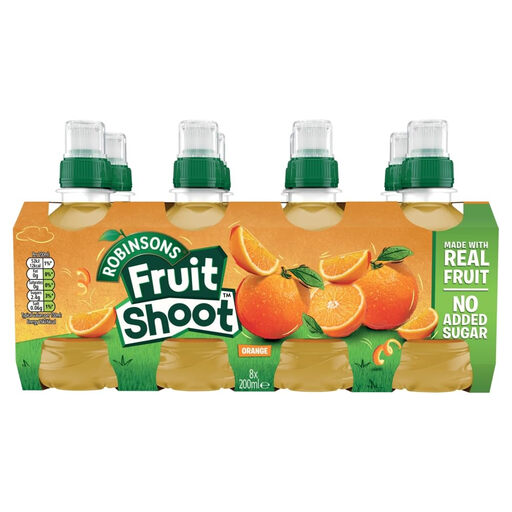
A ready-to-drink orange option in 200ml bottles, not 100% juice or a zero-sugar drink. The listing reports 1.2g sugars per 100ml and identifies sweeteners. Its bottle caps pose a choking risk for children under 36 months.
 No image available
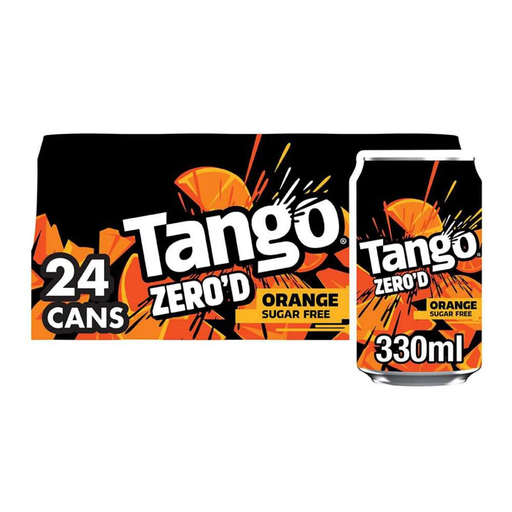
A sparkling orange-flavoured drink for a break, rather than a 100% juice choice. It contains sweeteners. If the zero-sugar claim is important to your decision, confirm the numerical sugars figure on the current pack.
 No image available
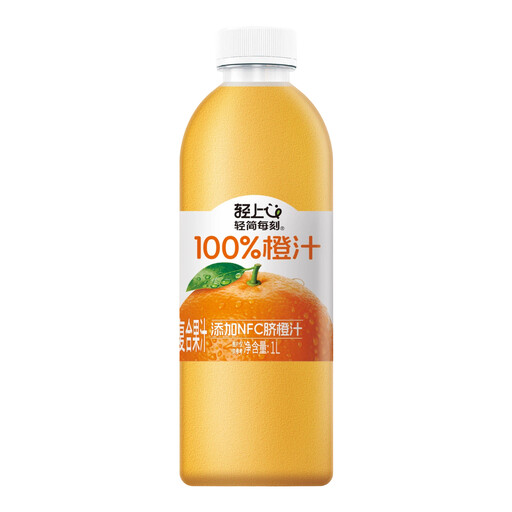
A mixed-fruit drink in a 1L carton, not pure orange juice despite the original title’s wording. Its listing reports 11.6g carbohydrate per 100ml alongside 0.3g sugars per 100ml; check both figures on the current pack if you count carbohydrates. Pour a measured amount rather than treating the carton as one serving.
No. NHS guidance counts naturally occurring sugars in unsweetened fruit juice as free sugars. Tropicana Smooth Orange has no added sugar but lists 13g sugars per 150ml; Marks & Spencer also says its no-added-sugar Mediterranean Orange High Juice contains naturally occurring sugars.
Measure the amount you pour instead of assuming a bottle is one serving. For example, Tropicana gives nutrition for a 150ml glass; use that serving basis when reading its label, and remember that NHS guidance counts juice sugars as free sugars.
If you want food on your break, do not treat juice as the food itself. Diabetes UK explains that juice has much less fibre than whole fruit, while British Nutrition Foundation guidance advises shift workers to avoid large, heavy meals.
No. Marks & Spencer lists 50% fruit juice and sucralose in its Mediterranean Orange High Juice, while it describes its Pure Squeezed Orange Juice Smooth as juice with nothing else added. Check the ingredients and, if dilution is required, compare nutrition for the prepared drink.
Check total carbohydrate as well as sugars for the amount you intend to drink; a small sugars figure does not, by itself, state the total carbohydrate figure. Diabetes UK also notes that juice contributes free sugars and has less fibre than whole fruit.