Parents packing school-day drinks
The choice is between a measured serving of fruit-only juice and an orange drink with a different fruit content and serving size. Check the school’s packed-lunch policy before choosing what to send.


Choose 100% orange juice if fruit-only juice is the aim; choose a diluted no-added-sugar orange drink or squash if its prepared-drink sugar figure, fruit content and sweeteners better fit your requirements. No added sugar does not mean sugar-free, and the NHS advises limiting fruit juice and smoothies to a combined total of no more than 150ml a day.
The choice is between a measured serving of fruit-only juice and an orange drink with a different fruit content and serving size. Check the school’s packed-lunch policy before choosing what to send.
A concentrate needs to be compared after dilution, using the amount a child will actually drink. Fruit percentage and sweeteners matter too: a squash is not the same product as 100% juice.
Look for a 100% juice description and check the ingredients, rather than relying on a no-added-sugar claim alone. Fruit-only juice still contains naturally occurring sugars.
Decide whether you want fruit-only juice or a drink made with water, then compare the nutrition information for the serving you intend to pour or pack.
| Priority | What to check | Your needs |
|---|---|---|
| Product type | Read the product description and ingredients. The Sainsbury’s Fruit and Barley Orange squash description states 10% fruit from concentrate; a 100% orange juice is a different type of drink. | I want fruit-only orange juice, rather than an orange-flavoured drink or squash. |
| Sugars | Compare the nutrition panel’s ‘of which sugars’ figure using the same serving basis. A no-added-sugar claim does not say that a fruit juice contains no sugars. | The sugar figure in the drink I will serve matters more to me than the front-of-pack wording. |
| Juice portion | Measure the juice serving. The NHS advises no more than 150ml of fruit juice and smoothies combined per day. | If I choose juice, I want to know how a measured serving fits into the day. |
| Dilution | Follow a concentrate’s mixing instructions and check whether its nutrition values describe the concentrate or the prepared drink. Compare equivalent prepared servings. | I’m happy to mix a drink with water, but I want to compare what goes into the glass. |
| Ingredients and packing | Check sweeteners and allergens on the exact pack, plus storage and after-opening directions. Confirm the individual school’s packed-lunch policy. | I need a format and ingredient list that work for the child and the school-day routine. |
Fruit-only orange juice contains naturally occurring sugars even when no sugar has been added.
Check ‘of which sugars’ for the serving you plan to pour. For juice, also account for the NHS advice to limit fruit juice and smoothies to a combined 150ml a day.
A concentrate’s stated nutrition may refer to a drink made up with water, while juice is ready to drink. Values on different serving bases do not make a like-for-like comparison.
Follow the dilution instructions, then compare sugars for equivalent amounts of prepared drink.
Fruit percentage and ingredients distinguish these products. Sainsbury’s describes its Fruit and Barley Orange No Added Sugar product as a 10%-fruit squash with sweeteners.
Decide on the product type first, then read the exact pack for fruit content, sweeteners and allergens.
A large chilled pack needs to be used in line with its refrigeration and after-opening instructions.
Choose a pack size you can use within those instructions, and check the school’s policy before relying on a drink for packed lunches.
Unused juice can be wasted if an opened pack cannot be finished within its stated period.
These examples show why the product description matters more than the brand name when comparing juice, high juice and squash.
Sainsbury’s describes Tropicana Smooth Orange Fruit Juice as orange juice with no added sugar.
Sainsbury’s describes innocent Pure Orange Juice with Bits as 100% pure fruit juice with nothing else added.
Tesco describes its No Added Sugar High Juice Orange as a concentrated orange juice drink with sweeteners.
Sainsbury’s describes its Fruit and Barley Orange No Added Sugar product as a squash with 10% fruit from concentrate and sweeteners.
M&S describes its Pure Squeezed Orange Juice Smooth as juice with nothing else added, while its Mediterranean Orange High Juice is described as made with 50% fruit juice.
These Joybuy options are a squash and ready-to-drink orange drinks for the school-day comparison, not a selection of 100% orange juices. Check each pack’s ingredients, nutrition and school suitability before choosing.
 No image available
A concentrate for a drink mixed with water, rather than fruit-only orange juice. Follow the dilution directions and check the prepared-drink nutrition before comparing sugars. Check the current ingredient and allergen label; the product information also warns that it is not suitable for children under 36 months.
 No image available
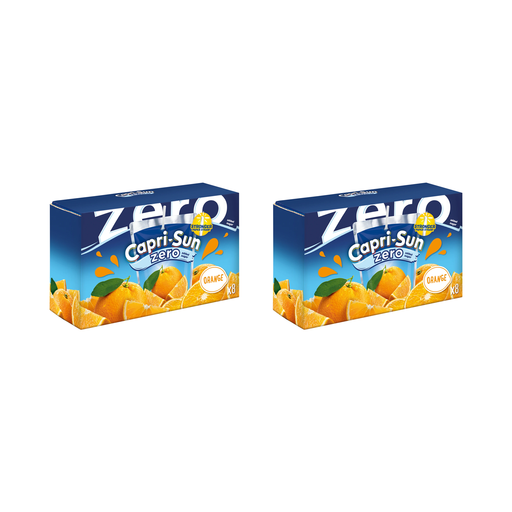
Individual ready-to-drink pouches may suit a packed-drink routine, but this orange and lemon drink is not 100% orange juice. Check the pack’s sugars rather than interpreting ‘Zero’ as a nutrition figure: the listed nutrition and that wording need reconciling on the current label. The product information warns of a straw-related choking hazard for children under 3 years.
 No image available
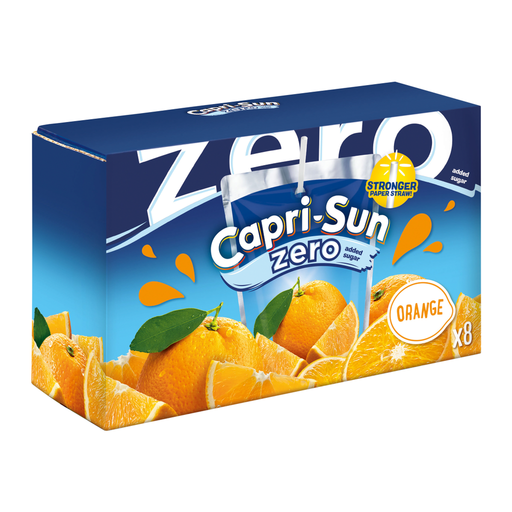
This eight-pack provides individual ready-to-drink pouches, not 100% orange juice. Read the current nutrition panel before relying on the ‘Zero’ wording, and check the ingredients if sweeteners matter to you. The product information warns that the straw presents a choking hazard for children under 3 years.
 No image available
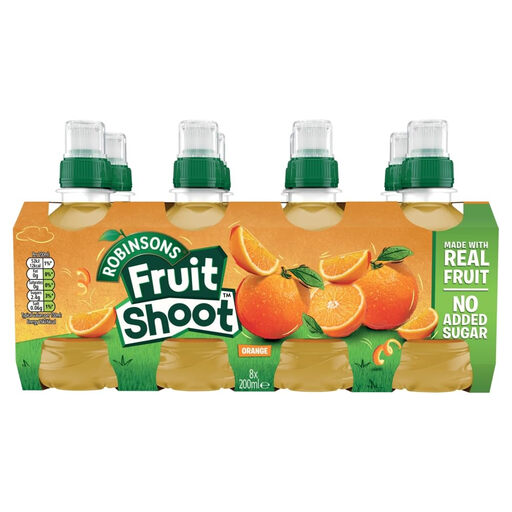
These ready-to-drink bottles offer a portioned orange drink, not 100% orange juice. ‘Low Sugar’ does not establish a no-added-sugar claim, so check the current pack if that distinction matters. Follow the after-opening directions; the product information warns about small-part caps and says the drink is unsuitable for children under 36 months.
No. Fruit-only orange juice contains naturally occurring sugars even when no sugar is added. Compare ‘of which sugars’ on the nutrition panel for the amount you intend to serve.
The NHS advises limiting fruit juice and smoothies to a combined total of no more than 150ml a day. Measure a juice serving rather than treating a full bottle or carton as one portion.
No. Sainsbury’s describes its Fruit and Barley Orange No Added Sugar product as a 10%-fruit squash with sweeteners; Tesco describes its No Added Sugar High Juice Orange as a concentrated juice drink with sweeteners. Check fruit content, mixing directions and prepared-drink nutrition when comparing either with fruit-only juice.
No. Check the individual school’s packed-lunch policy before relying on that claim. Department for Education school food standards guidance has an England scope; it does not by itself establish what every school accepts in a home-packed lunch.
Read the ingredients and allergen information on the exact current pack before choosing. The product descriptions for the no-added-sugar high juice and fruit-and-barley squash discussed here identify sweeteners, while their ingredients differ; do not assume that every orange drink has the same formulation.