For a regular secondary-school packed lunch, a measured serving of still 100% orange juice is a clearer choice when the aim is to pack orange juice rather than a fizzy soft drink. The NHS advises limiting fruit juice and smoothies to 150ml a day and having them with a meal; if a pupil wants fizz instead, check the drink’s juice content, sugars per container and the school’s packed-lunch policy. No-added-sugar fizzy drinks still warrant an acidity check.
Who is this choice for?
Parents packing regular school lunches
If the aim is to include orange juice with lunch, compare a measured 150ml serving of still juice with the full volume of any fizzy drink you might pack. The NHS daily juice guidance concerns fruit juice and smoothies, not a recommended serving size for soft drinks.
Secondary-school pupils who want fizz
A sparkling orange drink may meet that preference without being 100% juice. Check the product description and the whole-container nutrition figures. Medway Community Healthcare’s child oral-health guidance also notes that acidic fizzy drinks can affect tooth surfaces, including sugar-free versions.
Families checking a school rule
Check the individual school’s packed-lunch policy before choosing a fizzy drink for school. England’s Department for Education describes national school-food standards for food and drink provided to pupils on school premises; that description does not settle what a parent may pack in a particular school lunch.
What should you check before choosing?
Decide whether the lunch needs orange juice or a fizzy orange drink, then compare the amount the pupil would actually drink—not just figures per 100ml.
Still 100% orange juice
Choose when: The aim is orange juice with a routine lunch; measure the serving rather than packing an arbitrary bottleful.
Bear in mind: It has no fizz and contains naturally occurring sugars. The NHS advises no more than 150ml of juice or smoothies a day, with a meal.
No-added-sugar sparkling drink
Choose when: Fizz matters more than choosing 100% juice, and the school permits the drink.
Bear in mind: No added sugar does not remove the concern about acidic fizzy drinks described by Medway Community Healthcare.
Sparkling orange beverage
Choose when: An occasional fizzy soft drink is what the pupil wants, rather than a substitute for 100% orange juice.
Bear in mind: Juice content and sugars vary by product. Sainsbury’s lists San Pellegrino Orange as 16% orange juice from concentrate, with 14.5g sugars per 330ml can.
| Priority | What to check | Your needs |
|---|
| Juice content |
Read the product description and ingredients for the juice percentage. Sainsbury’s lists San Pellegrino Orange as a sparkling beverage containing 16% orange juice from concentrate; innocent Smooth Orange Juice is described by Tesco as 100% fruit juice. |
I’m looking for actual orange juice, so an orange-flavoured fizzy drink would not serve the same purpose. |
| Sugars and acidity |
Compare sugars for the amount to be packed, as well as per 100ml. Ocado lists M&S Diet Sparkling Orange Crush at 0.2g sugars per 100ml; Medway Community Healthcare cautions that even sugar-free fizzy drinks can be acidic. |
If fizz is the priority, I want to check both the sugars in the serving and what a no-added-sugar label does—and does not—tell me. |
| Serving size |
For juice, the NHS advises a maximum of 150ml a day with a meal. Check whether the packed container holds more: Sainsbury’s lists San Pellegrino Orange in 330ml cans, while the M&S sparkling drink listed by Ocado is a 1L bottle. |
A measured juice serving could go with lunch; I would check a fizzy drink’s full container size separately rather than treating it as a 150ml juice portion. |
| School rules |
Read the school’s packed-lunch policy, particularly its wording on fizzy drinks. England’s Department for Education describes national standards for food and drink provided to pupils on school premises, not a decision about every parent-packed drink. |
Before buying drinks for school lunches, I need to know what this pupil’s school allows. |
Common packed-lunch mistakes
-
Assuming an orange-labelled fizzy drink is orange juice
The categories can differ considerably. Sainsbury’s describes San Pellegrino Orange as a sparkling beverage with 16% orange juice from concentrate, while Tesco describes innocent Smooth Orange Juice as 100% fruit juice.
Check the product description, ingredients and juice percentage before deciding which type of drink you want to pack.
-
Reading ‘no added sugar’ as ‘suitable every day’
A sugar statement does not address acidity. Medway Community Healthcare’s child oral-health guidance cautions that acidic fizzy drinks, including sugar-free ones, can wear away tooth surfaces.
Consider a fizzy orange drink as an occasional choice rather than making its sugar label the only reason to pack it routinely. For juice, follow the NHS advice to limit it to 150ml a day with a meal.
-
Checking per 100ml but not the packed amount
The amount in a whole container may be the amount drunk at lunch. Sainsbury’s lists 14.5g sugars for a 330ml can of San Pellegrino Orange; that can is not the same portion as the NHS’s 150ml daily reference for juice.
Compare the nutrition panel with the actual amount you intend to pack, and check whether a bottle is meant to be divided into servings.
-
Assuming national standards answer the school-policy question
England’s Department for Education says the cited school-food standards apply to food and drink provided to pupils on school premises. That scope alone does not determine the rules for a drink packed by a parent.
Read the individual school’s packed-lunch policy before buying fizzy drinks for school.
Brand and product references
These examples show why the exact product and pack matter; a brand name alone does not establish juice content, sugars or serving size.
M&S
Ocado lists M&S Diet Sparkling Orange Crush as a no-added-sugar sparkling drink made with orange juice.
- The listing states 0.2g sugars per 100ml and 0.5g per 250ml serving.
- The listed format is a 1L bottle, not an individual lunch-sized pack. No added sugar does not settle the acidity question for fizzy drinks.
San Pellegrino
Sainsbury’s describes San Pellegrino Orange as a sparkling beverage containing 16% orange juice from concentrate.
- The listing identifies a 330ml can, making the full container size clear.
- It is not 100% juice; Sainsbury’s lists 14.5g sugars per can.
Orangina
Tesco describes Orangina as a sparkling orange soft drink with a blend of citrus juices, orange pulp and orange zest.
- The Tesco listing identifies a 420ml bottle and describes its citrus ingredients.
- Check the nutrition panel on the exact bottle before comparing its sugars with another drink.
Tropicana
Tropicana Smooth Orange Juice is a still-juice option rather than a sparkling orange drink.
- Tesco identifies 150ml as one serving for this product.
- It does not provide fizz. The NHS advises limiting fruit juice and smoothies to 150ml a day with a meal because they are high in sugar.
innocent
Tesco describes innocent Smooth Orange Juice as 100% fruit juice, providing another still-juice option.
- The listing defines a 150ml serving and says the sugars occur naturally in the fruit.
- It is not sparkling; keep the NHS’s daily 150ml juice guidance in mind when portioning it for lunch.
Sparkling orange options on Joybuy
These multipacks are options for a pupil who specifically wants a fizzy orange soft drink, not alternatives to a measured serving of 100% orange juice. Check the exact drink’s ingredients, nutrition panel and the school’s packed-lunch policy before choosing one for lunch.
 No image available
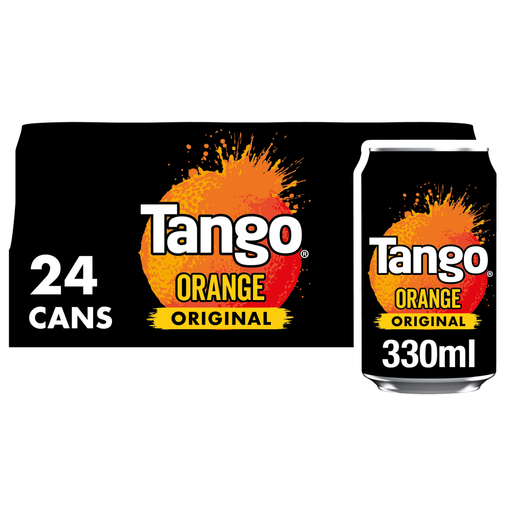
Tango Orange 24 × 330ml
For an occasional lunch when fizz is the preference rather than 100% juice. This multipack contains 24 × 330ml; check the nutrition and ingredient information for the individual drink, and confirm that the school permits fizzy drinks.
View on Joybuy
 No image available
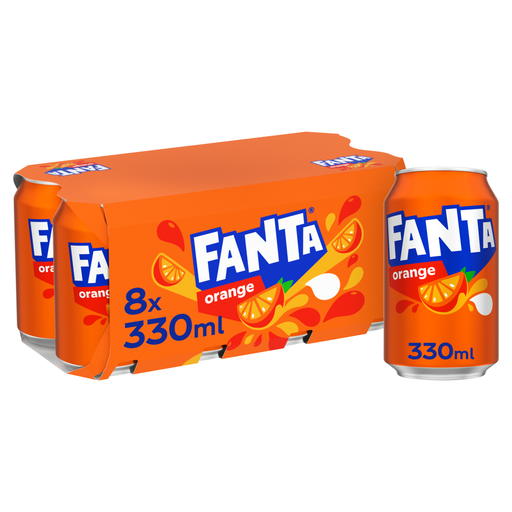
Fanta Orange 8 × 330ml
Another fizzy orange soft-drink option for an occasional school lunch, subject to the school’s policy. The pack contains 8 × 330ml; compare the ingredients and sugars for the full drink rather than assuming it is a serving of orange juice.
View on Joybuy
Packed-lunch questions
Is a sparkling orange drink the same as orange juice?
Not necessarily. Check the product category and juice percentage: Sainsbury’s describes San Pellegrino Orange as a sparkling beverage with 16% orange juice from concentrate, whereas Tesco describes innocent Smooth Orange Juice as 100% fruit juice.
How much orange juice should I put in a packed lunch?
The NHS advises limiting fruit juice and smoothies to one small glass of 150ml a day and drinking it with a meal. That is a daily guideline for juice and smoothies, not a suggested portion for a fizzy orange soft drink.
Does no added sugar remove the concern about fizzy drinks?
No. Medway Community Healthcare’s child oral-health guidance says acidic drinks, including sugar-free fizzy drinks, can wear away tooth surfaces. Check the drink’s sugar information, but do not use it as the only consideration for a routine packed-lunch choice.
Do England’s school-food standards decide what parents can pack?
The Department for Education describes the cited standards as applying to food and drink provided to pupils on school premises; that statement does not settle a particular parent-packed lunch. Check the pupil’s school policy for its rules on fizzy drinks.


