If orange content matters most, choose 100% juice, while following NHS advice to limit fruit juice and smoothies to 150ml in total each day and have them with a meal; juice sugars still count as free sugars. If lower listed sugar matters more, compare blends, juice drinks and squash by serving size, orange content and sweeteners rather than treating ‘no added sugar’ as ‘sugar-free’.
Who is each drink for?
Parents planning school-day drinks
A 100% juice, a ready-to-drink juice drink and a squash call for different portion and preparation decisions. For fruit juice, the NHS advises a combined daily limit of 150ml for juice and smoothies, taken with a meal.
Families comparing sugar and sweeteners
A lower-sugar fruit blend can still contain sugars from fruit. A no-added-sugar juice drink may instead contain sweeteners and a smaller proportion of orange juice, so the ingredient list matters alongside the nutrition panel.
Shoppers looking for a short ingredient list
For a drink made solely from orange juice, check the ingredient declaration rather than the orange imagery on the pack. Tropicana describes Smooth Orange as 100% pressed orange juice, while Tesco describes innocent Smooth Orange Juice as 100% pure orange juice.
What should you compare?
100% orange juice
Choose when: Orange juice as the sole ingredient is the priority.
Bear in mind: No added sugar does not mean sugar-free; the NHS counts sugars in unsweetened juice as free sugars.
Orange-led fruit blend
Choose when: A mix of fruit ingredients and water is acceptable in place of pure orange juice.
Bear in mind: Compare the stated serving and ingredients: a blend is not interchangeable with 100% orange juice.
Juice drink or squash
Choose when: Lower listed sugar matters more than pure-juice content and sweeteners are acceptable.
Bear in mind: Juice drinks can contain a small proportion of orange juice, and squash must be diluted before drinking.
| Priority |
What to check |
Your needs |
| Portion size |
Check the bottle or glass size against the serving on the nutrition panel. For fruit juice and smoothies, NHS guidance sets a combined 150ml daily limit and recommends having them with meals. |
I’m serving fruit juice with a meal and want to measure a portion, rather than assume the whole bottle is one serving. |
| Sugar and ingredients |
Compare sugars using the same volume or the stated serving. Read the juice percentage and look for sweeteners: Tesco Fruit Splash lists 12% orange juice from concentrate and contains acesulfame K and sucralose. |
Lower listed sugar matters to me, but I also want to know how much orange juice the drink contains and whether it uses sweeteners. |
| Preparation |
Check whether the drink is ready to serve or needs dilution. Follow the pack’s mixing directions for squash and check its nutrition values at the stated dilution. |
For a packed drink, I need to know whether I can pour it straight into a bottle or must prepare it beforehand. |
| Storage |
Check pack size, refrigeration requirements and the use-after-opening instruction for the exact product. |
A larger bottle only suits my school-week plans if I can use it within the time stated on its label. |
What is easy to overlook?
-
Reading ‘no added sugar’ as ‘zero sugar’
Tropicana UK lists 13g sugars per 150ml for its no-added-sugar Smooth Orange. The NHS counts sugars in unsweetened fruit juice as free sugars.
Read the total sugars figure for the portion you intend to serve, not just the front-of-pack wording.
-
Comparing sugar figures without comparing juice content
Tesco Fruit Splash lists 12% orange juice from concentrate, whereas Tropicana describes Smooth Orange as 100% pressed orange juice. They are different types of drink.
Compare the juice percentage, ingredients and sugars together before choosing between them.
-
Missing sweeteners or declared allergens
Tesco Fruit Splash contains acesulfame K and sucralose. M&S Mediterranean Orange High Juice contains sucralose and declares sulphites.
Read the current ingredient and allergen declarations, particularly if you are avoiding either ingredient.
-
Choosing a large chilled bottle without checking storage
Tesco’s directions for innocent Smooth Orange Juice say to refrigerate it and use it within four days of opening. A bottle that will not be used in that period may leave juice to discard.
Match the pack size to the portions you expect to serve and follow its own storage label.
Relevant brand ranges
Tropicana
Its Smooth Orange and Fresh & Light Morning Orange illustrate the difference between pure orange juice and a fruit-and-water blend.
- Tropicana UK describes Smooth Orange as 100% pressed orange juice, not from concentrate, and lists 13g sugars per 150ml.
- Fresh & Light Morning Orange lists 10g sugars per 150ml but contains water and several fruit ingredients, so it is not pure orange juice.
innocent
Smooth Orange Juice is an option to compare when a short ingredient list matters.
- Tesco describes it as 100% pure orange juice and lists 12g sugars per 150ml.
- It is sold chilled; follow the refrigeration and use-after-opening directions on the pack.
Tesco
Fruit Splash No Added Sugar Orange Juice Drink represents a sweetened juice-drink route, not a pure-juice route.
- Tesco’s ingredient declaration lists 12% orange juice from concentrate.
- It also lists acesulfame K and sucralose; check whether those ingredients suit the intended drinker.
M&S
Smooth Orange Juice and Mediterranean Orange High Juice are different formats: juice and squash.
- M&S lists Smooth Orange Juice as not from concentrate, with 9.3g sugars per 100g.
- Mediterranean Orange High Juice is a squash containing sucralose and sulphites; it should not be treated as pure orange juice.
Orange drink options on Joybuy
These options cover a ready-to-drink orange juice drink, a mixed-fruit drink and an orange squash. Compare their stated serving sizes and ingredients before choosing one for a school day.
 No image available
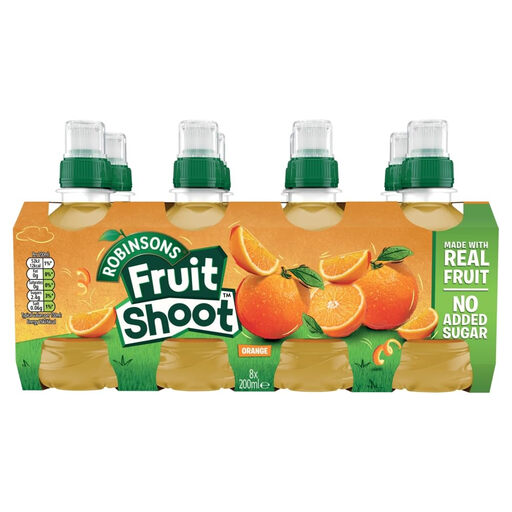
Fruitshoot Orange Low Sugar, 8 × 200ml
The individual bottles suit a ready-to-drink school-day portion. The listing states 1.2g sugars per 100ml and 12% orange juice from concentrate; it contains sucralose and acesulfame K rather than being 100% juice. It also says the drink is unsuitable for children under 36 months and warns that the caps contain small parts.
View on Joybuy
 No image available
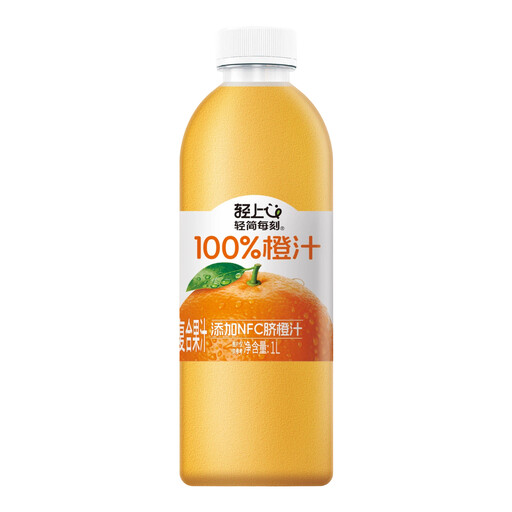
LIGHT UP Every Moment Orange & Multi-fruit Drink, 1L
This ready-to-drink blend suits a household comparing listed sugars across mixed-fruit options. Its listing states 0.3g sugars per 100ml and specifies 10% non-concentrated orange juice plus 5% orange juice concentrate, alongside other fruit ingredients. Despite ‘100% Orange Juice’ wording in the original product name, the listed composition is not 100% orange juice; check the pack’s storage directions after opening.
View on Joybuy
 No image available
Robinsons No Added Sugar Orange Squash, 1L
This squash is for preparing a drink at the dilution stated on its label, not for drinking straight from the bottle. The listing reports negligible sugars per 250ml diluted serving and 10% orange fruit from concentrate. It contains acesulfame K and sucralose, declares sulphites and is marked unsuitable for children under 36 months.
View on Joybuy
Common questions
Does ‘no added sugar’ mean an orange drink is sugar-free?
No. Fruit juice can contain sugars even when none has been added: Tropicana UK lists 13g sugars per 150ml for Smooth Orange. Check total sugars on the nutrition panel as well as the ingredient list.
How much fruit juice fits into a school day?
The NHS advises limiting fruit juice and smoothies to a combined 150ml a day and having them with meals. That is a limit for juice and smoothies together, not a separate 150ml allowance for each drink.
Is a no-added-sugar juice drink the same as orange juice?
No. Tesco Fruit Splash, for example, lists 12% orange juice from concentrate and contains acesulfame K and sucralose. Choose between it and 100% orange juice by checking the juice content, sweeteners and sugars per intended serving.
Can schools serve orange juice at lunch?
For drinks supplied by schools in England, the Department for Education’s school food standards guide specifies no more than 150ml fruit or vegetable juice. The guidance concerns school-supplied drinks in England; check the relevant arrangements for a drink packed at home or a school elsewhere in the UK.
What should I check after opening a bottle?
Follow the storage and use-after-opening directions for the exact drink. Tesco’s directions for innocent Smooth Orange Juice say to refrigerate it and use it within four days of opening; directions for other products can differ.


