Cyclists planning longer or harder rides
Check the carbohydrate in the amount you intend to carry. An orange-flavoured drink is not necessarily enough to cover your ride-fuelling plan.


Choose a sparkling orange drink if you want fizz and have already planned what you will drink and eat on your ride. If you specifically want orange juice, check for a still product labelled 100% juice; neither choice should be assumed to cover the carbohydrate needed for a demanding ride. A 2015 article in Nederlands Tijdschrift voor Geneeskunde advises 30–60g of carbohydrate per hour for 1–2.5 hours of high-intensity exercise, so compare the amount in the container you will carry with your wider plan.
Check the carbohydrate in the amount you intend to carry. An orange-flavoured drink is not necessarily enough to cover your ride-fuelling plan.
A sparkling drink may suit a ride where food and drink needs are already covered. Try the particular drink during training to judge how comfortable it is for you to consume while riding.
Compare the ingredients and juice percentage rather than relying on orange imagery. The M&S, Orangina and Fanta drinks described by Marks & Spencer and Tesco contain differing amounts of fruit juice; Tropicana describes its still Smooth Orange as 100% juice.
Start with the ride and the role you want the drink to play, then compare the serving size, carbohydrate and ingredients on the particular pack.
| Priority | What to check | Your needs |
|---|---|---|
| Carbohydrate for the ride | Read grams of carbohydrate per 100ml and per container. Compare the amount you will drink with your planned hourly intake; a 2015 article in Nederlands Tijdschrift voor Geneeskunde advises 30–60g per hour for 1–2.5 hours of high-intensity exercise. | For a long or hard ride, I need to know what this drink contributes without counting on it as my whole fuelling plan. |
| Comfort with fizz | Consider the drink’s carbonation and how easily you can consume your intended amount during a training ride. Older studies published in the International Journal of Sport Nutrition found no significant carbonation-related disadvantage in their tested exercise conditions; those findings cannot establish individual tolerance. | I enjoy a fizzy drink, but would rather find out during training whether it feels comfortable on the bike. |
| Juice or soft drink | Check the ingredient list, fruit-juice percentage and any sweeteners. Marks & Spencer lists 13% orange juice from concentrate in Sparkling Brazilian Orange; Tesco lists 12% combined citrus juice in Orangina and 5% orange juice in the Fanta Orange product it describes. Tropicana describes Smooth Orange as 100% still juice. | If I want orange juice rather than an orange-flavoured soft drink, the stated juice content matters more than the front of the pack. |
| Everyday juice portions | Keep ordinary food guidance distinct from an event-fuelling calculation. The NHS says unsweetened 100% fruit juice, vegetable juice and smoothies count as a maximum 150ml portion once a day towards 5 A Day. | For everyday drinking, I want to understand what counts towards 5 A Day without treating that portion rule as a cycling-fuel target. |
Marks & Spencer lists 13% orange juice from concentrate in Sparkling Brazilian Orange, while Tesco lists 12% combined citrus juice in Orangina and 5% orange juice in its Fanta Orange product. Orange flavour does not establish that a drink is wholly juice.
Read the current ingredient list and juice percentage. If you want 100% orange juice, look for that description on the specific product.
The carbohydrate in a single container varies by product. It may not cover the 30–60g per hour advised for 1–2.5 hours of high-intensity exercise in a 2015 article in Nederlands Tijdschrift voor Geneeskunde.
Calculate the carbohydrate in the amount you will actually drink and plan the rest of your ride’s intake separately.
Studies published in the International Journal of Sport Nutrition in 1992 and 1994 did not find significant disadvantages from carbonation in the outcomes and exercise conditions they tested. That does not tell you how a particular drink will feel to you.
Try it on a training ride. If fizz makes it difficult to drink comfortably, consider a still option.
The NHS maximum 150ml portion, once a day, describes how unsweetened 100% juice, vegetable juice and smoothies count towards 5 A Day. It is not an hourly cycling-carbohydrate recommendation.
Consider everyday juice portions and the demands of a particular ride as separate questions.
These product references illustrate different labels and drink types; a brand name alone does not establish a drink’s juice content or suitability for a ride.
Sparkling Brazilian Orange is a fizzy orange drink to compare if you want carbonation rather than a 100% juice.
Tesco describes its 420ml Orangina product as a sparkling orange juice drink with citrus pulp.
Smooth Orange is a still-juice option if the distinction between juice and a fizzy soft drink matters to you.
Innocent discusses its orange juice with bits in its UK product FAQ, making the specific juice label the useful starting point for comparison.
These are orange-flavoured fizzy drinks to consider when you want refreshment and are planning your ride’s food and drink separately. Compare each pack’s carbohydrate and ingredients before deciding whether it fits that plan.
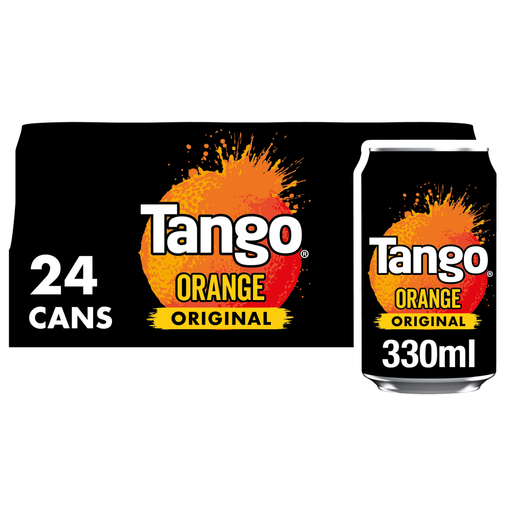 No image available
Individual 330ml cans offer a fizzy orange option for a ride where fuelling is already planned. Check the current label for carbohydrate per can, fruit content and ingredients before counting one towards your intake.
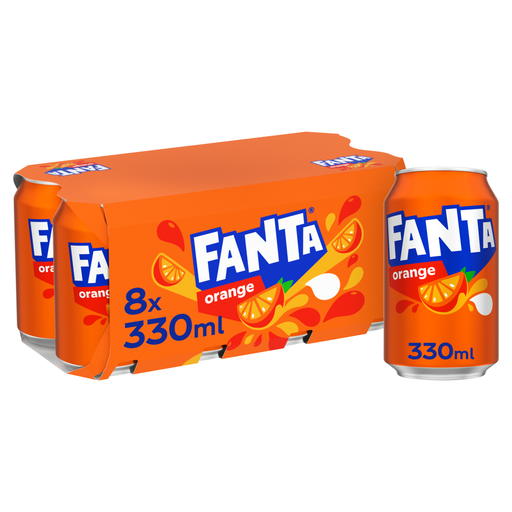 No image available
This pack of 330ml cans is an orange soft-drink option rather than a substitute for checking juice content or ride fuel. Read the nutrition and ingredient information on this particular pack; figures for another Fanta pack should not be assumed to match it.
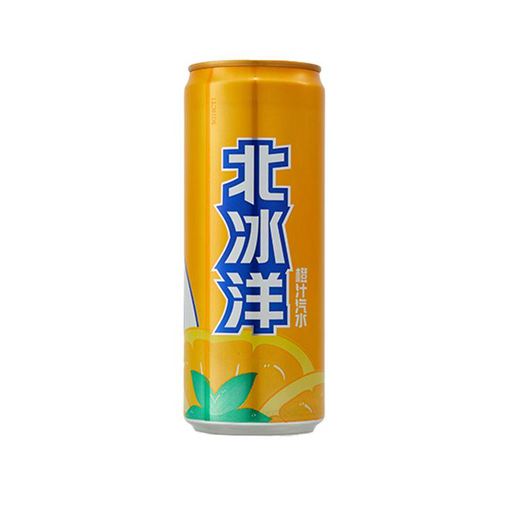 No image available
This 330ml orange juice soda is an option if you want fizz and are accounting for fuel separately. If the amount of orange juice matters to you, check its percentage on the current label as well as the carbohydrate per serving.
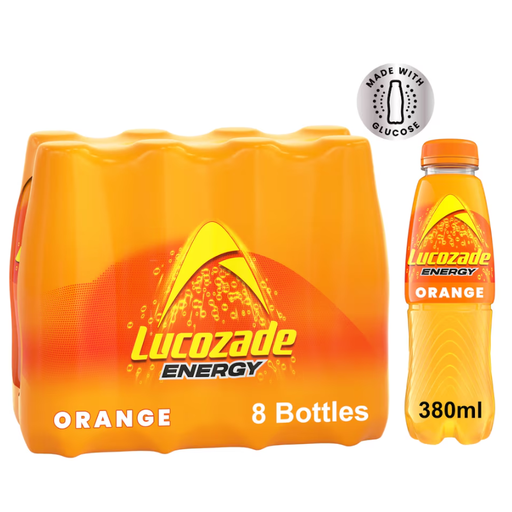 No image available
This is an orange energy-drink option, not a 100% orange juice. Check carbohydrate per 380ml bottle alongside its current caffeine and ingredient information when deciding whether it fits the ride you have planned.
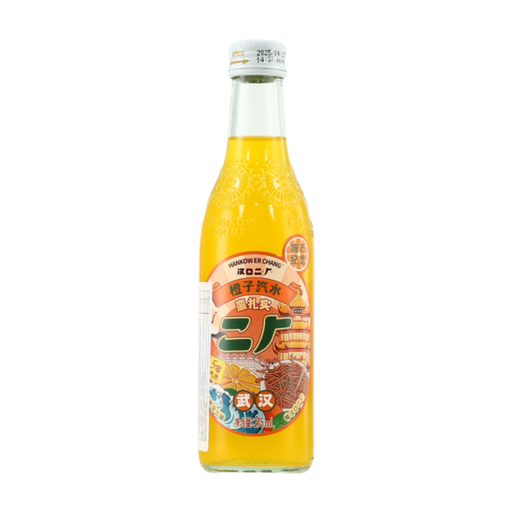 No image available
The 275ml bottle offers an orange-flavoured soda for someone who wants a smaller fizzy drink. Check the current package for its carbohydrate and orange-juice content rather than treating orange flavour as evidence of 100% juice.
Do not assume one container will cover the ride. A 2015 article in Nederlands Tijdschrift voor Geneeskunde advises 30–60g of carbohydrate per hour for 1–2.5 hours of high-intensity exercise. Check the carbohydrate in the exact drink and amount you will consume, then account for the rest of your fuelling plan.
Not automatically. Studies published in the International Journal of Sport Nutrition in 1992 and 1994 found no significant carbonation-related disadvantage in the exercise conditions and outcomes they tested. Those results do not establish how comfortable a particular fizzy drink will be for you, so try it during training.
Do not assume that it does. The NHS says unsweetened 100% fruit juice, vegetable juice and smoothies count as a maximum 150ml portion once a day towards 5 A Day. Check the specific sparkling drink’s ingredients and juice percentage rather than treating orange flavour as a 100% juice declaration.
It depends on the products and serving sizes compared. Tropicana states that Smooth Orange contains 9.3g carbohydrate per 100ml; Tesco lists 1.4g per 100ml for its Orangina sparkling drink. Still juice can therefore contribute more carbohydrate than that particular fizzy drink for the same volume, but its label alone does not establish a complete cycling nutrition plan.