After a hard session, particularly if you are training again soon, 100% orange juice can contribute carbohydrate and fluid, but it does not replace food containing protein; the British Dietetic Association emphasises prompt carbohydrate refuelling when quick recovery is needed. After a routine workout, water and a normal meal or snack may be enough. If choosing juice, check that the ingredients say 100% orange juice rather than relying on a no-added-sugar claim, and follow the NHS advice to limit fruit juice and smoothies to one 150ml glass a day.
Who is this choice for?
People training again soon
After a long, hard or repeated session, a carbohydrate-containing drink may be convenient alongside a meal or snack containing protein. The British Dietetic Association advises starting carbohydrate refuelling promptly when the time between demanding sessions is short.
People finishing a routine workout
If another demanding session is not imminent, consider whether water and a normal meal or snack meet your needs before adding juice specifically for recovery.
Shoppers avoiding added sugar
No added sugar does not mean sugar-free. Tropicana describes its 100% orange juice as containing naturally occurring sugars, while Marks & Spencer lists a separate no-added-sugar orange high-juice drink made with 50% juice and sucralose.
What matters when choosing?
100% orange juice
Consider it when: You want a carbohydrate-containing fluid after demanding exercise, particularly with another session soon.
Bear in mind: Juice contains naturally occurring sugars and is not a substitute for food containing protein.
Lower-juice orange drink or squash
Consider it when: Orange-flavoured refreshment matters more to you than carbohydrate refuelling.
Bear in mind: Fruit content, carbohydrate and other ingredients differ from 100% juice; squash also needs diluting as directed.
Water and a meal or snack
Consider it when: You have finished a routine session and can eat normally afterwards.
Bear in mind: It takes more preparation than opening a drink, but lets you include food containing carbohydrate and protein.
| Priority |
What to check |
Your needs |
| Carbohydrate |
Check carbohydrate per 100ml and for the serving you intend to have. Compare drinks on the same measurement basis; no-added-sugar wording does not state how much carbohydrate they contain. |
I am training again soon and want to know what carbohydrate the drink would contribute alongside food. |
| Fruit content |
Read the ingredients and fruit-juice percentage. A 100% orange juice and a diluted orange drink are different choices, even if neither has added sugar. |
I want to know whether I am buying pure orange juice or an orange-flavoured drink for refreshment. |
| Other ingredients |
For a lower-juice drink, check the current pack for sweeteners and declared allergens. If it is squash, follow its dilution directions. |
Sweeteners or particular ingredients matter to me, so I need to check the exact drink rather than its front-of-pack wording. |
| Serving size |
The NHS advises no more than one 150ml glass of fruit juice, vegetable juice or smoothie a day; that glass counts as one fruit-and-vegetable portion. |
I want a serving that fits this juice guidance, not an unlimited drink because it has no added sugar. |
| Storage |
Check whether the pack needs chilling and how soon to use it after opening. Marks & Spencer instructs buyers to refrigerate its Pure Squeezed Orange Juice Smooth and drink it within four days of opening. |
A bottle needs to fit how quickly my household will use it. |
What should you avoid overlooking?
-
Reading “no added sugar” as “sugar-free”
100% orange juice contains naturally occurring sugars. The NHS advises limiting fruit juice and smoothies to one 150ml glass a day because these drinks are sugary and can damage teeth.
Read the sugars figure on the nutrition panel, and use a 150ml glass when following the NHS portion guidance.
-
Making juice the whole post-workout plan
Juice can contribute carbohydrate, but the listed orange juices provide little protein. The British Nutrition Foundation identifies both carbohydrate and protein as relevant to sports nutrition.
After demanding exercise, plan food containing protein as well as any drink you choose.
-
Treating squash and pure juice as interchangeable
Marks & Spencer lists its no-added-sugar Mediterranean Orange High Juice as a 50% juice drink with sucralose. It is not 100% orange juice.
Check the fruit percentage and carbohydrate figure if refuelling is the reason for buying; choose a lower-juice drink on its own terms if you mainly want refreshment.
-
Overlooking instructions after opening
Marks & Spencer instructs buyers to refrigerate its Pure Squeezed Orange Juice Smooth and drink it within four days of opening.
Check the instructions on the exact pack and choose a size you expect to finish within its stated period.
A partly used bottle may go to waste if it cannot be finished in time.
Which brands are relevant?
These are label and product references for comparing orange drinks; brand inclusion does not mean every product in a range has the same ingredients or nutrition.
Tropicana
Tropicana describes Smooth Orange as 100% pure pressed juice, not from concentrate, with no added sugar.
- Its listed 150ml serving contains 14g carbohydrate and 13g naturally occurring sugars.
- The same serving lists 1.2g protein, so it does not replace food containing protein after training.
Tesco
Tesco Orange Juice Smooth is listed as 100% orange juice from concentrate.
- Tesco lists 15.8g carbohydrate per 150ml serving.
- Its listed protein is 0.8g per 150ml; consider the drink alongside, rather than instead of, food after a demanding session.
Sainsbury's
Sainsbury's Smooth Pure Orange Juice is listed as 100% orange juice from concentrate.
- Its listed 150ml serving contains 12.8g carbohydrate and 12.0g sugars.
- As fruit juice, it falls within the NHS advice to limit juice and smoothies to one 150ml glass a day.
M&S
Marks & Spencer lists both Pure Squeezed Orange Juice Smooth and a separate Mediterranean Orange High Juice drink.
- The pure juice is described as having nothing else added; its listed carbohydrate and sugars are 9.3g per 100g.
- The no-added-sugar high-juice drink contains 50% orange juice and sucralose. Check which product you are buying rather than treating them as equivalent.
Innocent
Innocent says it does not add sugar to its drinks.
- Check the ingredients, fruit percentage and nutrition of the particular orange drink before comparing it with 100% juice.
Orange-drink options on Joybuy
These orange-flavoured options are squash or lower-juice drinks for refreshment, not 100% orange juices for a post-workout carbohydrate contribution. Check each current pack if a no-added-sugar claim or an exact sugar figure is essential to your choice.
 No image available
Robinsons No Added Sugar Orange Squash 1L
An orange squash to consider when you want refreshment rather than a carbohydrate top-up after exercise. Dilute it as directed; it is not 100% orange juice. Check the ingredients and allergen information if sweeteners or sulphites matter to you.
View on Joybuy
 No image available
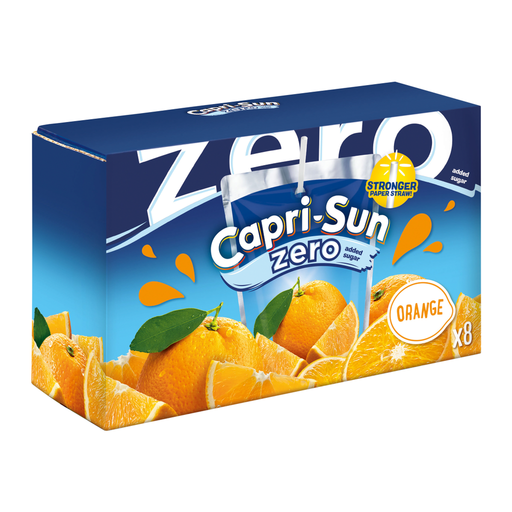
Capri-Sun Zero Orange 8 x 200ml
Ready-to-drink orange-flavoured pouches for refreshment rather than a substitute for 100% orange juice after demanding training. “Zero” in the name should not be read as an exact sugar figure: check the current pack’s nutrition table. The product information warns that the straw is unsuitable for children under 3.
View on Joybuy
 No image available
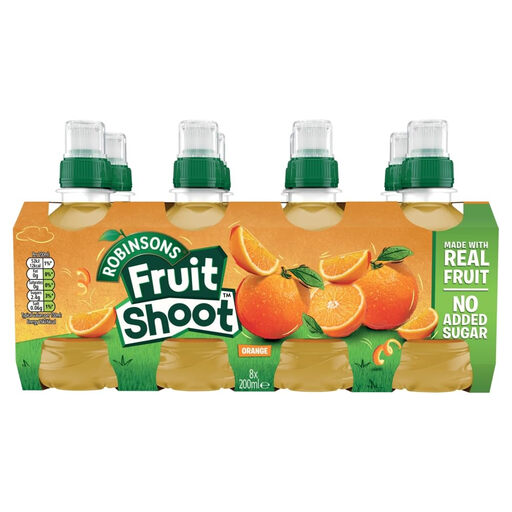
Fruitshoot Orange Low Sugar 8 x 200ml
An orange drink to consider for refreshment, not a 100% juice for carbohydrate refuelling. Its name says “Low Sugar”, not “No Added Sugar”, so check the current pack if that distinction matters. The product information also notes sweeteners and a choking warning for children under 36 months.
View on Joybuy
Questions about orange drinks after exercise
Can orange juice help after a hard workout?
100% orange juice can contribute carbohydrate and fluid when quick refuelling is needed, particularly before another demanding session. The British Dietetic Association advises starting carbohydrate-rich food and fluids promptly in that situation; juice alone does not replace a meal or snack containing protein.
Does no added sugar mean sugar-free?
No. Tropicana lists 13g naturally occurring sugars per 150ml of Smooth Orange, and Sainsbury's lists 12.0g per 150ml of its Smooth Pure Orange Juice. Read the nutrition panel for the particular drink.
How much fruit juice does the NHS advise?
The NHS advises limiting fruit juice, vegetable juice and smoothies to no more than one 150ml glass a day because they are sugary and can damage teeth. That glass counts as one fruit-and-vegetable portion.
Is no-added-sugar orange squash the same as 100% juice?
No. Fruit content and other ingredients can differ: Marks & Spencer lists its no-added-sugar Mediterranean Orange High Juice as a 50% juice drink containing sucralose. Check the prepared drink’s carbohydrate information if you are choosing it for post-workout refuelling.
What should I check before buying an orange drink?
Check the fruit-juice percentage, carbohydrate and sugars for a comparable serving, and any sweeteners or declared allergens. Follow the exact pack’s dilution, chilling and after-opening instructions where applicable.


