For an everyday orange-flavoured drink, do not treat 100% orange juice as sugar-free: Diabetes UK explains that juice contains free sugars, and the NHS advises limiting fruit juice and smoothies to one 150ml glass a day, with a meal. A juice blend or no-added-sugar orange drink may have a different labelled sugar figure, but check the serving size, ingredients and whether it needs diluting before choosing between them.
Who is this choice for?
The useful distinction is whether you want fruit, a measured serving of juice or an orange-flavoured drink for everyday use.
People with diabetes reconsidering a daily glass of juice
If orange juice is part of your routine, compare its sugars per serving and consider whether you want a drink or a whole orange. The NHS advises a maximum of one 150ml glass of fruit juice or smoothie a day, taken with a meal; individual dietary advice may differ.
Shoppers comparing orange drinks by labelled sugar
A 100% juice, a fruit-juice blend and a drink made for dilution have different ingredients and serving instructions. Check the nutrition information for the amount you would actually drink, rather than relying on “no added sugar” in the product name.
People who need a separate plan for low blood sugar
Choosing an everyday drink is a different decision from following an individual plan for a hypo. Use the instructions agreed with your diabetes team for that situation, rather than treating an orange drink’s supermarket label as treatment guidance.
What should you check before buying?
Decide whether you want juice or an orange-flavoured alternative, then compare sugar figures for a realistic serving of that product.
| Priority |
What to check |
Your needs |
| Labelled sugars |
Read “of which sugars” per 100ml and per serving. Check the ingredients as well as any “no added sugar” wording: Diabetes UK explains that sugars in fruit juice count as free sugars. |
I want to know how much sugar is in the drink I will pour, even if no sugar has been added. |
| Juice portion |
Measure the serving you intend to drink. The NHS advises limiting fruit juice and smoothies to one 150ml glass a day and having it with a meal. |
A small glass is easier for me to account for than an unmeasured pour or repeated refills. |
| Fruit or drink |
Decide whether you want a whole orange, 100% juice or a blend. Whole fruit retains fibre that is largely removed during juicing; a blend may also contain water and other fruits. |
If I want to eat fruit, I would rather compare a whole orange with juice than assume they are interchangeable. |
| Drink preparation |
Check whether an orange drink is ready to drink or requires dilution. Read the prepared-drink nutrition information and ingredient list, including any sweeteners. |
For an orange-flavoured alternative to juice, I want to compare the drink as I will prepare it. |
Common buying mistakes
-
Reading “no added sugar” as “zero sugar”
No added sugar does not mean that fruit’s naturally occurring sugars are absent. Tropicana lists 13g sugars per 150ml for Original Orange, which it describes as 100% juice with no added sugar.
Compare the “of which sugars” figure for the portion you expect to drink, not just the wording on the front of the pack.
-
Comparing diluted drinks with pure juice as though they were identical
Ingredients and preparation affect what a serving represents. Tesco describes its No Added Sugar High Juice Orange as a concentrate for dilution containing 50% orange juice from concentrate and sweeteners; it is not a serving of 100% juice.
Choose the type of drink you want first, then compare its ingredients, dilution instructions and nutrition information.
-
Pouring a large glass because juice counts towards 5 A Day
A larger pour also increases the amount of sugar consumed. The NHS advice for fruit juice and smoothies is a maximum of one small 150ml glass a day, with a meal.
Use a glass you can measure if you choose juice; use another drink for additional everyday hydration.
Brand references for comparison
These examples illustrate why the exact product and its prepared serving matter more than a brand name alone.
Tropicana
Its Original Orange juice and Fresh & Light Morning Orange blend offer a comparison between 100% juice and a drink containing water and other fruit ingredients.
- Tropicana lists 13g sugars per 150ml for Original Orange and 10g per 150ml for Fresh & Light Morning Orange.
- Fresh & Light Morning Orange contains 30% orange juice; its lower listed sugar figure does not make it sugar-free or equivalent in composition to Original Orange.
Tesco
No Added Sugar High Juice Orange is an example of a concentrated orange drink rather than pure juice.
- Tesco’s product information lists 2.2g sugars for a prepared glass and instructs shoppers to dilute the concentrate.
- It contains 50% orange juice from concentrate and sweeteners, so its prepared-glass figure is not a like-for-like measure against 150ml of pure juice.
Innocent
Its explanation of fruit-based drinks is a reminder to inspect the nutrition panel of the particular juice or smoothie you are considering.
- Innocent says its fruit juices and smoothies contain naturally occurring sugars from fruit.
- That general statement does not give a sugar figure for every Innocent product or serving size.
Joybuy orange-drink options
These options are orange-flavoured drinks or squash for shoppers considering an alternative to 100% orange juice. Compare the label of the exact pack and, for squash, the drink after dilution.
 No image available
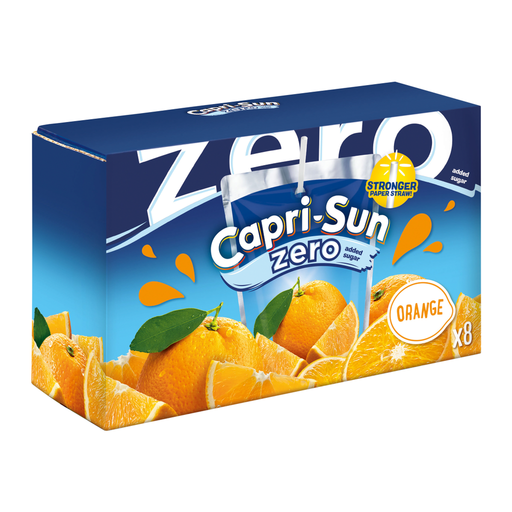
Capri-Sun Zero Orange 8 × 200ml
Consider this ready-to-drink orange-flavoured option if you want a pouch rather than pure orange juice. Capri-Sun lists 0.6g sugars per 100ml for Zero Orange; check the pack label for the amount in the 200ml pouch.
View on Joybuy
 No image available
Robinsons No Added Sugar Squash Orange 1L
Choose this type of orange drink if you prefer squash to ready-to-drink juice. Follow the pack’s dilution instructions and compare the sugar information for the prepared serving; “no added sugar” alone does not state an exact sugar amount.
View on Joybuy
No image available
Fruitshoot Orange Low Sugar 8 × 200ml
The 200ml bottles suit shoppers who want an individual, ready-to-drink orange-flavoured option rather than a concentrate. Check the current pack for sugars per bottle instead of relying on “Low Sugar” in the name. Keep the small caps away from children under 36 months, as the product information warns.
View on Joybuy
Questions about orange juice and orange drinks
Does “no added sugar” mean orange juice is sugar-free?
No. Juice can contain sugars from the fruit without any sugar being added. Tropicana Original Orange, for example, is described by the brand as having no added sugar but lists 13g sugars per 150ml. Check the nutrition panel for the exact product.
How much fruit juice does the NHS advise drinking?
The NHS advises limiting fruit juice and smoothies to a maximum of one small 150ml glass a day and drinking it with a meal. That is general guidance, not a personal diabetes eating plan.
Is eating an orange the same as drinking orange juice?
No. A whole orange retains fibre that is largely removed when fruit is juiced. If you want fruit rather than a drink, that difference is worth considering alongside the convenience of juice.
What should I compare on orange-drink labels?
Compare “of which sugars” per 100ml and for the amount you will drink, then check whether the product is 100% juice, a blend or an orange drink. For a concentrate, read the dilution instructions and nutrition information for the prepared drink; also check the ingredients if sweeteners matter to you.


