
24/7 Customer Support

Free returns

Same-day & Next-day Delivery

Quality Guaranteed

Unlock Your Welcome Offers: FREE Delivery | Up to 80% OFF | Free 30-day JoyPlus trial
Download the APP
Choosing orange juice drinks can look simple until you compare juice content, sugar, sweeteners, pack sizes and serving formats. A bright label may suggest a fruit-led drink, while the ingredients reveal a fizzy soft drink, diluted squash or a low-sugar beverage with added sweeteners.
For UK households, parents and lunch planners, the right choice depends on how the drink will be used. A multipack of small pouches may suit school bags, while a litre of orange squash can offer more servings at home. Before buying, check these common traps.
Orange soft drinks and orange fizzy drinks may contain some concentrated juice, but the percentage can vary considerably. For example, some products list orange juice from concentrate at around 5–12%, while others combine orange with apple, lemon or other fruit ingredients.
A product with “orange” prominently displayed on the front is not necessarily a traditional orange juice. Check the ingredients list and look for terms such as orange juice from concentrate, orange fruit from concentrate or orange flavouring.
Orange squash labelled no added sugar may still contain naturally occurring sugars from fruit. It may also contain sweeteners such as sucralose, acesulfame K or aspartame. Compare the nutrition panel rather than relying on front-of-pack wording.
A low-sugar orange drink can be useful for shoppers trying to reduce sugar intake, but it is still important to check the recommended dilution and serving size. A drink measured at 3 calories per 250ml diluted serving is not directly comparable with a ready-to-drink 500ml bottle.
Fruit juice multipacks can be convenient, but large packs may not represent good value if storage space is limited or drinks are consumed slowly. Conversely, small packs may cost more per litre.
Consider the number of people drinking the product, whether it is for daily use or occasional gatherings and whether opened bottles need refrigeration. Always compare total volume and price per litre, not only the pack price.
Use the product description to distinguish between:
A higher juice percentage may provide a more noticeable fruit character, but it does not automatically mean lower sugar or fewer calories. The full ingredients list and nutrition table remain the useful comparison points.
Check values per 100ml first, then calculate the amount in the actual serving. For instance, Tango Orange lists 4.3g of sugars per 100ml, equivalent to 14g in a 330ml can. Capri-Sun Zero Orange lists 0.6g of sugars and 4kcal per 100ml.
If selecting drinks for children, also check sweetener information, age warnings and packaging safety. Products with small caps, straws or pouches may carry specific choking warnings.
Pouches, cans and bottles each suit different routines:
Look at storage instructions too. Some products should be refrigerated after opening and consumed within a stated period. Do not assume every shelf-stable drink has the same storage requirements.

Why This Fits Their Persona: A 1L bottle is suited to family meals and regular dilution at home, helping shoppers compare servings by volume rather than buying individual bottles.
The label states no added sugar, while the nutrition information is given for a diluted serving. It also clearly states that it must not be consumed undiluted.
1L format; orange fruit from concentrate; suitable for vegans and vegetarians according to the product information.
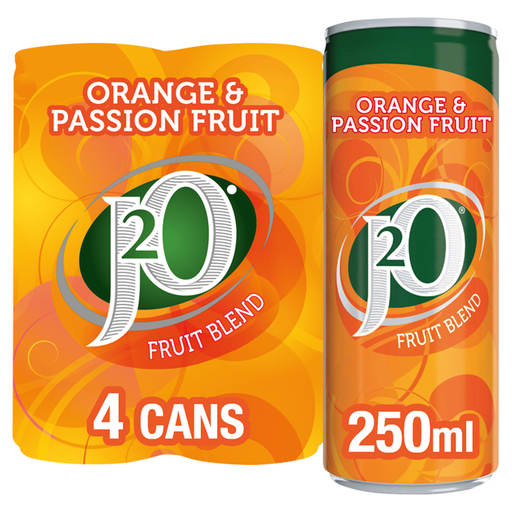
Why This Fits Their Persona: The 250ml cans are convenient for lunches, guests and social occasions where a measured serving is preferable to opening a large bottle.
The ingredient list specifies orange fruit and juice from concentrate percentages, rather than relying only on front-label fruit imagery.
Four 250ml cans; orange and passion fruit blend; listed at 19kcal and 4.0g sugars per 100ml.
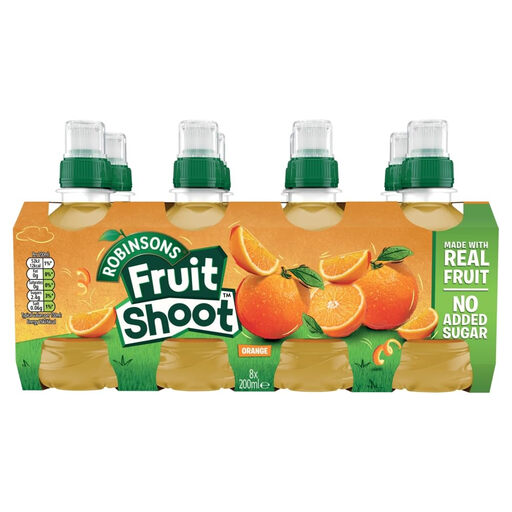
Why This Fits Their Persona: The 8 x 200ml format is easy to portion for packed lunches, days out or after-school refreshments.
The product gives a specific 200ml pack size and states its orange juice from concentrate content, helping parents compare like for like.
8 x 200ml bottles; 6kcal and 1.2g sugars per 100ml; storage guidance advises refrigeration after opening.
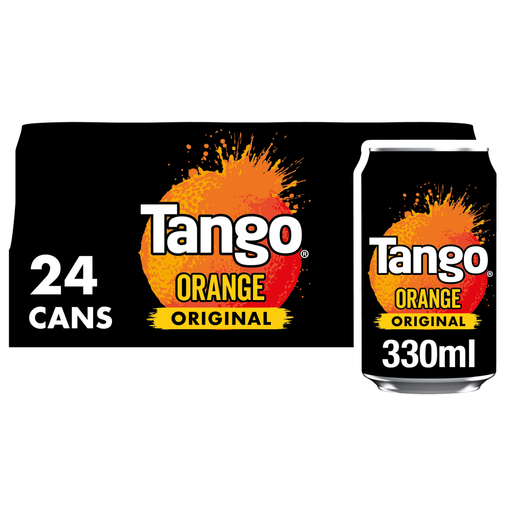
Why This Fits Their Persona: A 24-can pack is designed for households, parties, barbecues and occasions where individual servings are required.
The pack quantity and 330ml can size are clearly stated, making it easier to plan servings and avoid underestimating the total purchase volume.
24 x 330ml cans; carbonated orange drink; 63kcal and 14g sugars per can according to the listed nutrition information.
We have compiled a complete, real-time list of products that fully satisfy these strict selection criteria and UK safety regulations.
Some small-format drinks are designed for portability, but check the packaging for age warnings, choking risks, sweeteners and storage instructions. A 200ml pouch or bottle may be easier to portion, while water should remain part of a child’s usual drink options.
It can provide more servings from one bottle when diluted according to the instructions. Compare the price per litre as prepared, not just the concentrated bottle size. Also account for refrigeration after opening and the amount used at each serving.
This varies by product. Shelf-stable pouches and cans may be intended for immediate consumption, while opened bottles may need refrigeration and use within a stated period. Always follow the packaging, check the best-before date and avoid consuming products with damaged seals or packaging.