Who is this for?
The choice depends on whether you are serving a small drink with food or providing something children can return to throughout the party.
Parents planning a children’s party
If you want to offer orange juice, decide how it will be poured and whether children will also have had juice or a smoothie earlier that day. NHS guidance treats 150ml as a combined daily amount, not a fresh allowance for each occasion.
Families paying attention to free sugars
Juice can contain sugar even when none has been added. NHS-linked dental guidance explains that the naturally present sugars in fruit become free sugars when the fruit is juiced.
Hosts accommodating different drink preferences
Water can remain the refillable drink while an orange-flavoured option is offered separately. Check each product’s ingredients and nutrition information: a juice, juice drink and squash are not the same type of drink.
What should you check before choosing?
Decide first whether orange juice will be a measured drink with food or whether you need a refillable party drink. Then compare orange-flavoured products using the same nutrition measure and the portion you intend to serve.
| Priority |
What to check |
Your needs |
| Serving size |
Check the cup or pack volume and whether children may have had juice or a smoothie already. The NHS advises no more than 150ml of fruit juice and smoothies combined per day. |
I want to offer juice with the party food without treating a large cup or repeated pours as one small serving. |
| When it is served |
The NHS recommends keeping juice and smoothies to mealtimes. Its dental advice also notes that how often teeth encounter sugar, and the acid in fruit juice, matter. |
For a party that lasts several hours, I need a drink children can return to without leaving juice out for continual sipping. |
| Drink type |
Read the product name and ingredients to distinguish 100% orange juice from a juice drink or squash. Compare ‘of which sugars’ per 100ml and for the portion you plan to serve; ‘no added sugar’ does not mean sugar-free. |
I want orange flavour, but I do not want a front-of-pack claim to stand in for checking what is in the drink. |
| Party format |
Check whether a bottle or pouch is meant to be one serving, whether a squash needs dilution, and any age or ingredient warnings on the exact product. |
Individual drinks may be easy to hand out, but I still want the serving and product warnings to fit the children attending. |
Brand and retailer references
These examples help distinguish drink types; a familiar brand or retailer name does not replace checking the exact pack.
Tropicana
Tropicana UK describes its Smooth Orange and Original Orange with bits as 100% pressed orange juices with no added sugar.
- The Smooth Orange product information lists 13g sugars per 150ml, giving a stated serving figure to consider alongside the NHS juice guidance.
- ‘No added sugar’ on these juices does not mean they contain no sugar.
innocent
innocent discusses both juices and smoothies, which should be identified by their exact product type rather than treated as interchangeable party drinks.
- The brand states that sugars occur naturally in the fruit used for its juices and smoothies.
- Check the particular product’s ingredients, serving size and sugars per 100ml before comparing it with orange juice.
Tesco
Tesco’s children’s-drinks listing includes different types of fruit-based drinks and pack formats in the same shopping category.
- The listing provides examples of smoothies and no-added-sugar juice drinks as distinct options.
- The category listing alone does not establish an individual drink’s ingredients or suitability for a dietary requirement.
Asda
Asda identifies a product named 50% Fruit No Added Sugar High Juice Orange, a different description from 100% orange juice.
- The product name makes fruit percentage and drink type useful points to check when comparing orange-flavoured options.
- Check the individual pack for its ingredients, allergens and nutrition rather than inferring them from ‘high juice’ or ‘no added sugar’.
Orange-flavoured options on Joybuy
These are orange-flavoured drink and squash options for a party, not 100% orange juices. Compare their serving formats and pack information if orange flavour matters, and keep the choice of a refillable drink separate from any measured serving of juice.
 No image available
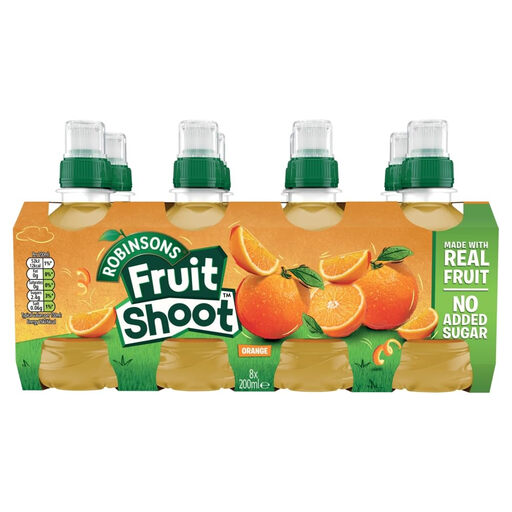
Fruitshoot Orange Low Sugar, 8 x 200 ml
Individual orange-drink bottles suit handing out drinks, but a full 200ml bottle is not a small measured pour. The product information warns that the caps contain small parts and that the drink is unsuitable for children under 36 months.
View on Joybuy
 No image available
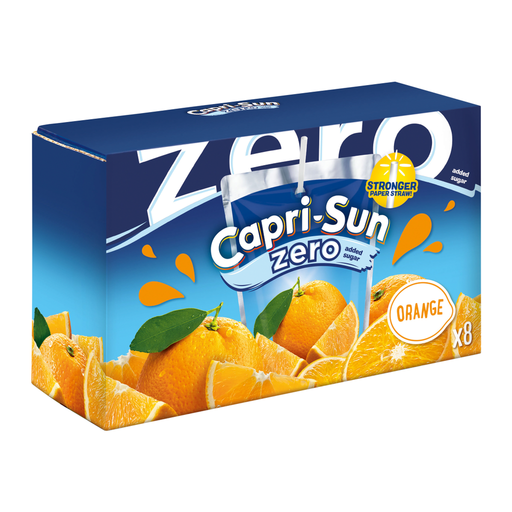
Capri-Sun Zero Orange, 8 x 200ml
The 200ml pouches offer an individual orange-flavoured drink. Its product information gives conflicting descriptions of sugar content, so check the pack’s nutrition declaration rather than treating ‘Zero’ as a sugar-free guarantee. The product warning says it is unsuitable for children under 3 years because of a straw-related choking hazard.
View on Joybuy
 No image available
Robinsons No Added Sugar Orange Squash, 1L
This is a squash to dilute for an orange-flavoured drink, not ready-to-drink orange juice. Follow the dilution instructions on the pack and compare nutrition for the prepared drink. Its product information says not to drink it undiluted, identifies sulphites and says it is unsuitable for children under 36 months.
View on Joybuy
Party drinks: common questions
How much orange juice can I serve a child at a party?
The NHS advises no more than 150ml of fruit juice and smoothies combined per day for children and adults. Count any juice or smoothie the child had before the party when deciding whether to offer a serving.
Should orange juice be available for refills throughout the party?
Serve orange juice with food rather than as a refillable drink: the NHS recommends keeping juice and smoothies to mealtimes. NHS dental advice also notes that how often teeth encounter sugar, and the acid in fruit juice, matter. Put water out for refills instead.
Does ‘no added sugar’ orange juice contain zero sugar?
No. NHS-linked dental guidance explains that fruit juice contains naturally present sugar, which becomes free sugar when the fruit is juiced. Read ‘of which sugars’ on the nutrition panel per 100ml and for the portion you intend to serve.
Is a ‘zero’ orange drink the same as 100% orange juice?
Do not assume they are the same product type. Check whether the pack describes juice, a juice drink or squash, then read its fruit content, ingredients and nutrition panel. A name or front-of-pack sugar claim does not establish what a particular serving contains.
What can children drink if orange juice is optional?
Keep water available as the main refillable drink. If you also offer orange juice, follow the NHS advice to serve it with food and account for the child’s combined juice and smoothie intake that day.


