Choose 100% orange juice if you want juice with a revision meal and are content with a measured serving: NHS guidance limits fruit juice, vegetable juice and smoothies to a combined 150ml a day, and sugars in unsweetened juice count as free sugars. For a drink to keep beside you while studying, water avoids those juice sugars; a no-added-sugar orange squash offers orange flavour but is a diluted drink, often with sweeteners, rather than pure juice. Check the ingredients and sugars in the drink as prepared instead of reading ‘no added sugar’ as ‘zero sugar’.
Who is each drink for?
Students having juice with a meal
If you want orange juice with breakfast or lunch before revision, a measured glass makes the serving easier to keep track of. NHS guidance sets a combined daily limit of 150ml for fruit juice, vegetable juice and smoothies.
Students looking for less sugar in a desk drink
If you want orange flavour during a longer study session, compare a diluted no-added-sugar squash with other drinks by its prepared-serving label. Check whether it contains sweeteners, and do not mistake it for 100% juice.
What should you check?
100% orange juice
Choose it when: You want juice with a revision meal rather than an orange-flavoured soft drink.
Bear in mind: NHS guidance counts sugars in unsweetened fruit juice as free sugars and limits fruit juice, vegetable juice and smoothies to a combined 150ml a day.
No-added-sugar orange squash
Choose it when: Orange flavour matters more to you than having a serving of pure juice.
Bear in mind: Squash must be diluted as directed, and a no-added-sugar version may contain sweeteners.
Water or a sugar-free drink
Choose it when: You mainly want something to drink throughout a revision session.
Bear in mind: It is not a serving of orange juice; check the label if choosing a flavoured drink rather than water.
| Priority | What to check | Your needs |
|---|
| Drink type and sugars |
Read the product description and ingredients to distinguish 100% juice from squash or a soft drink. Compare sugars for the stated serving, not the ‘no added sugar’ wording alone; NHS guidance counts sugars in unsweetened juice as free sugars. |
I want to know whether I am buying orange juice or an orange-flavoured drink, and what the sugars line says for the amount I will have. |
| Serving and timing |
Check the pack’s serving size and measure juice rather than treating a carton as one serving. The NHS limit is a combined 150ml a day for fruit juice, vegetable juice and smoothies. |
For a meal before studying, I can pour a small glass of juice; for a drink to keep on the desk, I would choose something else. |
| Dilution and ingredients |
For squash, follow the stated dilution ratio and compare nutrition for the prepared drink. Check the ingredient list if sweeteners affect your choice. |
I want orange flavour without confusing concentrated squash with the glass I will actually drink. |
Common label and serving mistakes
-
Reading ‘no added sugar’ as ‘sugar-free’
Tropicana lists 13g sugars per 150ml of its Smooth Orange juice. NHS guidance counts sugars in unsweetened fruit juice as free sugars, even when none has been added.
Read the sugars line for the portion you intend to pour, then check the ingredients to confirm whether the drink is juice or another orange drink.
-
Sipping from a juice carton throughout revision
Repeated pours make it harder to keep track of the combined 150ml daily limit that NHS guidance gives for fruit juice, vegetable juice and smoothies.
Measure juice into a glass with a meal, and choose a different drink to keep beside you for a longer session.
-
Comparing squash concentrate with ready-to-drink juice
The nutrition stated for a diluted squash applies to the prepared drink when you follow its dilution instructions, not necessarily to the concentrate in the bottle.
Check the mixing directions and compare the sugars in the prepared serving with the serving shown on a juice carton.
Brand and product-line references
A brand can sell more than one type of orange drink, so use the product description and nutrition panel for the particular carton or bottle.
Tropicana
Its Smooth Orange is presented as 100% orange juice.
- Tropicana’s Smooth Orange label lists 13g sugars per 150ml.
- Do not read no-added-sugar wording as a claim that the juice contains no sugars.
Innocent
Its Smooth product is a pure orange juice option, rather than an orange squash.
- The Ocado listing describes its sugars as naturally occurring in fruit, with none added.
- Check the carton’s sugars line and after-opening instructions for the pack you buy.
Sainsbury's
Its Pure Orange Juice and Stamford Street Co. Orange Juice from Concentrate are distinct own-brand products.
- Sainsbury's describes its Pure Orange Juice as 100% fruit juice from concentrate.
- The Stamford Street Co. listing gives 12g sugars per 150ml serving; check the label of the specific product rather than transferring that figure to another carton.
Asda
ASDA Smooth Orange Juice is labelled as 100% pure juice from concentrate.
- Its product description makes the juice-from-concentrate format clear.
- Check the carton’s sugars and storage instructions; ‘100% pure’ does not mean sugar-free.
M&S
Its Smooth Orange Juice and No Added Sugar Mediterranean Orange High Juice are different types of drink.
- Marks & Spencer describes the smooth juice as not from concentrate, while the High Juice is sold as a concentrated squash with sweetener.
- For the squash, compare the prepared drink and follow its dilution directions; do not treat it as 100% orange juice.
Joybuy orange-drink options
These options are orange squash and ready-to-drink orange-flavoured drinks for revision breaks. They are different from choosing a serving of 100% orange juice with a meal.
 No image available
Robinsons No Added Sugar Orange Squash 1L
A concentrate to prepare when you want an orange-flavoured drink during revision. Follow the pack’s dilution directions and check sugars for the prepared serving; this is squash, not 100% orange juice, and it contains sweeteners.
 No image available
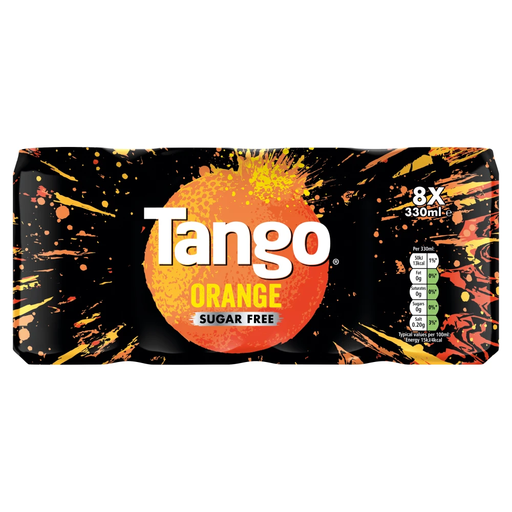
Tango Orange Sugar Free Carbonated Soft Drink 8 x 330ml
Ready-to-drink cans if you prefer an orange-flavoured drink without mixing squash. This is a carbonated soft drink rather than pure orange juice; check its nutrition and sweeteners on the pack.
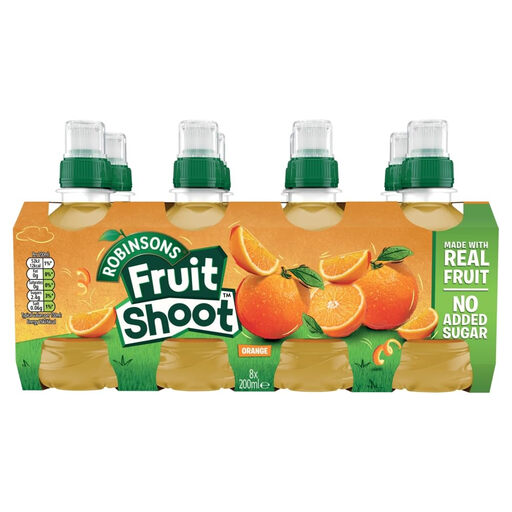 No image available
Fruitshoot Orange Low Sugar 8 x 200ml
Individual 200ml bottles offer a ready-to-drink format for a study break. This orange drink contains sweeteners and is not 100% juice; check the pack’s sugars line rather than treating ‘low sugar’ as ‘no sugar’. Its cap is unsuitable for children under 36 months.
 No image available
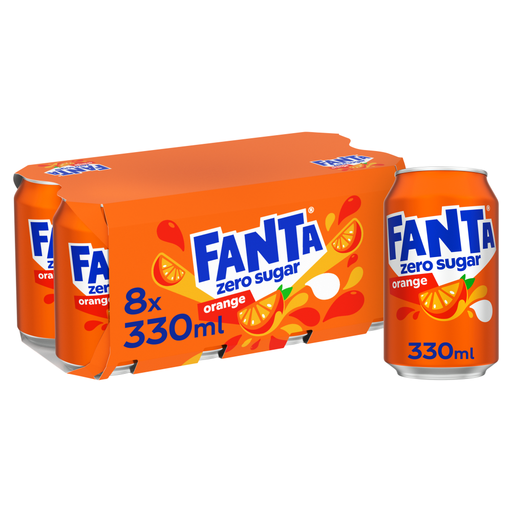
Fanta Orange Zero Sugar 8 x 330ml
Ready-to-drink orange-flavoured cans for a break rather than a serving of pure juice. The product name says ‘Zero Sugar’, but the listed nutrition gives a non-zero sugars figure; check the current pack’s sugars panel before choosing it on that basis.
 No image available
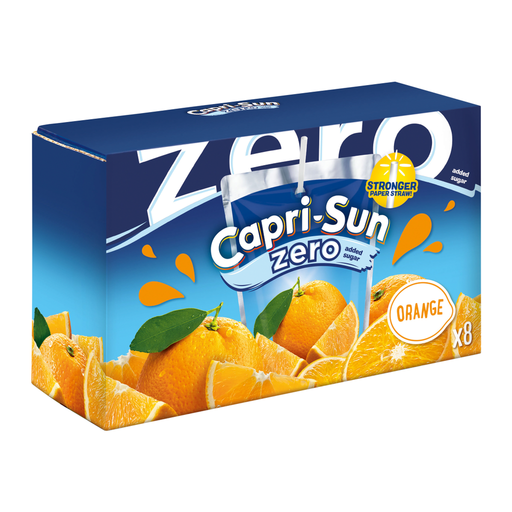
Capri-Sun Zero Orange 8 x 200ml
Individual 200ml pouches require no mixing for a revision break. This orange-and-lemon drink contains sweetener and is not 100% orange juice; check the current sugars panel rather than assuming ‘Zero’ means 0g. The straw presents a choking hazard, and the product is unsuitable for children under 3.
Questions about revision-time drinks
Does ‘no added sugar’ orange juice contain no sugar?
No. Tropicana lists 13g sugars per 150ml of Smooth Orange, and NHS guidance counts sugars in unsweetened fruit juice as free sugars. Check the sugars line for the serving you plan to drink.
How much orange juice should I pour during a revision day?
NHS guidance limits fruit juice, vegetable juice and smoothies to a combined 150ml a day. Measure the juice into a glass so the carton size does not stand in for a serving size.
Is no-added-sugar orange squash the same as orange juice?
No. Orange squash is a concentrate prepared with water; the M&S No Added Sugar Mediterranean Orange High Juice listing, for example, identifies it as squash with sweetener. Follow the dilution directions and compare the prepared drink, not the concentrate, with juice.
What matters when choosing a lower-sugar orange-flavoured drink?
Compare sugars for the amount you will actually drink, then check the ingredients for sweeteners and whether the product needs diluting. A ‘zero’ or ‘no added sugar’ name is not a substitute for the nutrition panel on the particular pack.
How should I keep orange juice after opening?
Follow the storage and after-opening instructions on your carton. They differ between orange-juice products, so check the particular pack before leaving it out during a study session or keeping it for another day.


