Choose a measured serving of 100% orange juice if pure juice matters to you, but do not mistake “no added sugar” for sugar-free: juice contains sugars from fruit. For a larger orange-flavoured office drink with less sugar, compare the prepared-serving labels on juice drinks and diluted squash, while checking fruit content, sweeteners and allergens. The NHS advises limiting fruit juice and smoothies to a combined 150ml a day and having them with a meal.
Who is each drink for?
The useful distinction for an office snack is whether you want pure juice, a ready-to-drink alternative or a squash you can prepare with water.
Workers comparing sugars in orange drinks
If you want an orange-flavoured desk drink with less sugar than a serving of pure juice, compare sugars in the amount you will actually drink. Check whether the alternative contains sweeteners and whether it needs diluting.
Workers choosing a measured pure-juice serving
If 100% orange juice is your preference, allow for its naturally occurring sugars rather than relying on a “no added sugar” label. The NHS advises a combined daily limit of 150ml for fruit juice and smoothies, taken with a meal.
People buying drinks for a shared office
Check whether colleagues can refrigerate a chilled juice or have water available to dilute squash. Ingredients and allergen declarations matter when a drink is intended for several people; the Asda high-juice squash example lists sweeteners and sulphites.
What should you check before buying?
Start with the type of drink, then compare sugars for the portion you plan to serve. Storage and preparation can settle the choice for a shared kitchen.
100% orange juice
Choose it when: You want pure orange juice and plan to pour a measured serving.
Trade-off: No added sugar does not mean no sugar; pure juice contains sugars from fruit.
Orange juice drink
Choose it when: You want a ready-to-drink orange option but do not require 100% juice.
Trade-off: The Sainsbury's example contains 50% orange juice from concentrate and sweetener, rather than being pure juice.
No-added-sugar orange squash
Choose it when: You can make up an orange-flavoured drink with water and want to compare sugars in a prepared glass.
Trade-off: Squash must be diluted as directed, and the cited high-juice examples contain sweeteners and sulphites.
| Priority |
What to check |
Your needs |
| Sugars per serving |
Read the sugars value and serving size on each label. Tesco lists 15g per 150ml for its 100% Pure Orange Juice Smooth; Sainsbury's lists 6.7g per 150ml for its orange juice drink and 2.4g per prepared 250ml for its high-juice squash. |
I want to know how much sugar is in the drink I will actually have, rather than assuming “no added sugar” means sugar-free. |
| Juice portion |
For fruit juice and smoothies together, the NHS advises no more than 150ml a day and recommends having them with a meal. Measure a serving from a larger bottle. |
A small glass of pure juice works for me, but I do not want to treat a large bottle as one office-snack portion. |
| Drink type |
Check the product name, fruit percentage and ingredients. The cited Sainsbury's juice drink and high-juice squash each contain 50% fruit juice; the squash is a concentrate to dilute. |
If I choose a drink instead of pure juice, I want to know what fruit content and sweeteners come with that choice. |
| Office use |
Read storage and dilution directions before buying for a shared kitchen. Sainsbury's says its cited Innocent chilled juice should be refrigerated and consumed within four days of opening; the Asda high-juice squash lists sulphites. |
Fridge space, access to water and other people's ingredient requirements all affect what I can keep at work. |
Common buying mistakes
-
Reading “no added sugar” as “sugar-free”
Tropicana describes its Smooth Orange as 100% juice with no added sugar while also stating that it contains naturally occurring sugars. The front-of-pack wording alone cannot tell you the sugars in a serving.
Read the nutrition panel for the portion you intend to drink. If considering a juice drink or squash instead, check its fruit content and sweeteners too.
-
Pouring a large bottle as one portion
A bottle may hold several servings. The NHS advises limiting fruit juice and smoothies to a combined 150ml a day and having them with a meal.
Pour a measured serving or choose a format that makes the portion easier to manage.
-
Comparing squash concentrate with ready-to-drink juice
Squash nutrition may be stated for the drink after dilution. The cited Asda high-juice squash is prepared using one part squash to four parts water, so undiluted concentrate is not a comparable serving.
Follow the dilution directions and compare the labelled prepared serving with the portion of juice or juice drink you would have.
-
Overlooking ingredients and storage
The cited Asda squash lists sweeteners and sulphites. Sainsbury's says its cited Innocent chilled juice needs refrigeration and should be consumed within four days of opening.
Check the current ingredient, allergen and storage instructions when buying for colleagues, particularly if fridge space is limited.
Brand and retailer examples
These examples illustrate differences between pure juice, juice drinks and squash; the label on the particular product is what matters when choosing.
Tropicana
Tropicana's Smooth Orange example is a 100% pure pressed juice, not an orange squash.
- Tropicana describes it as not from concentrate, with no added sugar.
- The brand also states that it contains naturally occurring sugars, so it is not a zero-sugar choice.
Innocent
The cited Smooth product is a chilled 100% pure orange juice.
- Its product description says nothing is added to the juice.
- Sainsbury's lists naturally occurring sugars and says to keep the cited 900ml bottle refrigerated and drink it within four days of opening.
Tesco
Tesco's cited Smooth product provides a pure-juice example for checking serving nutrition.
- Tesco labels it 100% pure orange juice.
- Tesco lists 15g sugars per 150ml serving; “pure” does not mean sugar-free.
Sainsbury's
The cited own-label examples show both a ready-to-drink orange juice drink and a concentrated high-juice squash.
- Sainsbury's lists 6.7g sugars per 150ml for the juice drink and 2.4g per prepared 250ml for the squash.
- Both cited products contain 50% fruit juice and sweetener; the squash needs diluting, and neither is 100% juice.
Asda
Asda's cited No Added Sugar High Juice Orange is a squash to prepare with water.
- Asda lists 2.5g sugars per 250ml serving when diluted as directed.
- The cited product contains sweeteners and sulphites and is not a ready-to-drink pure juice.
M&S
The cited Mediterranean Orange High Juice is a no-added-sugar squash rather than pure orange juice.
- Marks & Spencer describes it as made with 50% fruit juice.
- The cited ingredients include sucralose; check the current pack for the full ingredient and allergen declarations.
Orange drink options on Joybuy
These options cover a ready-to-drink orange fruit drink and a squash to dilute for office use. Neither should be treated as a serving of 100% orange juice.
 No image available
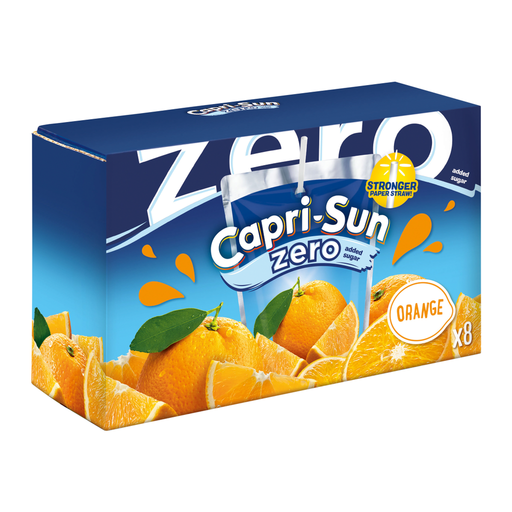
Capri-Sun Zero Orange 8x200ml
The individual pouches offer a ready-to-drink orange option for a desk snack. This is a fruit drink rather than 100% orange juice and contains sucralose. Do not take “Zero” to mean sugar-free; check the current nutrition label for sugars in the pouch you will drink.
View on Joybuy
 No image available
Robinsons No Added Sugar Orange Squash 1L
This squash is an option where colleagues can prepare an orange-flavoured drink with water. Follow the dilution directions rather than drinking it undiluted, and refrigerate it after opening. It contains sweeteners and sulphites; check the current label if you need a numerical sugars comparison for a prepared serving.
View on Joybuy
Questions about orange drinks at work
Does “no added sugar” orange juice have no sugar?
No. Tropicana's and Innocent's cited 100% orange juices say they have no added sugar but contain naturally occurring sugars from fruit. Check the sugars value on the nutrition panel for the serving you plan to drink.
What portion of orange juice should I pour at work?
The NHS advises limiting fruit juice and smoothies to a combined 150ml a day and having them with a meal. A larger bottle contains multiple portions, so measure the amount poured rather than treating the bottle as one serving.
Is no-added-sugar orange squash the same as pure juice?
No. The cited Sainsbury's and Asda high-juice squashes contain 50% fruit juice and are concentrates intended to be diluted with water; they also contain sweeteners. If pure juice matters, check for a product labelled 100% orange juice instead.
Can I keep orange drinks in the office cupboard?
Check the storage directions for the specific product and whether they change after opening. Sainsbury's says its cited Innocent juice must be refrigerated and consumed within four days of opening. Squash also needs preparing according to its dilution directions, so cupboard space alone is not the only consideration.


