Choose water if the aim is a zero-sugar everyday drink for a secondary-school packed lunch; the NHS also recommends milk as a drink for children. If you include 100% orange juice, the NHS advises a maximum of 150ml of fruit juice and smoothies in total per day, taken with a meal. A 150ml carton is straightforward to portion, but a “no added sugar” label does not mean the juice contains no sugar.
Who is this choice for?
Families looking for a zero-sugar lunch drink
If “no added sugar” has led you to orange juice, check what the label actually says about total sugars. The reviewed Tropicana juice, for example, is labelled no added sugar but lists 8.6g sugars per 100ml. Water is the clearer choice when no sugar is the requirement.
Families packing orange juice with a meal
The NHS advises limiting fruit juice and smoothies to 150ml in total per day and having them with a meal. A 150ml carton gives you a defined lunch portion, provided you also account for juice or smoothies consumed at other times.
Parents comparing cartons and bottles
Pack volume matters as well as the sugars line. A 300ml bottle holds twice the NHS daily maximum for fruit juice and smoothies, so it is not a single 150ml juice portion simply because it is sold as a grab-and-go drink.
What should you check?
Decide whether the lunch needs a drink with no sugar, a measured portion of 100% juice, or a different orange-flavoured drink; the label and pack size then become easier to assess.
| Priority |
What to check |
Your needs |
| Sugars |
Read the sugars figure per 100ml and for the amount that will be drunk. Check it even when the front label says “no added sugar”. |
I want a drink with no sugar, rather than a juice with no sugar added. Water meets that requirement; 100% orange juice does not become sugar-free because of its front-of-pack wording. |
| Juice portion |
Check the carton or bottle volume and count any other fruit juice or smoothies that day. The NHS advises no more than 150ml in total, with a meal. |
If I pack orange juice, a 150ml carton makes the intended portion clear. A larger pack means measuring out the lunch serving. |
| Drink type |
Read the product description and ingredients to distinguish 100% orange juice from a juice drink, squash or orange-flavoured soft drink. |
Orange flavour alone is not enough for me to choose: I need to know whether I am buying juice or a different drink with its own ingredients and nutrition information. |
| Lunch format |
Compare the volume of a ready-to-drink pack with the portion you intend to serve. For squash, follow the pack’s dilution directions before filling a lunch bottle. |
A small carton avoids measuring juice in the morning. If I use a larger carton or squash bottle, I can prepare the intended amount at home. |
| School policy |
Check the school’s current packed-lunch policy before choosing drinks specifically for school. |
I want to know what my child’s school allows in a lunch brought from home, rather than assuming a shop label answers that question. |
Common packed-lunch mistakes
-
Reading “no added sugar” as “no sugar”
Orange juice can contain sugars naturally present in the fruit. ASDA Groceries lists 8.6g sugars per 100ml for its reviewed Tropicana no-added-sugar juice.
Check the sugars line for the amount your child would drink. Choose water if a zero-sugar everyday drink is the aim.
-
Using a whole 300ml juice bottle as one lunch portion
Drinking the full bottle would exceed the NHS maximum of 150ml of fruit juice and smoothies in total per day.
Pack a 150ml carton or measure 150ml from a larger container, taking any other juice or smoothie that day into account.
-
Assuming every orange drink is 100% juice
Orange juice drinks can have different ingredients from 100% juice. The Joybuy listings for Master Kong Fresh Orange Juice and Minute Maid Orange Juice Drink, for example, list water and added sugar alongside orange concentrate.
Use the product description, ingredients and nutrition panel to identify the drink you are buying.
-
Assuming school-food guidance settles the packed-lunch rules
The Department for Education’s School food in England guidance describes requirements for food and drink provided in state-funded schools in England. A drink brought from home is a different practical question.
Check your child’s school’s current packed-lunch policy before buying drinks for school use.
Orange juice brand references
These examples show how juice type, texture and pack volume can differ; the figures apply to the named products, not every drink from each brand.
Tropicana
The reviewed Smooth Orange Fruit Juice is a 300ml, 100% juice bottle labelled no added sugar.
- ASDA Groceries lists 8.6g sugars per 100ml for this bottle.
- The full 300ml bottle is twice the NHS maximum daily fruit-juice and smoothie volume.
Innocent
Tesco lists smooth and with-bits Innocent orange juices, including 900ml and 1.35L packs.
- The listed formats offer a texture choice when pouring a portion at home.
- Check the chosen pack’s sugars information and measure the amount packed for lunch.
Tesco
Tesco lists its own-label 100% Pure Orange Juice Smooth in a 1L carton alongside other orange juices.
- A large carton allows juice to be portioned into a separate lunch container.
- Read the selected product’s nutrition panel rather than treating all Tesco orange juices as having the same sugars figure.
Sainsbury's
The reviewed Pure Orange Juice is a 1L carton of 100% orange juice from concentrate.
- Sainsbury’s lists a 150ml serving and 12.0g sugars for that serving.
- A lunch portion must be measured from the 1L carton; the juice is not sugar-free.
Asda
The reviewed Orange Juice from Concentrate comes in a pack of three 150ml cartons.
- One carton matches the NHS maximum daily fruit-juice and smoothie amount by volume.
- ASDA Groceries lists 13g sugars per carton, so the portion-controlled format is not a zero-sugar drink.
M&S
M&S lists smooth, with-bits and squeezed orange-juice formats, including a 350ml bottle and larger bottles.
- The listed range offers texture and pack-format choices.
- A full 350ml bottle exceeds the NHS 150ml daily fruit-juice and smoothie maximum; measure a smaller juice portion for lunch.
Orange-flavoured drinks on Joybuy
These Joybuy options are orange-flavoured drinks and squash, not a selection of 100% orange juices. Compare their drink type, pack format and on-pack sugars information against the packed-lunch choice you intend to make.
 No image available
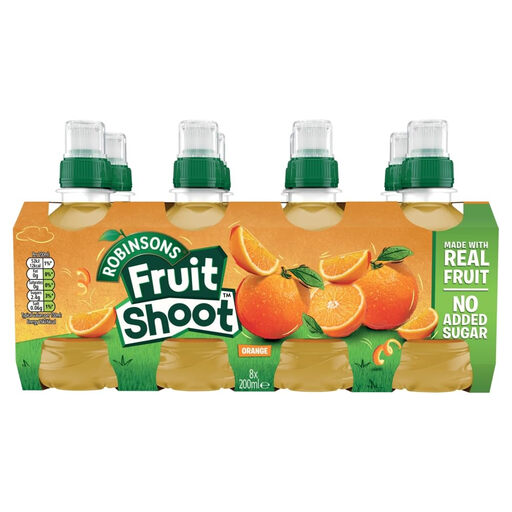
Fruitshoot Orange Low Sugar 8 x 200 ml
The 200 ml bottle format is an option when you want a ready-to-pack orange drink rather than 100% orange juice.
Check the sugars figure and ingredients on the bottle when deciding whether it meets your lunch-drink requirement. The product information describes sweeteners and notes that the cap contains small parts.
View on Joybuy
 No image available
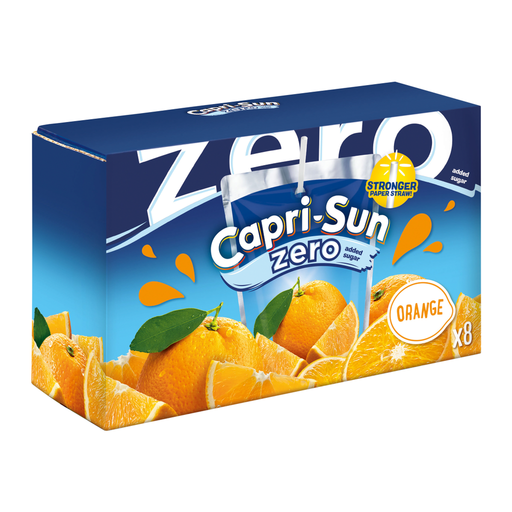
Capri-Sun Zero Orange 8x200ml
The individual 200ml pouches offer an orange-flavoured lunch drink, not a measured portion of 100% orange juice.
Do not rely on “Zero” in the name as a sugars figure: the product information pairs sugar-free wording with a non-zero sugars value. Check the nutrition panel on the pouch before choosing it for a no-sugar requirement.
View on Joybuy
 No image available
Robinsons No Added Sugar Orange Squash 1L
This 1L squash bottle suits a lunch drink prepared at home rather than a ready-to-drink orange-juice carton.
Dilute it according to the pack directions; do not drink the concentrate undiluted. Check the ingredients, including the stated sweeteners and sulphites, and the nutrition information for the prepared drink.
View on Joybuy
 No image available
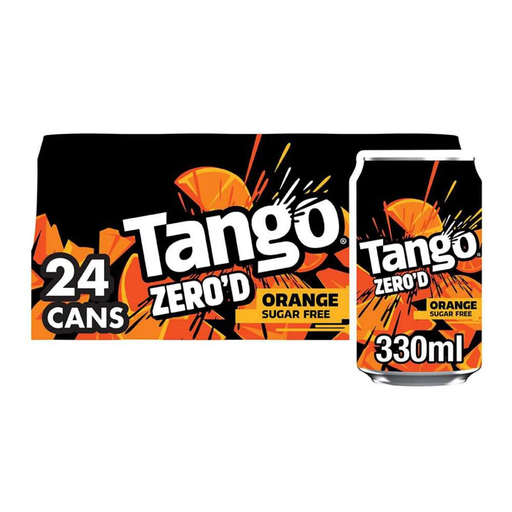
Tango Orange Zero'd 24x330ml
This is an orange-flavoured carbonated soft drink in 330ml cans, not orange juice.
Its product information describes sweeteners. Check the can’s sugars information and the school’s packed-lunch policy before choosing a canned fizzy drink for lunch.
View on Joybuy
Packed-lunch questions
Does “no added sugar” mean orange juice is sugar-free?
No. The reviewed Tropicana no-added-sugar juice lists 8.6g sugars per 100ml, according to ASDA Groceries; Sainsbury’s lists 12.0g per 150ml serving for its reviewed pure orange juice. Check the sugars line for the portion you plan to pack.
How much orange juice should I pack for lunch?
If you include orange juice, the NHS advises a maximum of 150ml of fruit juice and smoothies in total for the day, taken with a meal. Count any juice or smoothies consumed outside school in that total.
Is a whole 300ml orange-juice bottle one lunch portion?
No, not if you are following the NHS 150ml maximum daily amount for fruit juice and smoothies: a full 300ml bottle is twice that volume. A 150ml carton or a measured serving from a larger pack makes the juice portion clearer.
Do school-food requirements decide which drink I can pack from home?
The Department for Education’s School food in England guidance addresses food and drink provided in state-funded schools in England. For a drink brought from home, check your child’s school’s current packed-lunch policy rather than assuming the guidance settles that choice.


