What should the canteen check?
100% orange juice
Choose when: The lunch offer calls for orange juice rather than a diluted juice drink.
Bear in mind: No added sugar does not mean sugar-free; the NHS counts sugars in unsweetened juice as free sugars.
Orange juice drink with sweetener
Choose when: A lower labelled sugar figure is the priority and a drink containing less than 100% juice is acceptable.
Bear in mind: Check the juice percentage and sweetener declaration; Morrisons' no-added-sugar orange-juice drink contains 51% juice and sucralose.
Set the ingredient requirement first, then compare nutrition figures on the same volume and choose a serving format the canteen can manage.
| Priority |
What to check |
Your needs |
| Product identity |
Read the product description, ingredient list and juice percentage. Check whether sweeteners are declared; do not use a processing description as a substitute for the nutrition panel. |
I want the menu to say 100% orange juice only when that is what the carton contains. If a juice drink is acceptable, I want its ingredients to be clear. |
| Sugars |
Compare sugars per 100ml or per equal-sized serving. Check a no-added-sugar claim against the nutrition panel: according to the NHS, sugars in unsweetened fruit juice count as free sugars. |
A lower labelled sugar figure matters to me, but I do not want to mistake no added sugar for zero sugar or assume a juice drink is pure juice. |
| Juice portion |
Check the cup or carton volume. NHS guidance advises no more than 150ml of fruit juice and smoothies combined per day; a 200ml carton of 100% juice is larger than that amount. |
If I offer juice at lunch, I want to know what volume is being served rather than letting a shared bottle set the portion by accident. |
| Pack and storage |
Match pack size to expected lunch demand. Read the product-specific refrigeration and use-after-opening instructions before selecting a shared carton. |
Our counter may serve only a few juice portions at a time, so I need a pack format that fits the labelled opened life. |
| Allergen information |
Check the current supplier label and information for drinks served from the counter. GOV.UK and Food Standards Agency guidance addresses both prepacked and non-prepacked drinks; Food Standards Scotland specifies that non-prepacked allergen information must be available before purchase. |
When someone asks about ingredients or allergens, I need the current product information available rather than relying on memory. |
Brand and own-label examples
These retailer examples illustrate label and pack-format differences; they are not a list of Joybuy stock.
Tropicana
Tesco Groceries lists a 1.5L Smooth Orange Juice carton for a shared-serve option.
- The listing gives 13g sugars and 61kcal per 150ml.
- Its no-added-sugar wording does not mean zero sugar; the listing says to use the juice within five days of opening.
Innocent
Sainsbury's describes the 1.75L Pure Orange Juice Smooth carton as 100% orange juice.
- The listing states 12g sugars per 150ml and says nothing else is added to the juice.
- Never added sugar does not mean sugar-free; the listing says to drink it within four days of opening.
Tesco
Tesco Groceries lists both a 200ml orange juice from concentrate carton and a 1.75L not-from-concentrate juice.
- The 200ml carton provides a fixed single-serve format and is labelled 100% pure juice.
- That carton lists 18.4g sugars and exceeds the NHS 150ml daily reference amount for fruit juice and smoothies combined.
Sainsbury's
Sainsbury's lists a 1L Smooth Pure Orange Juice made from concentrate.
- Its listed ingredient is orange juice from concentrate; the nutrition panel gives 12.0g sugars per 150ml.
- It remains 100% juice, not a lower-sugar juice drink. The listing says to use it within seven days of opening.
Asda
ASDA Groceries lists a 1L smooth juice from concentrate and a separate pure squeezed juice described as never from concentrate.
- Both cited products are labelled 100% juice, providing a choice of processing description.
- Their listed sugars differ: 13g and 15g per 150ml respectively. The processing description alone does not identify the lower figure.
M&S
Marks & Spencer lists a 1.2L smooth orange juice described as not from concentrate.
- The listing states no artificial sweeteners, colours or flavourings and gives 9.3g sugars per 100g.
- It says to keep the juice refrigerated and drink it within 24 hours of opening, which matters when lunch demand is limited.
Joybuy orange drink options
These individually packed orange drinks are options when the canteen accepts a drink containing less than 100% juice. Neither should be presented as pure orange juice; check the pack's current ingredients and nutrition before putting dietary wording on a menu.
 No image available
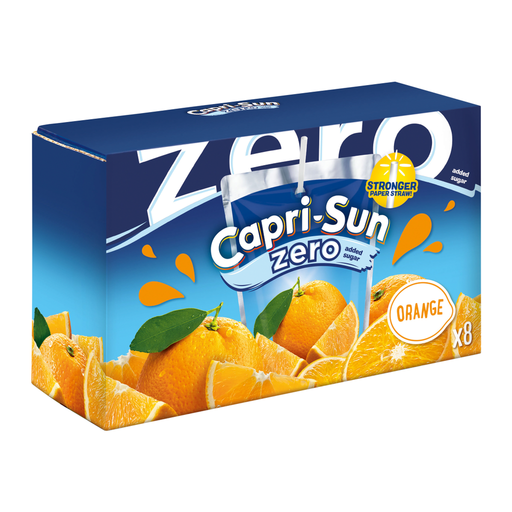
Capri-Sun Zero Orange 8x200ml
Eight 200ml pouches provide individual drinks for a lunch counter. The listed ingredients identify a diluted orange drink containing 6% orange juice and sucralose, rather than 100% juice. Its nutrition figure is 0.6g sugars per 100ml, while the description also uses zero-sugar wording; check the current pack before describing it as zero sugar. Each pouch is 200ml, so check whether that volume fits the canteen's intended serving.
View on Joybuy
 No image available
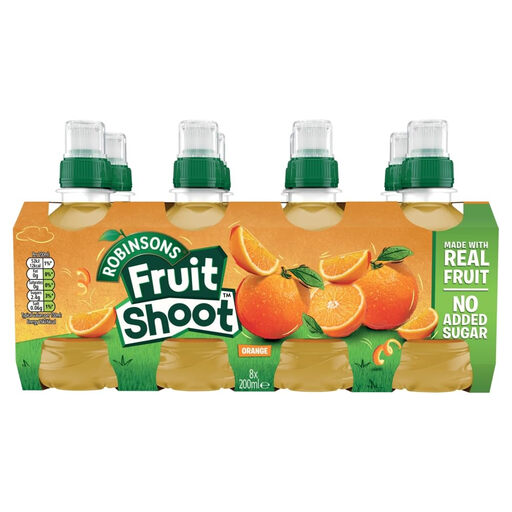
Fruitshoot Orange Low Sugar 8 x 200 ml
Eight 200ml bottles provide a fixed pack size for counter service. The listed drink contains 12% orange juice from concentrate, other fruit concentrates, sucralose and acesulfame K; it is not 100% orange juice. Its listed sugar figure is 1.2g per 100ml. Check the current supplier allergen information before serving it, and consider whether a 200ml bottle matches the intended portion.
View on Joybuy
Questions about serving orange drinks
Does ‘no added sugar’ mean an orange drink contains no sugar?
No. The NHS counts naturally occurring sugars in unsweetened fruit juice as free sugars. Tesco Groceries lists 13g sugars per 150ml for Tropicana's no-added-sugar orange juice; Morrisons lists 6g per 150ml for its no-added-sugar drink, which contains 51% juice and sucralose. Check the nutrition panel and ingredients rather than relying on either phrase.
What portion should the canteen use for 100% orange juice?
A measured 150ml serving fits the NHS guidance advising no more than 150ml of fruit juice and smoothies combined per day. A 200ml carton of 100% juice is larger than that reference amount, so check carton volume before making it the standard juice serving.
Does juice that is not from concentrate automatically list less sugar?
No. Compare the exact products on the same volume basis: Sainsbury's lists 12.0g sugars per 150ml for its 100% juice from concentrate, while ASDA Groceries lists 15g per 150ml for its pure squeezed juice described as never from concentrate. The processing description does not replace the nutrition figure.
What allergen information is needed at a UK canteen counter?
Check the current supplier information for each drink, including drinks dispensed rather than sold in their original packaging. GOV.UK and Food Standards Agency guidance says food businesses must provide allergen information for prepacked and non-prepacked food and drink; Food Standards Scotland says information for non-prepacked items must be available before purchase.
Can opened orange juice cartons follow one shared use-by rule?
No. Follow each product's label and refrigeration instructions. The cited retailer listings say to use the M&S 1.2L juice within 24 hours of opening, Innocent within four days, Tropicana within five days and Sainsbury's within seven days; choose carton sizes against expected lunch demand.


