Guests who prefer pure juice
Offer a clearly labelled 100% orange juice, smooth or with bits. It contains naturally occurring sugars even when no sugar has been added; smaller glasses make the serving size clear.


Serve 100% orange juice if guests want pure juice, but do not treat 'no added sugar' as sugar-free: pure juice still contains naturally occurring sugars. For a separate orange-style option, a juice-and-water blend avoids sweetener in the cited example, while some no-added-sugar juice drinks and squashes contain sweetener; compare the ingredients and sugars for the portion you plan to serve.
For a mixed New Year's Eve gathering, the useful distinction is between guests who want pure orange juice and those looking for a different orange-flavoured drink.
Offer a clearly labelled 100% orange juice, smooth or with bits. It contains naturally occurring sugars even when no sugar has been added; smaller glasses make the serving size clear.
Set out a separate option and check its nutrition panel. A juice-and-water blend without sweetener is different from a no-added-sugar juice drink or squash containing sweetener.
Keep the bottles or cartons identifiable, particularly if drinks are poured into jugs. Guests can then distinguish 100% juice from a juice drink and check ingredients for themselves.
Choose the type of drink first, then compare the ingredients, nutrition panel and serving format. A 'no added sugar' label alone does not answer all three questions.
| Priority | What to check | Your needs |
|---|---|---|
| Type of drink | Read the product description and ingredients for 100% juice, a juice-and-water blend, a juice drink or squash. Check which fruits are included and whether water has been added. | I want guests to know whether they are choosing pure orange juice or a different orange-flavoured drink. |
| Sugars per serving | Compare the labelled sugars using the portion you will actually pour. Tropicana UK lists 13g per 150ml for Original Orange; Sainsbury's lists 10g per 150ml for Tropicana Fresh & Light and 6.7g per 150ml for Stamford Street Co. Orange Juice Drink. These are different product types. | If I serve more than one orange drink, I want to compare like-sized portions rather than assume 'no added sugar' means no sugar. |
| Sweeteners and ingredients | Check the full ingredients list, not just the front label. Tesco's no-added-sugar orange juice drink and Sainsbury's Stamford Street Co. drink list sucralose; Marks & Spencer lists sucralose and sulphites in Mediterranean Orange High Juice. | Some guests may want to avoid sweetener or need to check a particular ingredient, so I would keep the original packaging available. |
| Juice serving size | The NHS advises limiting fruit juice, vegetable juice and smoothies to a combined 150ml a day. Plan glass sizes for pure juice accordingly, rather than treating a large carton as a single serving. | I want to offer pure juice without making repeated large refills the default at the drinks table. |
| Serving format | Decide whether you need ready-to-serve bottles or pouches, chilled juice, or squash that must be diluted. Check the pack instructions for preparation and storage. | If I am preparing drinks ahead, a concentrate means mixing them; individual portions need less preparation when guests arrive. |
Pure orange juice contains naturally occurring sugars. Tropicana UK lists 13g sugars per 150ml for Original Orange, despite describing it as having no added sugar.
Read the sugars line on the nutrition panel and keep pure juice distinct from a lower-sugar juice drink.
Adding water, using other fruit juices or including sweetener changes the type of drink. A sugar figure alone does not tell guests whether they are getting 100% orange juice.
Check the product description and juice percentage before comparing nutrition figures for the portions you will serve.
Guests may need to identify sweeteners or other ingredients. Marks & Spencer's Mediterranean Orange High Juice, for example, lists both sucralose and sulphites.
Keep the original packaging nearby and identify each jug by its exact product name.
Large containers make it easy to pour more than intended. NHS guidance gives a combined daily limit of 150ml for fruit juice, vegetable juice and smoothies.
Put out smaller glasses for pure juice and make water available alongside the other drinks.
These product examples show why it is worth checking the exact label: a brand or retailer can offer more than one type of orange drink.
Its cited Original Orange and Fresh & Light products represent different choices: pure orange juice and a juice-and-water blend.
The cited Orange Juice with Bits is an example for guests who want 100% juice with pulp.
Its cited 3 x 250ml cartons illustrate a ready-to-drink, no-added-sugar orange juice drink containing sweetener.
Its cited Stamford Street Co. Orange Juice Drink offers a different route from the pure juices shown in its orange-juice range.
The cited Smooth Orange Juice and Mediterranean Orange High Juice illustrate pure juice and a separate high-juice drink.
These options are orange-flavoured drinks and squash for a separate party choice, rather than examples of 100% orange juice. Check each pack's ingredients and nutrition before deciding what to serve.
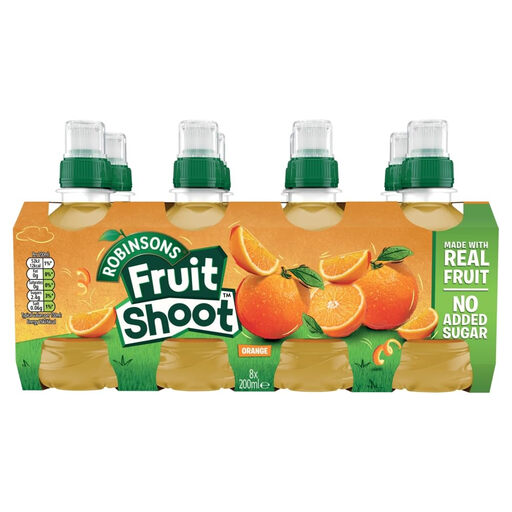 Image unavailable
The eight 200ml bottles suit a drinks table where individual portions are useful. This is an orange drink rather than 100% orange juice; check the ingredients for sucralose and acesulfame K. The product information warns that the caps contain small parts and that the drink is unsuitable for children under 36 months.
 Image unavailable
This 1L squash is a concentrate for hosts who can prepare an orange drink before serving; do not serve it undiluted, and follow the pack's dilution instructions when planning portions. Check the label for sucralose, acesulfame K and sulphites.
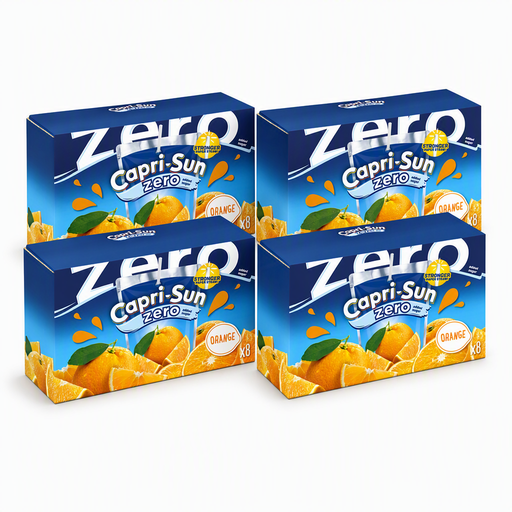 Image unavailable
The 200ml pouches offer individual ready-to-serve portions of an orange drink, not 100% juice. Do not assume 'Zero' means sugar-free: check the current pack's nutrition panel. The product information warns of a straw choking hazard and says it is unsuitable for children under three years.
No. Pure orange juice contains naturally occurring sugars even when none have been added. Tropicana UK lists 13g sugars per 150ml for Original Orange, while Sainsbury's lists 12g per 150ml for innocent Orange Juice with Bits; check the nutrition panel for the drink you buy.
The NHS advises limiting fruit juice, vegetable juice and smoothies to a combined 150ml a day. If serving pure orange juice, a 150ml glass makes that amount straightforward to recognise; offer other drinks alongside it.
Read the ingredients list. The cited Tesco and Sainsbury's no-added-sugar orange juice drinks list sucralose, as does Marks & Spencer's Mediterranean Orange High Juice. Keep the original packaging available if you decant drinks for guests.
Not in the cited examples. Tesco's orange juice drink lists 8% orange juice from concentrate and Sainsbury's Stamford Street Co. drink lists 50%, whereas Tropicana Original and innocent Orange Juice with Bits are described as 100% juice. Read the exact product description and ingredients rather than relying on the word 'orange'.
Follow the storage and after-opening instructions on the pack you buy. For example, Sainsbury's listing for innocent Orange Juice with Bits advises refrigeration and use within four days once opened.