Choose 100% orange juice if you want juice itself, but check the serving size: even juice with no added sugar contains naturally occurring sugars that the NHS counts as free sugars. If labelled sugar is the deciding factor, compare a ready-to-drink juice drink with a squash you can dilute; both may contain sweeteners. Orange-flavoured water is another option for the journey, but it is not orange juice.
Who is each drink for?
Travellers comparing labelled sugar
If you want an orange-flavoured drink with less sugar listed on the label, compare the amount you would actually drink. Check whether you are buying a juice drink, a squash that needs water or flavoured water, and read the ingredients for sweeteners.
Shoppers who want 100% orange juice
If pure juice matters more than choosing a drink with a lower labelled sugar value, check both the ingredients and serving size. As the NHS explains, sugars naturally present in unsweetened fruit juice still count as free sugars.
Families packing drinks for the car
Individual packs can be easier to distribute during a journey, while a squash needs water and a way to dilute it. Check storage instructions for opened drinks and any age warning on the particular pack.
What should you check before packing?
Start with the drink type, then compare sugar figures at the serving size you expect to use. Packaging and storage matter just as much once the drink is in the car.
| Priority | What to check | Your needs |
|---|
| Sugar and portion |
Read total sugars per 100ml and per serving; a larger pack may contain more than one serving. Tropicana UK lists 13g sugars per 150ml of Original Orange, despite stating that no sugar is added. The NHS counts sugars in unsweetened juice as free sugars. |
I want to know how much sugar is in the amount I will drink, rather than treating “no added sugar” as “sugar-free”. |
| Drink type |
Check the product description and ingredient list. Tropicana UK lists orange juice as the ingredient in Original Orange; Tesco Groceries lists water, orange ingredients and sucralose in its Whole Orange Juice Drink No Added Sugar. Sainsbury’s describes Fruit Slurps as flavoured water. |
If I am choosing juice, orange flavour alone is not enough. If flavour is the priority, a juice drink or flavoured water may fit instead. |
| Ingredients |
Look for sweeteners and relevant allergen declarations on the current pack. Tesco Groceries lists sucralose, acesulfame K and sodium metabisulphite in its orange high juice; ASDA Groceries lists sweeteners and sulphites in its 50% Fruit Orange High Juice. |
Someone travelling with me may need to check sweeteners or sulphites before I pack the drink. |
| Preparation |
Check whether the drink is ready to serve. Tesco Groceries and ASDA Groceries give their high-juice sugar figures for a prepared 250ml serving diluted at one part squash to four parts water. |
I would rather take a ready-to-drink pack unless I can bring water and dilute squash as directed. |
| Storage and pack size |
Read the unopened and after-opening instructions for the exact drink. Sainsbury’s says innocent Pure Orange Juice with Bits must be kept at 0–8°C and used within four days of opening; Tesco’s juice drink comes in 250ml cartons. |
For a long journey, I need a pack size and storage plan that work after the first drink is opened. |
Mistakes to avoid
-
Reading “no added sugar” as “zero sugar”
No added sugar does not remove the sugars naturally present in juice. Tropicana UK lists 13g sugars per 150ml of Original Orange, and the NHS counts sugars in unsweetened fruit juice as free sugars.
Use the nutrition panel and the amount you plan to drink, not the front-of-pack wording alone.
-
Comparing orange flavour with orange juice content
Pure juice, a juice drink, squash and flavoured water are different types of product. For example, Tesco Groceries lists orange juice from concentrate and orange comminute in its no-added-sugar juice drink, while Sainsbury’s describes Fruit Slurps as flavoured water.
Decide whether juice content or an orange-flavoured drink matters to you before comparing labels.
-
Using squash figures without following the dilution directions
The sugar figures Tesco Groceries and ASDA Groceries give for their orange high juices describe prepared drinks, not undiluted concentrate.
Bring water and follow the directions on the bottle you purchase.
-
Opening chilled juice without a storage plan
Sainsbury’s says its innocent Pure Orange Juice with Bits must be kept at 0–8°C and used within four days once opened. That instruction still matters during a car journey.
Check the label before packing, and choose a size you can store as directed after opening.
Brand and retailer examples
These examples illustrate different drink types; a brand name alone does not tell you the juice content, sugar figure or storage requirements of every product it sells.
Tropicana
Tropicana UK describes Original Orange as juice made with orange juice as its ingredient; Sainsbury’s lists a Pure Smooth Orange multipack of four 250ml bottles.
- The stated ingredient in Original Orange is orange juice.
- Tropicana UK lists 13g sugars per 150ml of Original Orange despite its no-added-sugar wording.
innocent
Sainsbury’s describes innocent Pure Orange Juice with Bits as 100% fruit juice.
- Its label lists 12g sugars per 150ml, making the serving figure clear to compare.
- The 900ml product must be refrigerated at 0–8°C and used within four days of opening, according to Sainsbury’s.
Tesco
Tesco Groceries lists both a ready-to-drink Whole Orange Juice Drink No Added Sugar and an orange high juice intended for dilution.
- The juice drink lists 2.2g sugars per 250ml carton; the high juice lists 2.2g per prepared 250ml glass.
- The drinks are not pure orange juice. The high juice needs water and lists sodium metabisulphite among its ingredients.
Sainsbury’s
Sainsbury’s lists Fruit Slurps Orange & Pineapple as flavoured water in 250ml bottles, rather than orange juice.
- Its listing gives less than 0.5g sugars per 250ml bottle.
- It contains sweeteners and should not be mistaken for 100% orange juice.
Asda
ASDA Groceries lists a 50% Fruit No Added Sugar High Juice Orange concentrate.
- Its listed 2.5g sugars per 250ml serving applies when prepared as directed.
- It needs dilution at one part squash to four parts water and contains sweeteners and sulphites.
M&S
Marks & Spencer lists both Smooth Orange Juice and Mediterranean Orange High Juice; one is juice, while the other is a concentrate.
- The separate product descriptions make it possible to choose by drink type.
- The high juice contains sucralose and sulphites. The smooth juice must be refrigerated after opening and used within 24 hours, according to Marks & Spencer.
Joybuy options for the journey
These Joybuy options are individual orange drinks, a squash and a canned orange soft drink. Compare their labels by drink type rather than assuming they offer the same juice content.
 No image available
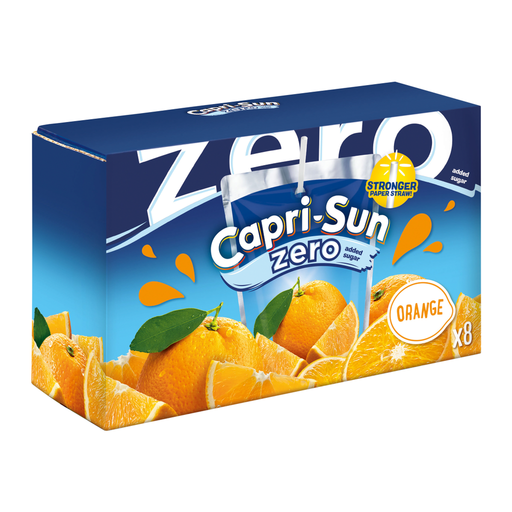
Capri-Sun Zero Orange 8 × 200ml
The eight 200ml pouches provide individual drinks for a journey. Check the current pack’s sugar figure rather than treating “Zero” in the name as confirmation that the drink is sugar-free. Check its storage instructions and straw age warning before packing it for children.
View on Joybuy
 No image available
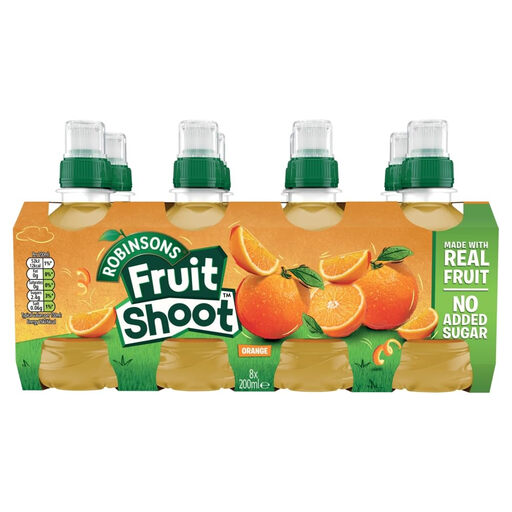
Fruitshoot Orange Low Sugar 8 × 200ml
Eight individual 200ml bottles may suit a journey with several travellers. This is a juice drink rather than 100% orange juice; check its sugar figure and sweeteners on the current label. Its cap warning matters when packing for children under 36 months, and an opened bottle needs to be handled according to its storage instructions.
View on Joybuy
 No image available
Robinsons No Added Sugar Squash Orange 1L
The 1L squash is a concentrate for travellers who can bring water and prepare each drink. Dilute it according to the bottle; do not drink the concentrate undiluted. Check the current label for sweeteners, sulphites, age guidance and after-opening storage.
View on Joybuy
 No image available
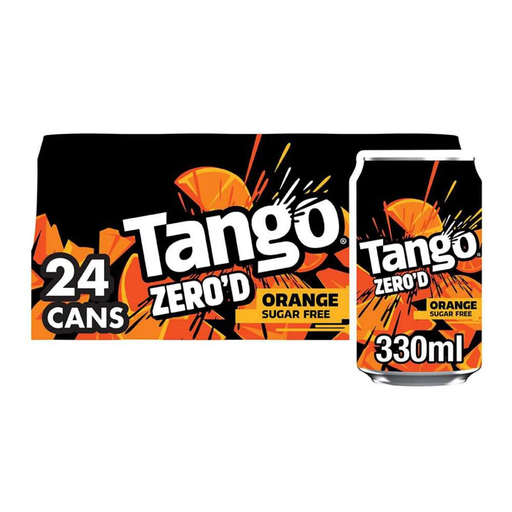
Tango Orange Zero'd 24 × 330ml
The 24 × 330ml can pack is a ready-to-drink orange soft-drink option, not 100% orange juice. Check the current pack’s sugars per can before relying on “Zero'd” in the name, and read the ingredients if sweeteners matter to you.
View on Joybuy
Questions about orange drinks
Does “no added sugar” mean orange juice is sugar-free?
No. Sugar occurs naturally in 100% orange juice, and the NHS counts sugars in unsweetened fruit juice as free sugars. Tropicana UK, for example, lists 13g sugars per 150ml of Original Orange while stating that no sugar is added.
Are zero-sugar orange drinks the same as orange juice?
Not necessarily. Check the product description and ingredients: Tesco Groceries describes its no-added-sugar option as a juice drink containing water, orange ingredients and sucralose, while Sainsbury’s describes Fruit Slurps Orange & Pineapple as flavoured water with sweeteners. Neither should be treated as 100% orange juice.
Can I put unopened orange high juice in a car snack bag?
Follow the storage directions on the bottle you buy. A car that becomes hot or sits in sunlight may not meet an instruction to keep a drink cool and out of sunlight; also plan to bring water if the high juice needs diluting.
What should I check when buying orange squash for someone avoiding particular ingredients?
Read the current ingredients and allergen declaration, not just the no-added-sugar claim. Tesco Groceries lists sodium metabisulphite in its orange high juice, while ASDA Groceries lists sulphites and sweeteners in its 50% Fruit Orange High Juice.


