Parents packing a regular school lunch
If the drink is mainly for hydration, compare orange juice with water or milk first. The NHS recommends water and milk for children and limits fruit juice to a small daily serving with a meal.


For a routine school packed lunch, the NHS recommends water or milk for children. If you include 100% orange juice, the NHS advises limiting fruit juice and smoothies to 150ml in total for the day and serving juice with a meal; its naturally occurring sugars still count as free sugars. A no-added-sugar orange drink is not necessarily pure juice or sugar-free, so check its ingredients and the school’s packed-lunch rules.
The useful starting point is whether the lunch needs an everyday drink, a measured serving of juice or an orange-flavoured alternative.
If the drink is mainly for hydration, compare orange juice with water or milk first. The NHS recommends water and milk for children and limits fruit juice to a small daily serving with a meal.
Check whether the label says 100% orange juice or orange juice drink. A no-added-sugar drink can contain a small proportion of juice and sweeteners, while unsweetened pure juice still contains free sugars.
A 150ml carton fixes the amount packed. If pouring from a larger bottle, measure the serving and account for any fruit juice or smoothie the child has already had that day, in line with NHS guidance.
Decide what role the drink has in the lunch, then compare the product type, serving size and packing instructions. The NHS recommends water or milk for children; its 150ml daily limit applies to fruit juice and smoothies, not to every orange-flavoured drink.
Choose when: The lunch needs a routine drink for hydration, following NHS guidance for children.
Bear in mind: This is a drink choice, not a serving of orange juice; consider fruit separately if you want to include it in the lunch.
Choose when: You want to include juice with the meal and can keep fruit juice and smoothies to 150ml for the day.
Bear in mind: According to the NHS, sugars in unsweetened fruit juice count as free sugars, even when none has been added.
Consider when: Labelled sugar content matters more to you than choosing 100% juice, and the school accepts the drink.
Bear in mind: Check the juice percentage and ingredients rather than treating the drink as equivalent to pure orange juice.
| Priority | What to check | Your needs |
|---|---|---|
| Serving size | For fruit juice or smoothies, check the pack volume against the NHS limit of 150ml a day. If using a larger bottle, measure the amount poured and follow its storage instructions. | I want to include juice with lunch without packing an unmeasured portion or overlooking juice served earlier in the day. |
| Juice and sugars | Read the product name, juice percentage, ingredients and sugars per serving. The NHS counts sugars in unsweetened fruit juice as free sugars; “no added sugar” does not mean zero sugar. | When I pick up an orange drink, I want to know whether it is pure juice or a drink made with juice and sweeteners. |
| Packing and storage | Check whether the drink needs chilling, how long a bottle may be kept after opening and whether it needs preparation. A carton, ready-to-drink pouch and squash bottle involve different packing steps. | I need a serving I can prepare, carry and store according to the instructions on its pack. |
| School rules | Check the individual school’s packed-lunch policy before sending juice or a sweetened drink. Product wording such as “school approved” does not establish that school’s rules. | Before putting an orange-flavoured drink in the lunchbox, I want to know whether my child’s school accepts it. |
The NHS counts sugars naturally present in unsweetened fruit juice as free sugars. For example, ASDA Groceries lists 13g sugars in an Asda 150ml orange-juice carton.
Check both the product type and the sugars figure for the serving you intend to pack.
A larger bottle does not set a lunchbox serving. The NHS advises a maximum of 150ml of fruit juice and smoothies a day, taken with a meal.
Use a 150ml carton or measure juice into a clean container, taking account of any juice or smoothie served earlier that day.
Sainsbury’s lists 8% juice and the sweeteners acesulfame K and sucralose in its No Added Sugar Fruit Slurps Orange Juice Drink. It is a different product type from 100% orange juice.
Read the ingredients and juice percentage, then check whether the school accepts the drink before packing it.
These examples show why the exact variety, serving size and label matter; a brand name alone does not tell you what is in the lunchbox.
Sainsbury’s describes Tropicana Smooth Orange 1.5L as 100% juice that is not from concentrate.
ASDA Groceries describes Innocent Pure Orange Juice with Bits 900ml as 100% pure fruit juice.
Tesco Pure Orange Juice is listed in a pack of five 150ml cartons.
Sainsbury’s lists both pure orange juice and a separate No Added Sugar Fruit Slurps Orange Juice Drink.
ASDA Groceries lists orange juice from concentrate in 150ml cartons and a separate 1L smooth pure-squeezed juice.
Marks & Spencer lists its Smooth Orange Juice as a 1.2L not-from-concentrate product.
These Joybuy options are orange-flavoured drinks and a squash, not the 100% orange juice or water-and-milk routes discussed above. Check each pack’s ingredients, preparation instructions and the school’s policy before choosing one for a lunchbox.
 No image available
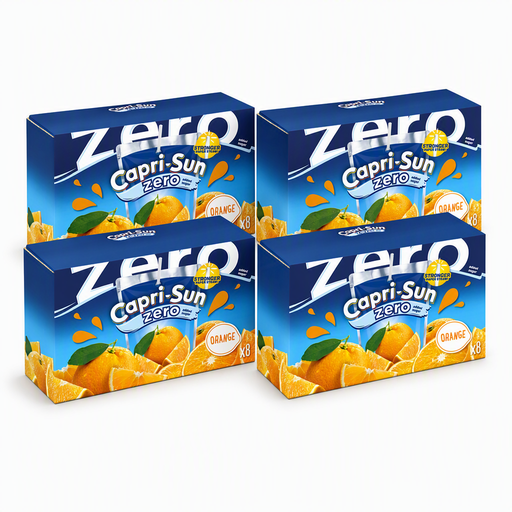
This is an orange-flavoured pouch option rather than 100% juice. Its product information lists 8% juice, sucralose and 0.6g sugars per 100ml: check the nutrition figure rather than reading “Zero” as a promise of no sugars. Each pouch is 200ml, not a 150ml juice portion. The product information warns that the straw presents a choking hazard for children under 3.
 No image available
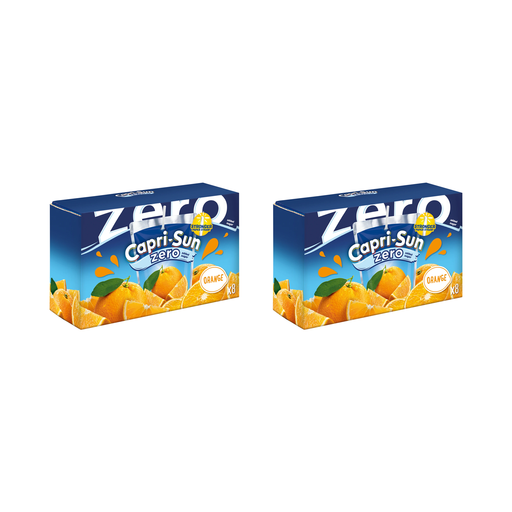
For an orange-flavoured drink rather than pure juice, the product information lists 8% juice, sucralose and 0.6g sugars per 100ml. The bundle quantity is described inconsistently as 2x8, 4x8 and 8 pouches, so confirm the quantity on the product page or pack before ordering. Its straw carries a choking warning for children under 3.
 No image available
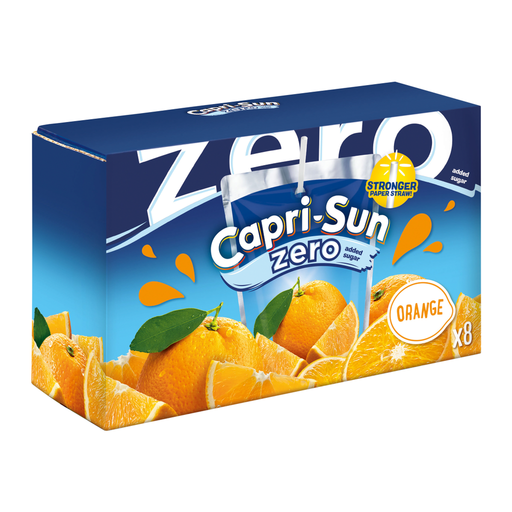
The product information describes an orange drink with 8% juice and a sweetener, rather than 100% juice, and lists 0.6g sugars per 100ml. Check that figure against the “Zero” wording and note that each pouch contains 200ml. The straw carries a choking warning for children under 3.
 No image available
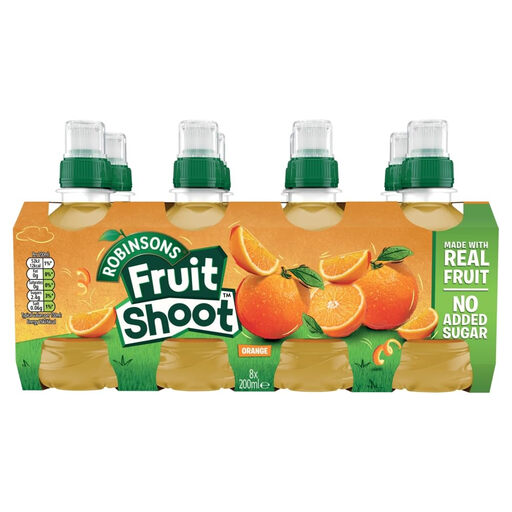
This 200ml orange juice drink is listed with 8% juice and 0.6g sugars per 100ml; it is not pure orange juice. Its product information gives conflicting sweetener lists, so read the current pack if particular ingredients matter to you. The product carries a choking warning for children under 36 months.
 No image available
This is orange squash, not juice or a ready-to-drink lunchbox serving. Follow the pack’s dilution directions before transferring it to a suitable container, and refrigerate the bottle after opening as instructed. The product information says it is not suitable for children under 36 months.
No. The NHS counts sugars naturally present in unsweetened fruit juice as free sugars. Check the sugars per serving on the nutrition label, and check whether the product is 100% juice or an orange juice drink with other ingredients.
The NHS advises limiting fruit juice and smoothies to one small 150ml glass a day and having it with a meal. A 150ml carton fixes the lunch portion; if pouring from a larger bottle, measure it and account for any juice or smoothie served earlier that day.
The NHS recommends water and milk as drinks for children and treats fruit juice as a limited serving with a meal. For a routine packed-lunch drink, start with water or milk rather than assuming juice is needed each day.
No. For example, Sainsbury’s lists 8% juice and sweeteners in its No Added Sugar Fruit Slurps Orange Juice Drink, while ASDA Groceries describes Innocent Pure Orange Juice with Bits as 100% juice. Compare the exact labels and check the school’s packed-lunch policy before sending a sweetened drink.
Measure the portion and follow the bottle’s storage directions as well as those for the container you pack. ASDA Groceries says its listed Innocent orange juice must be kept at 0–8°C; Marks & Spencer says its listed Smooth Orange Juice should be refrigerated after opening and drunk within 24 hours.