Hosts serving children and families
A small glass helps make juice portions clear. The NHS advises limiting fruit juice and smoothies to a combined 150ml a day; a large glass of 100% juice is not a sugar-free option.


Choose 100% orange juice if guests specifically want juice, but plan modest servings: the NHS advises limiting fruit juice and smoothies together to 150ml a day, and the sugars in unsweetened juice still count as free sugars. If sugar per prepared drink matters more, compare a diluted no-added-sugar high juice with a zero-sugar squash; neither is pure orange juice, and their ingredients and dilution directions need checking.
The useful distinction for a party is whether guests expect orange juice or whether the host is offering an orange-flavoured alternative with a different sugar and ingredient profile.
A small glass helps make juice portions clear. The NHS advises limiting fruit juice and smoothies to a combined 150ml a day; a large glass of 100% juice is not a sugar-free option.
Compare nutrition for the drink as served, not the concentrate. Tesco lists 2.2g sugars per prepared glass for its no-added-sugar high juice, while the Robinsons squash listed by Tesco has 0g per 250ml when diluted as directed. Both are drinks with sweeteners, not pure juice.
If guests expect juice rather than squash, check the carton’s serving size, sugar declaration and refrigeration instructions. Pack size also matters when an opened carton may remain after the party.
Decide what kind of drink you are serving, then compare labels on the same ready-to-drink basis and plan how it will be poured or prepared.
| Priority | What to check | Your needs |
|---|---|---|
| Drink type | Read whether the label says 100% orange juice, high juice or squash. Check the ingredient list and whether a concentrate needs diluting. | I want guests to know whether they are being offered juice or an orange-flavoured drink. A no-added-sugar label alone does not settle that distinction. |
| Sugar and servings | Compare sugars for the stated serving of the drink as served. For juice, the NHS advises a combined daily limit of 150ml for fruit juice and smoothies; naturally occurring juice sugars count as free sugars. | If I serve juice, a measured 150ml glass makes the portion easier to plan. If I serve squash, I need its figures for the diluted drink rather than the concentrate. |
| Ingredients | Check sweeteners and the allergen declaration on the current bottle. Tesco’s no-added-sugar orange high juice and the Robinsons orange squash listed by Tesco contain sweeteners and declare sulphites. | Some guests may need to check ingredients before accepting a drink, so I want the original bottles available alongside what I serve. |
| Party preparation | Check the dilution directions for concentrates. For chilled juice, check the storage temperature and the pack-specific instructions after opening. | I need a serving format that fits the party and a plan for any juice left in an opened carton. |
The NHS counts naturally occurring sugars in unsweetened fruit juice as free sugars. For example, Sainsbury’s lists 11.4g sugars per 150ml of its 100% squeezed orange juice.
If the party needs a zero-sugar orange-flavoured choice, check the prepared-serving declaration on a squash labelled for that purpose rather than presenting pure juice as sugar-free.
High juice and squash are different drinks from 100% orange juice. The Tesco high-juice and Robinsons squash examples contain sweeteners and declare sulphites.
Identify each drink clearly and keep its bottle available so guests can check the ingredients.
Opened-pack instructions differ. The product information for innocent’s smooth juice says to refrigerate it and drink it within four days of opening; the Tropicana and Sainsbury’s cartons cited here specify five days.
Estimate how many small juice servings you will pour, then choose a carton size and follow that pack’s storage instructions.
A squash’s nutrition declaration may describe a diluted serving, while a juice carton gives figures for juice as poured. The amounts are not directly comparable unless the serving basis is clear.
Check the stated serving volume and dilution directions before comparing sugar figures.
These labelled products illustrate the difference between pure juice and orange drinks; each figure applies to the named product and serving basis, not every drink from that brand.
The 1.8L smooth orange juice listed by Sainsbury’s is a 100% juice option for hosts serving measured glasses.
Sainsbury’s lists 100% orange juice in smooth and bits variants, so texture is a choice as well as pack size.
Tesco’s labelled examples cover both 100% orange juice and a no-added-sugar concentrated orange high juice.
Its listed 1.75L smooth carton is 100% squeezed orange juice, not from concentrate.
Marks & Spencer’s labelled examples include a 100% smooth juice and a separate Mediterranean Orange High Juice.
These options are orange squash or individually packed orange drinks for a party, rather than 100% orange juice. Check the current pack when sugar content, ingredients or suitability for younger children affects your choice.
 No image available
A squash to prepare for guests who want an orange drink rather than pure juice. Check the bottle for its dilution directions, sugars per prepared serving, sweeteners and sulphites. Do not serve it undiluted; the product information says it is unsuitable for children under 36 months.
 No image available
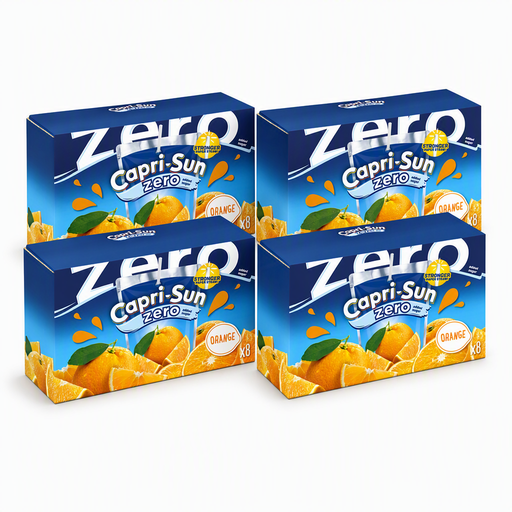
Individual 200ml orange-drink pouches offer a pre-portioned party format, not pure juice. Do not rely on “Zero” in the name as confirmation of zero sugar: check the current pack’s nutrition declaration. The product information warns that the straw presents a choking hazard and says the drink is unsuitable for children under 3 years.
 No image available
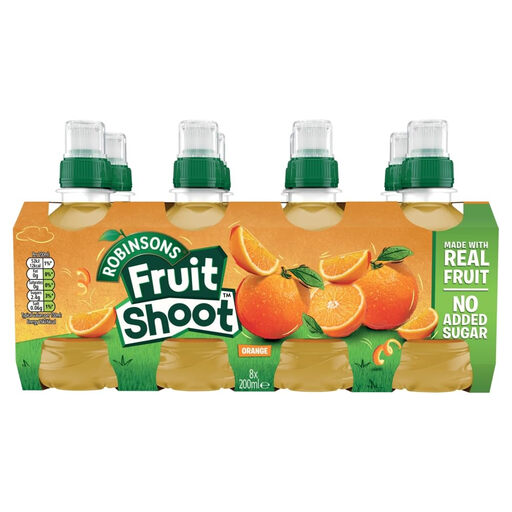
Eight individual bottles provide another orange-drink serving format rather than 100% juice. Check the current bottle for its sugar declaration and sweetener ingredients. The product information warns that the caps contain small parts and says it is unsuitable for children under 36 months.
No. The NHS says sugars occurring naturally in unsweetened fruit juice still count as free sugars. The listed Tropicana and innocent 100% juices likewise state that they contain naturally occurring sugars despite having no sugar added.
A measured 150ml glass is a useful planning reference. The NHS advises limiting fruit juice and smoothies together to 150ml a day, which counts as one 5 A Day portion; that daily guidance applies to the combined amount, not separately to each drink.
No. The Robinsons product listed by Tesco is a concentrated orange soft drink with sweeteners, not 100% juice. Tesco lists 0g sugars per 250ml serving when it is diluted one part concentrate to nine parts water; follow the directions on the particular bottle you serve.
Check the current label’s dilution directions, nutrition for the prepared drink, sweeteners and allergen declaration. Tesco’s no-added-sugar orange high juice lists 2.2g sugars per prepared glass and includes sucralose, acesulfame K and sodium metabisulphite.
Follow that carton’s refrigeration and use-after-opening instructions. The listed Tropicana and Sainsbury’s large juice cartons specify use within five days of opening, while the listed innocent smooth juice specifies four days and refrigeration at 0–8°C.