Parents choosing a regular after-school drink
If snack time falls between meals, the question is not just whether a carton says ‘100% juice’. NHS Tayside advises serving juice at mealtimes and considering the day’s total juice and smoothie intake.


For a routine between-meal after-school snack, choose water and whole fruit rather than orange juice: NHS Tayside advises having juice with meals and keeping fruit juice and smoothies to 150ml in total per day. If you choose an orange-flavoured drink, compare the sugars in the amount served. ‘No added sugar’ does not make 100% juice sugar-free, while squash needs to be assessed after dilution.
If snack time falls between meals, the question is not just whether a carton says ‘100% juice’. NHS Tayside advises serving juice at mealtimes and considering the day’s total juice and smoothie intake.
100% juice, diluted squash and other orange drinks have different ingredients and serving instructions. Check the sugars in the drink as served rather than treating ‘no added sugar’ as a zero-sugar claim.
Texture, pack size and whether a carton needs chilling can affect daily use. A larger pack does not set the serving size; check its opened-life instructions before choosing one.
Start with when the drink will be served, then compare the amount served and the nutrition and ingredients of the specific product.
Choose when: the after-school snack is between meals, particularly if the child has already had juice or a smoothie that day.
Trade-off: this is not an orange-flavoured drink, but it avoids making juice the between-meal choice.
Choose when: you want orange juice with a meal and can measure it within the day’s combined 150ml juice and smoothie amount.
Trade-off: the NHS counts sugars in unsweetened fruit juice as free sugars, even when none has been added.
Choose when: you want an orange-flavoured drink rather than 100% juice and its prepared nutrition and ingredients meet your requirements.
Trade-off: ‘no added sugar’ alone does not tell you the prepared drink’s sugar content or whether it contains sweeteners.
| Priority | What to check | Your needs |
|---|---|---|
| Snack timing | Is this between meals or with a meal? NHS Tayside advises having fruit juice and smoothies at mealtimes, not as a between-meal snack. | For an everyday snack straight after school, I want a drink that does not make juice the between-meal default. |
| Serving size | Measure the juice served. NHS Tayside advises a combined daily total of 150ml for fruit juice, vegetable juice and smoothies; more juice does not add another 5 A Day portion. | If I serve juice with food, I need to account for any juice or smoothie already served that day. |
| Sugars on the label | Compare sugars per 100ml and for the amount actually poured. The NHS counts sugars in unsweetened fruit juice as free sugars; ‘no added sugar’ is not ‘zero sugar’. | I do not want a front-of-pack phrase to stand in for the nutrition panel. |
| Type of drink | Identify 100% juice, squash or another orange drink. For squash, follow its dilution directions and compare nutrition for the prepared drink, alongside its ingredients. | When choosing orange flavour rather than 100% juice, I want to know what is in the drink I will actually serve. |
| Storage and pack size | Check whether the pack needs chilling and how long it can be kept after opening. Match the pack size to likely use without letting it determine the portion. | A smaller pack may suit me better if a larger chilled carton would remain open beyond its on-pack instructions. |
Unsweetened fruit-juice sugars still count as free sugars under NHS guidance. ASDA’s Tropicana Smooth listing gives 13g sugars per 150ml, despite no sugar being added.
Read the sugars line for both 100ml and the portion you intend to serve; consider timing as well as the label wording.
NHS Tayside says 150ml of fruit juice, vegetable juice or smoothie counts only once a day towards 5 A Day. A larger glass does not count as another portion.
Measure the serving and count juice and smoothies together across the day.
Squash is prepared by dilution and may contain sweeteners or other ingredients. Marks & Spencer’s and Ocado’s listings for the same named M&S Mediterranean Orange High Juice show conflicting ingredients.
Check the pack you receive, including its dilution directions, prepared-drink nutrition and ingredients, before relying on either listing.
Tesco’s listing for innocent Orange Juice With Bits 1.35 Litre says to refrigerate it and drink it within four days of opening.
Choose a pack size your household can use within its own on-pack instructions, and keep opened chilled juice refrigerated.
A carton left unfinished beyond its stated opened life may go to waste.
These examples illustrate differences to check on individual products; a brand name alone does not establish a drink’s sugar content or storage requirements.
ASDA lists Tropicana Smooth Orange Juice in a 900ml carton.
ASDA lists innocent Orange Juice with Bits in a 900ml bottle; Tesco also lists a 1.35-litre version.
Tesco lists its own-label 100% Pure Orange Juice Smooth in a 1-litre carton.
M&S Mediterranean Orange High Juice is an orange squash, not a 100% orange juice.
These options include squash, carbonated drinks and portioned orange drinks. They are not a selection of 100% orange juices: use each product’s current label to compare the drink as served, especially where its name makes a sugar claim.
 No image available
A squash option if you want to prepare an orange-flavoured drink rather than serve 100% juice. Follow the pack’s dilution directions and check the prepared-drink nutrition and ingredients. Do not serve it undiluted; the product information says it is unsuitable for children under 36 months.
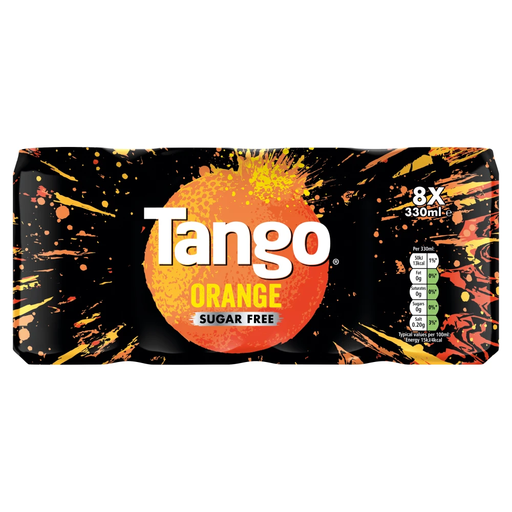 No image available
An eight-can carbonated orange drink, rather than 100% orange juice or a squash to dilute. If comparing it for a snack, check the current can’s nutrition and ingredients instead of treating the product name as the full sugar information.
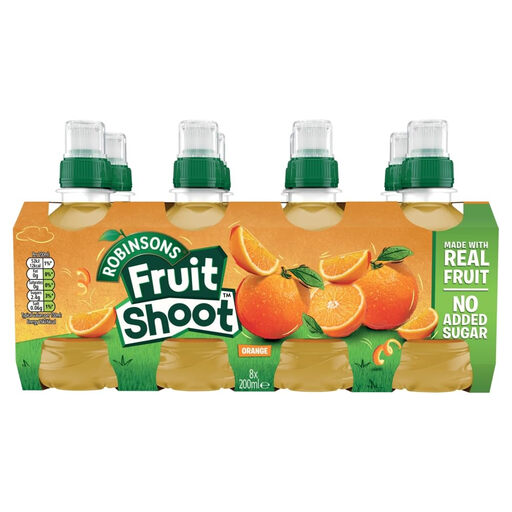 No image available
Individual bottles offer a defined pack size for a portable orange drink, not a 100% juice serving. Compare the label’s sugars and ingredients for the whole bottle. The product information warns that its cap contains small parts and that it is unsuitable for children under 36 months; follow its opened-storage instructions.
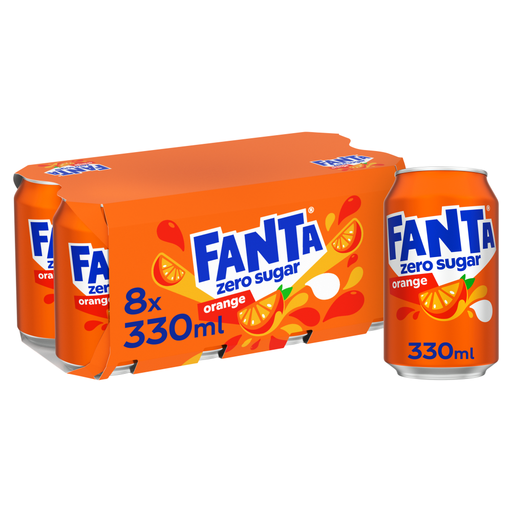 No image available
This is a carbonated orange drink, not 100% orange juice. If an exact sugar figure matters, compare the current can’s nutrition panel with the Zero Sugar name before choosing it.
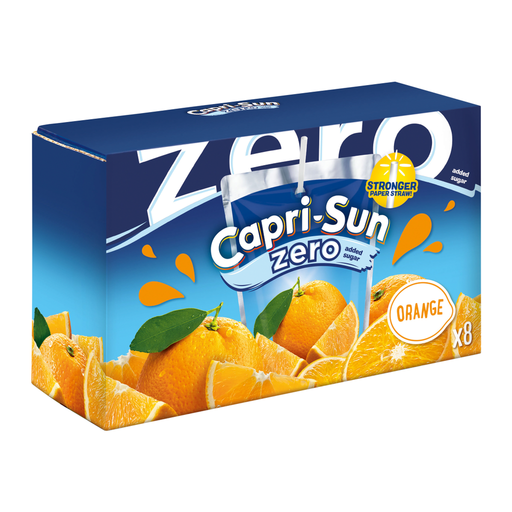 No image available
Portioned orange-drink pouches are an alternative to pouring from a carton, but they are not 100% orange juice. Check the current pouch’s sugar declaration against the Zero name before relying on it as a zero-sugar choice. The product information gives a choking warning and says it is unsuitable for children under 36 months.
No. ‘No added sugar’ can apply to 100% orange juice that still contains fruit sugars. The NHS counts sugars in unsweetened fruit juice as free sugars; check the nutrition panel for the portion served.
NHS Tayside advises having fruit juice at mealtimes rather than as a between-meal snack, and keeping fruit juice and smoothies to 150ml in total per day. For a routine snack between meals, choose water and whole fruit instead.
No. NHS Tayside says a 150ml serving of fruit juice, vegetable juice or smoothie counts only once a day towards 5 A Day, even if you drink more.
Compare the squash as prepared according to its dilution directions, not just the concentrate in the bottle. Check its sugars and ingredients alongside the juice label. For M&S Mediterranean Orange High Juice, Marks & Spencer’s and Ocado’s listings differ, so check the pack you receive.
Choose the texture the child prefers, then compare the specific products’ nutrition and storage instructions. Bits do not change NHS Tayside’s advice to have juice with meals and keep juice and smoothies to a combined 150ml per day.